Best hiking backpack for beginners: Top picks

A beginner hiking backpack can be a 20-30L daypack for lighter loads, or a 35-50L pack with a real hip belt for short overnights and loads up to about 25 pounds. Get the size or suspension wrong and you end up with sore shoulders, a pack that sways, and money spent on something you stop reaching for. This guide matches trail type, torso fit, and expected load to beginner-friendly packs, then shows you how to choose capacity, ventilation, and support.
For most first-time hikers, the clearest overall pick is the Osprey Skarab 30 because 30 liters gives you enough room for the gear most new day hikers actually carry, and Family Handyman recommends the Skarab 30 as its best hiking backpack.
Quick picks
| Pick category | Recommended pack | Best for | Known spec or source-backed detail | Price tier |
|---|---|---|---|---|
| Best overall for most first-time hikers | Osprey Skarab 30 | All-around beginner day hiking | Family Handyman recommends Osprey Skarab 30 as its best hiking backpack | Strong value |
| Best budget beginner pack | Mammut Neon Light | Very short, light hikes with minimal gear | Mens Health names Mammut Neon Light best budget; it is 12 liters, weighs 390 grams, and is hydration reservoir compatible | Cheap entry |
| Best 20L for short day hikes | Osprey Daylite Plus | Short day hikes, travel-to-trail use, small kits | Hiking Pirates says Osprey Daylite Plus is a stylish 20L bag | Value |
| Best 30L for all-around day hiking | Osprey Skarab 30 | Beginners carrying extra layers, food, and water without going overnight | 30L sits in the beginner day-hike sweet spot; source-backed top pick above | Strong value |
| Best 40L to 45L for overnights | Osprey Kestrel LT 45 | Short overnight trips and flexible day-to-overnight use | Mens Health names Osprey Kestrel LT 45 best overall; it has a 45-liter capacity and weighs 4.02 pounds | Buy-once |
What size hiking backpack should a beginner buy?
A beginner should buy a pack based on trip length and the space the full kit actually takes up. For very light day hikes, 20L works. For most beginner day hiking, 30L is the safer default. For short overnights, 40L to 45L works well. Packs above 50L are often more than needed for a first purchase.
20L for light day hikes with minimal layers
A 20L pack fits short hikes where the load stays simple: water, snacks, a light shell, phone, keys, and a small first-aid kit. That size works best when the forecast is stable and the trail is close to home or to the car.
The tradeoff is margin. Add bulkier insulation, extra water, or wet-weather layers, and a 20L bag starts forcing awkward packing.
30L as the beginner day-hike sweet spot
Thirty liters is the most forgiving first-pack size for day hiking because it leaves room for the usual beginner kit: extra water, lunch, a rain shell, warmer layers, and a few small items that take more space than expected. It gives you breathing room without pushing you into overnight-pack bulk.
This is why the Skarab 30 lands so well for new hikers. It matches how many first-timers really pack: a bit more water than needed, a spare layer, and a few extras that feel sensible on an unfamiliar trail.
40L to 45L for short overnights and flexible use
If the plan includes a beginner overnight, a bigger sleep layer, or shared gear, 40L to 45L is the practical range. Mens Health names the Osprey Kestrel LT 45 best overall, and its 45-liter capacity puts it right in that crossover zone.
This size also makes sense for cold-weather day hikes when layers get bulky. The catch is weight. Larger packs can tempt you to fill dead space, so the better pick is often the smallest pack that fully holds the gear you will really carry.
Why 50L plus is usually too much for a first pack
A common first-timer mistake is buying a 55L or 65L pack for ordinary day hiking because it seems more versatile. In practice, the extra space encourages overpacking, the load rides higher, and the hike feels worse before the first mile is done.
Fifty liters and above is usually for true multi-day needs, bulky sleep systems, or winter gear. It is rarely the right answer for a first pack aimed at day hikes and short overnights.
Beginner pack decision table
| Trip type | Typical carried weight | Recommended liter range | Frame type | Must-have features | Common failure modes |
|---|---|---|---|---|---|
| Short fair-weather day hike | Under 15 pounds | 20L | Light internal frame or structured daypack | Hydration sleeve or dual side mesh pockets, front stash pocket, light hip belt or stabilizing waist strap, compression straps | Buying too large and overpacking; no room for rain layer if weather shifts; poor bottle access |
| Typical beginner day hike | Under 15 pounds | 25L to 30L | Internal frame or well-structured daypack | Adjustable torso or size range that matches torso length, real side pockets, front shove-it pocket, breathable back panel, hydration routing | Poor torso fit causing shoulder pressure; loose load on uneven trails; no rain plan |
| Longer day hike in heat | Under 15 pounds | 30L | Internal frame with ventilated back panel | Mesh or trampoline-style back panel, easy bottle reach, reservoir sleeve, hip-belt pockets, compression straps | Hot back from flat foam panel; water packed too deep; unstable carry if hip belt only decorates the pack |
| Short overnight beginner trip | Up to about 25 pounds | 40L to 45L | Internal frame | Real padded hip belt, torso adjustment, top-load or panel access, rain cover or water-resistant fabric, sleeping-bag space, side pockets | Buying a frameless pack that folds under load; weak load transfer to hips; too-small pack forcing gear outside |
| Light 2-3 day trip | Up to about 25 pounds | 45L to 50L | Internal frame | Adjustable torso, firm hip belt, compression, external lash points, weather protection | Going above 50L without needing it; loose fit from choosing by height alone; no rain cover in changeable weather |
Best overall beginner backpack
Who it fits best
The Osprey Skarab 30 is the best match for most first-time hikers because it hits the useful middle: enough room for a real day-hike kit without drifting into overnight-bag bulk. It suits new hikers who expect changing weather, longer outings, or a habit of carrying extra water and layers.
Why its suspension works for beginners
Beginners usually benefit more from structure than from shaving every ounce. A good 30L pack should keep the load close, stop water from swinging the bag side to side, and add control at the hips on uneven ground.
That matters more than style or empty-pack weight. New hikers often notice bad support first on descents, when shoulder straps bite and the bag shifts.
Tradeoffs before you buy
The main tradeoff is simple: a 30L daypack is ideal for day hiking, but it is not a real overnight solution for everyone. If a sleeping bag, shelter, and extra insulation are on the list, move up rather than forcing a daypack to do two jobs badly.
Best budget beginner backpack
What you still need at entry-level prices
The Mammut Neon Light is the clearest budget mention in the source set because Mens Health names it best budget, says it is 12 liters, and lists a weight of 390 grams. It is also hydration reservoir compatible.
That does not make it the best budget choice for every beginner. It makes it a budget option for short, light hikes where minimal volume is enough.
Where budget packs usually cut corners
Cheap entry packs often lose structure first. The usual cuts are softer back panels, less useful hip belts, fewer torso-size options, and weaker organization. Rain protection also tends to disappear, so beginners end up stuffing the whole bag into a separate cover or relying on dry bags.
Suppose a pack is inexpensive but has no meaningful hip belt, no torso adjustment, and only one main compartment. That can be fine for a water-and-snacks walk, but it becomes frustrating once the trail gets steeper or the weather adds layers.
When spending more makes sense
Move beyond entry-level pricing when the pack will carry more water, more clothing, or overnight gear. That is also the point where fit systems, hip-belt quality, and frame shape start paying back the cost.
A strong-value pack usually gives the best first-pack result. Buy-once packs make sense if overnight trips are already likely.
Best 20L backpack for short day hikes
Best use case
The Osprey Daylite Plus is the cleanest 20L pick for short day hikes. Hiking Pirates says it is a stylish 20L bag, and that size lines up with fair-weather outings where the kit stays small.
What fits in 20 liters
Think of 20L as a low-bulk day-hike size. It suits water, lunch, a thin fleece or shell, a map or phone, and a few personal items. It also works well for hikers who want one small pack that can pull travel duty.
Picture a shaded two-hour trail in mild weather. A 20L bag feels tidy and stable there; a larger pack often ends up half-empty and floppy unless it has excellent compression.
When 20L becomes limiting
Twenty liters stops making sense once the trail gets hot, exposed, or long enough that extra water takes over the volume. It also gets tight fast when the forecast calls for a puffy jacket or spare warm layer.
Best 30L backpack for all-around day hiking
Why 30L works for most beginners
A 30L daypack gives new hikers room to pack conservatively without stepping into overnight-pack territory. That is the right balance for unfamiliar trails, shoulder-season weather, and the common habit of carrying a little more food and water than expected.
Features that matter most in this size
In a 30L pack, a few features matter more than brand prestige: dual side mesh pockets for bottles, a front stash pocket for quick layers, compression straps to reduce bulk when the bag is only half full, and hydration routing that does not interfere with the main compartment.
Ventilation matters too. A mesh back panel or trampoline-style suspension can help in hot weather by creating space between the pack body and the back, which usually feels better on long climbs than a flat slab of foam.
Who should size up instead?
Size up if a short overnight is realistic, if bulky cold-weather layers are routine, or if a torso-adjustable pack in 30L still does not provide enough support for the expected load. That is where a 40L to 45L pack becomes the safer buy.
Best 40L to 45L backpack for overnights
Who needs this size
The Osprey Kestrel LT 45 fits beginners moving beyond day hikes. Mens Health names it best overall, states that it has a 45-liter capacity, and lists its weight at 4.02 pounds. That is a reasonable profile for short overnights where support matters more than going ultralight.
Internal frame and hip-belt priorities
At this size, an internal frame is the default choice. Beginners carrying up to about 25 pounds usually benefit from a frame that resists barrel-shape sag and a hip belt that transfers part of the load away from the shoulders.
A fixed hip belt often feels more stable than a removable one once the pack gets heavier, though removable belts can make sense on smaller daypacks. Hip-belt pockets are worth seeking out because snacks or a phone are more useful at hand than buried under layers.
How to avoid overbuying capacity
If the overnight kit truly fits 40L to 45L, there is little reason to jump to 55L for “future options.” The extra space often turns into extra weight, and beginners then blame hiking when the real issue was buying a pack that invited too much gear.
Kelty Redwing is often described as convenient for day hikes or overnight adventures, which is the right idea for this category: crossover utility without drifting into expedition size.
How do you choose the right hiking backpack fit?
Choose fit by torso length, hip-belt wrap, and strap adjustment range, not by height alone. A beginner-friendly pack should either match the measured torso or offer a useful adjustment system, such as ladder-lock or multi-position torso settings. Good fit improves load transfer, stability, and comfort faster than any pocket layout.
Measure torso length instead of using height
Two people of the same height can need different pack sizes because torso length varies. That is why height charts alone mislead first-time buyers.
The practical goal is a pack whose shoulder yoke starts and lands where the torso length says it should. When the torso is too long or too short for the wearer, the hip belt and shoulder straps end up fighting each other.
Look for adjustable torso systems
Adjustment range matters more for first-time buyers because they are still learning how snug the fit should be. A ladder-lock or multi-position back panel gives more room to correct a near miss.
The Teton Sports Scout 3400 stands out here because Hiking Pirates says it is suitable for 2-3 day light backpacking trips, and the pack has a multi-position torso for adjustment. That kind of adjustability is useful when the buyer is unsure between sizes.
Check hip-belt wrap and load transfer
The hip belt is not decoration. On a properly matched pack, it helps move load to the hips and steadies the bag on uneven ground.
If the belt barely wraps, rides on the stomach, or slips down on descents, load transfer will be weak. Beginners feel that as shoulder fatigue, especially with water-heavy loads.
Fine-tune shoulder straps, load lifters, and sternum strap
- Load the pack first. Put in the water, layers, and food that match the intended trip. Fit checks on an empty pack hide problems that appear once the bag has shape and weight.
- Set the hip belt. Center it over the hip area so it can carry part of the load. Tighten until the pack feels anchored, but not so tight that it slides upward or pinches.
- Tighten shoulder straps. Pull them until the pack sits close without dragging weight fully onto the shoulders. If the straps take all the load, the torso setting or hip-belt setup is likely off.
- Adjust load lifters. Use them to bring the upper part of the pack closer to the body when the design includes them. Small changes matter most on bigger packs in the 40L to 45L range.
- Center the sternum strap. Tighten only enough to stabilize the shoulder straps. Too much tension can make the front feel restrictive without fixing poor torso fit.
What features matter most in a beginner hiking backpack?
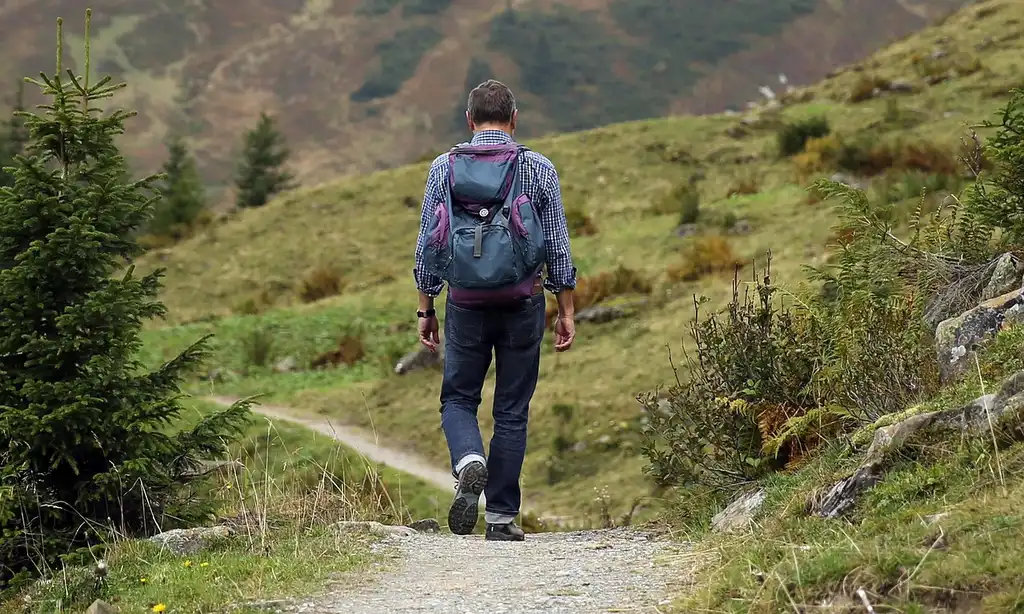
The most important beginner backpack features are the ones that solve predictable problems: an internal frame when loads get heavier, torso adjustment for fit, a real hip belt for transfer and stability, ventilation for hot weather, hydration compatibility for easy water access, and weather protection through a rain cover or water-resistant fabric.
Internal frame vs frameless support
Frameless packs save weight, but they depend heavily on careful packing and modest loads. That can work for experienced hikers with compact gear. It is usually less forgiving for first-time buyers.
Internal-frame packs give structure, shape, and better weight distribution. For ordinary beginner use, that support is often worth the extra empty-pack weight.
Ventilation and back-panel design for hot weather
Hot-weather comfort starts with back-panel design. Mesh back panels and trampoline-style suspensions create airflow space that can reduce the swampy feeling common on long climbs.
This is where a lighter pack is not always the easier pack. If the back panel runs hot and the water carries poorly, the hike can feel harder than it should.
The Osprey Talon 22 is often mentioned for this use case because it includes an external hydration sleeve and is described as lightweight and comfortable to carry. Those details matter for hikers who refill often and do not want to unpack the whole bag to manage water.
Hydration sleeve and bottle access
Beginners should usually get a hydration-compatible pack. A reservoir sleeve or external hydration sleeve makes carrying water easier, while dual side mesh pockets give a backup option for bottles and quick refill access.
Hydration design is not a minor feature. On a hot trail, easy water access changes how often people actually drink.
Rain cover, pockets, panel access, and compression straps
Rain protection can come from an included rain cover, water-resistant fabric, or a PFC-free DWR finish on the shell fabric. None of those makes a pack submersible, but they matter when the weather turns before a beginner has perfect packing habits.
Access style also changes daily use. Top-load designs tend to be simpler and cleaner under load. Panel access makes it easier to find items packed at the bottom. Front stash pockets are excellent for wet shells, zippered side pockets can secure smaller items, and compression straps keep half-full packs from sloshing around.
How to choose
Match the pack to the trip first
Start with the most common trip, not the biggest trip imagined. If most outings are short day hikes, buy for that. If overnights are already on the calendar, buy enough structure and capacity to carry them well.
Use this first-pack checklist
- Pick the trip type. Choose one main use: short day hikes, all-around day hiking, or short overnights. This single choice usually points straight to 20L, 30L, or 40L to 45L.
- Estimate the real load. Keep day-hike loads under 15 pounds when possible, and expect short overnights to push up to about 25 pounds. Support needs rise fast as water and extra clothing pile on.
- Measure your torso. Fit the pack by torso length rather than body height alone. If sizing is uncertain, favor packs with a ladder-lock or multi-position torso system.
- Check the hip belt. Make sure it wraps securely and helps steady the load. On larger packs, a real padded belt matters more than shaving a little empty-pack weight.
- Choose weather features. For hot weather, prioritize mesh or trampoline-style ventilation and quick water access. For variable weather, prioritize a rain cover or clearly water-resistant materials.
- Keep capacity honest. Do not buy extra liters just because the shelf has them. Too-large packs invite overpacking, and beginners usually feel that mistake in their shoulders and lower back first.
Frequently asked questions
Is a 20L, 30L, or 40L backpack better for beginners?
It depends on the trip. A 20L pack is better for short, light day hikes. A 30L pack is better for most beginners because it handles layers, food, and extra water without feeling oversized. A 40L to 45L pack is better only when short overnights or bulky gear are part of the plan.
Do beginners need an internal frame backpack?
Beginners do not always need an internal frame for short, light day hikes, but they usually benefit from one as loads rise. For overnight use or anything approaching about 25 pounds, an internal frame and a real hip belt make the pack easier to carry and more stable on rough terrain.
What is the best hiking backpack for first-time hikers?
For most first-time hikers, the best pick is the Osprey Skarab 30 because 30 liters suits the widest range of beginner day hikes and Family Handyman recommends that model as its best hiking backpack. If the goal is a short overnight, the Osprey Kestrel LT 45 is the stronger match.
How much should a beginner spend on a hiking backpack?
A beginner should spend enough to get the right fit, useful support, and the weather features the trail demands. Cheap entry packs can work for very short hikes, but strong-value packs are usually the better first buy. Buy-once money makes sense when overnight trips and heavier loads are already likely.
What backpack features make hiking easier in hot weather?
In hot weather, look for a mesh or trampoline-style back panel, easy bottle access, or a hydration sleeve with clean hose routing. These features help with airflow and drinking frequency. A pack that carries water poorly or traps heat can make a moderate climb feel much harder than it should.
Should a beginner get a hydration-compatible hiking backpack?
Yes, in most cases. A hydration-compatible pack makes it easier to carry and drink water regularly, which is especially useful on longer day hikes and warm-weather trails. A reservoir sleeve, hose routing, and dual side mesh bottle pockets together give the most flexible setup for a first pack.