Best small hiking backpack for short trails and light loads

The best small hiking backpack for most short trail days is the Trail Lite Speed 20 Backpack, because 20L usually leaves room for water, snacks, a shell, and small extras without forcing a bulky pack. For very light carries, the Trail Lite 12 Backpack is the tighter fit.
How to choose the right fit
Quick picks
- Best for most short day hikes: Trail Lite Speed 20 Backpack, 20L, $130.00.
- Best for the lightest carries: Trail Lite 12 Backpack, 12L, $110.00.
- Best when you want more room for layers: 25-35L packs, which are better for longer day hikes than for a true short-trail load.
Small pack selector
| Trail length | Expected carry list | Recommended liter range | Must-have features | Common failure signs |
|---|---|---|---|---|
| Very short trails, fast out-and-back hikes | Water, phone, keys, snacks, thin layer | 12L | Stable shoulder fit, chest strap, side bottle pockets, quick-access pocket | Cramped storage, bottle hard to reach, shoulder straps digging in, bounce from loose packing |
| Most short trail days | Two bottles or bladder, snacks, shell, map, small essentials | 18-20L | Chest strap, optional waist strap, breathable back panel, hydration compatibility, good pocket layout | Items shift around, pack feels saggy, layers are stuffed in, access slows on the move |
| Longer day hikes or cooler conditions | More layers, larger lunch, extra water, first aid, rain shell | 25-35L | More structure, clearer organization, stable load carry, room for bulkier layers | Overkill for short trips, heavier than needed, easy to overpack, less nimble on short trails |
Trail Lite 12 backpack
The Trail Lite 12 Backpack is the better fit when you want a very small hiking pack for day trips and the load stays minimal. It is a 12L pack, and The North Face lists it at $110.00.
Best use case
Choose 12L when your carry list stays small: water, snacks, phone, keys, and one light layer. That size works best when you do not need extra space and want the pack to stay compact on short trails.
What fits inside
A 12L pack can handle a stripped-down day hike load if the gear is slim. It works better with one bottle and a few small items than with spare clothing, a big lunch, and extra trail gear.
Where it falls short
The main risk with 12L is overpacking. Once the shell, food, water, and small items fill the main compartment, comfort drops fast. Bounce, hard-to-reach gear, and shoulder pressure are common signs that the pack is too small for the day.
Trail Lite Speed 20 backpack
The Trail Lite Speed 20 Backpack is the stronger all-around choice for short trail days. It is a 20L hiking pack, priced at $130.00, and it fits the common short-hike carry better than a 12L pack without jumping into oversized territory.
Why 20L works for more hikers
About 20 liters is often a useful middle ground for beginners because it can hold water, snacks, a shell, and small essentials while still feeling like a small pack. It also gives more room for pocket organization, which helps keep items easy to reach.
Tradeoffs versus a 12L pack
Compared with a 12L pack, 20L gives you more margin for a warmer start, an extra layer, or a second bottle. The tradeoff is simple: if the load stays tiny, 20L can feel larger than needed, but it is usually the safer choice when trip plans are less certain.
What size hiking backpack do I need for short trails?
For short trails, start with the smallest pack that still holds your water, a layer, snacks, and small essentials without sagging or bouncing. In this guide, that means 12L for bare-minimum carries, 18-20L for most short trail days, and 25-35L only when the day is getting longer or the load is growing.
12L versus 20L versus 25-35L
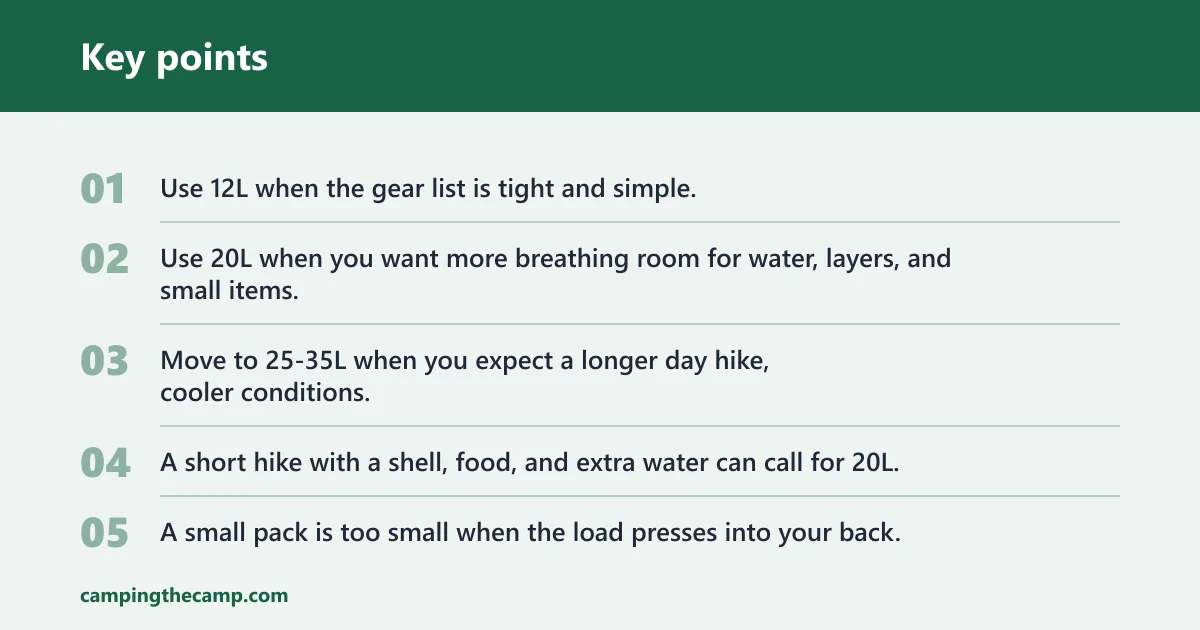
Use 12L when the gear list is tight and simple. Use 20L when you want more breathing room for water, layers, and small items. Move to 25-35L when you expect a longer day hike, cooler conditions, or a carry list that starts to outgrow a true small pack.
Short trail length and carry
Trail length alone does not decide the size. The carry list does. A short hike with a shell, food, and extra water can call for 20L, while a very short hike with only a bottle and a phone can fit in 12L.
When a small pack becomes too small
A small pack is too small when the load presses into your back, the shoulder straps pull hard, or you need to stuff gear into every pocket just to close it. Those are the signs that the pack has crossed from compact into cramped.
Say your hike is a 2-hour loop on warm rock, and you are carrying one bottle, a thin shell, and snacks. A 12L pack can work. Add a second bottle and a thicker layer, and the 20L option becomes the cleaner choice because the load stays easier to organize.
What features matter most in a small hiking backpack?
The most useful features are the ones that keep a light load steady and easy to reach. For a small hiking backpack, that means a good shoulder fit, a chest strap, a waist strap if it helps with bounce, breathable back-panel comfort, hydration compatibility, and pockets that let you grab water and snacks without digging.
Chest strap and waist strap
A chest strap helps keep the shoulder straps in place and cuts side-to-side movement. A waist strap can help even on a light load when the pack starts to bounce, especially on uneven trail. On a small daypack, the waist strap is more about stability than heavy load transfer.
Breathable back panel
A breathable back panel helps cut sweat on warm climbs. That matters on short trail days, especially when the pack sits close to your back for long stretches. The tradeoff is that some breathable designs feel less structured than firmer panels, so the pack can feel less planted if you overload it.
Hydration compatibility and pocket layout
A hydration-compatible pack lets you use an in-pack bladder, which can be handy on hot hikes or when you want to sip without stopping. It works best when the pack also has easy-access storage, side water bottle pockets, or quick-draw phone access, so small items do not disappear into the main compartment.
Do you need a hip belt or hydration pack?
You do not always need a hip belt on a small hiking backpack, but it can help when a light load starts to sway or the trail gets rough. Hydration compatibility matters more when you want steady drinking access in heat or on short, fast trail days, as long as you still have pockets for snacks and small gear.
When a hip belt helps a light load
A hip belt helps when the pack rides higher than you want or shifts as you move. On a compact daypack, it is useful for keeping the load close to the body, even if the belt is not doing the heavy lifting that it would on a larger pack.
When hydration compatibility matters more
A bladder setup makes more sense when you want water access without taking the pack off. It is a good fit for hot weather, brisk hiking, and short trail days where sipping often matters more than carrying large amounts of extra gear.
How to keep water easy to reach
Use side water bottle pockets for bottles you want within reach, and keep a hydration sleeve for the bladder if the pack has one. The best setup is the one that lets you drink without unpacking the bag or fishing around in the main compartment.
How do you keep a small pack comfortable on warm hikes?
Keep the load light, keep it steady, and keep airflow moving. On warm hikes, comfort depends on stopping bounce, using a breathable back panel wisely, and avoiding the habit of stuffing layers and snacks wherever they will fit. A small pack feels better when every item has a place.
Prevent bounce with a stable fit
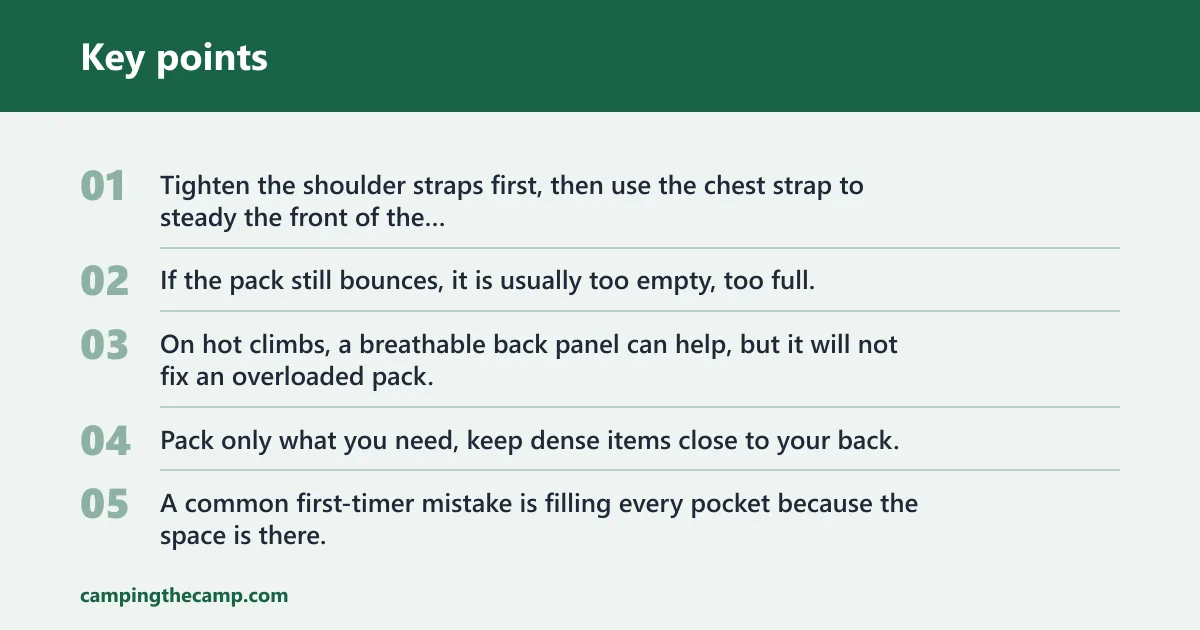
Tighten the shoulder straps first, then use the chest strap to steady the front of the pack. Add the waist strap if the load shifts. If the pack still bounces, it is usually too empty, too full, or shaped poorly for your torso.
Keep warm-weather carry manageable
On hot climbs, a breathable back panel can help, but it will not fix an overloaded pack. Pack only what you need, keep dense items close to your back, and avoid hanging gear off the outside unless the pack is built for it.
Avoid overpacking the shell and pockets
A common first-timer mistake is filling every pocket because the space is there. That turns a compact pack into a lumpy one. If the shell is stuffed so tightly that water bottles are hard to return or the zipper strains, the pack is too full for short-trail comfort.
Suppose a beginner picks a 12L pack for a warm afternoon hike, then adds a fleece, a rain shell, a full lunch, and a bladder. The pack may still close, but access gets worse and the straps start to feel harsher. That is the moment to move up to 20L.
What is the lightest backpack I can get without losing comfort?
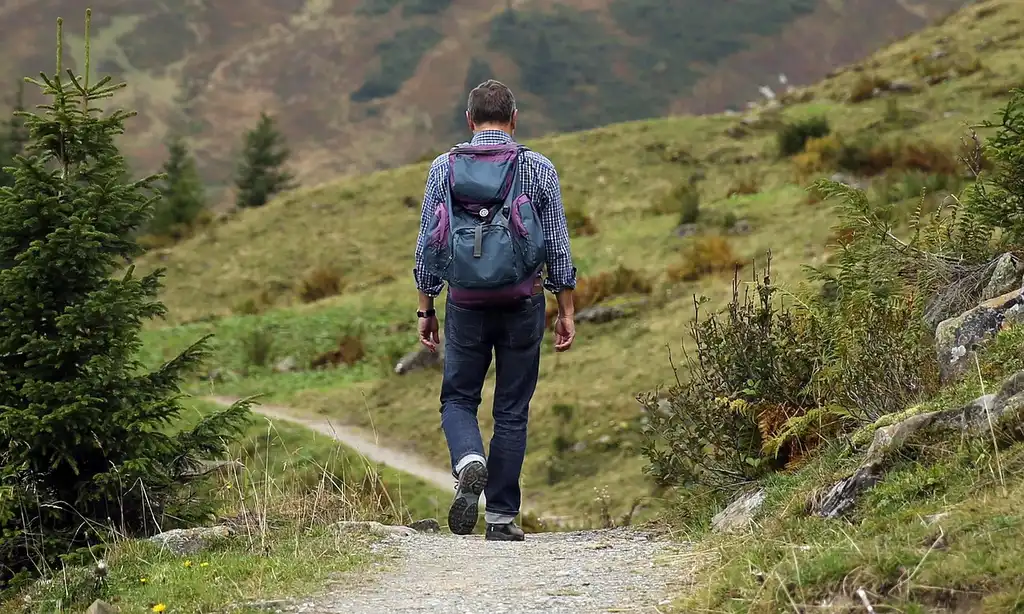
The lightest backpack worth carrying is the smallest one that still keeps the load steady, breathable, and easy to reach. For short trails, that usually means starting with 12L only when the carry list is tiny, and using 20L when you want comfort to hold up after the first mile.
Light weight versus usable comfort
Light weight helps, but only if the pack still carries well. A very small pack that digs into your shoulders or lets water bounce around is not a good trade. The right pack is the one that disappears on your back because the load is sorted and secure.
When the smaller pack is the right call
Choose the smaller pack when the trip is short, the weather is mild, and the carry list stays simple. If you are packing extra layers or more than the basics, the 20L option usually gives a better balance of weight, access, and comfort.
How to choose
- List what you will carry. Count water, snacks, layers, phone, keys, and any safety items before you pick a size.
- Match the size to the load. Use 12L for the lightest carries, 18-20L for most short trail days, and 25-35L only when the load is growing beyond a true small pack.
- Check fit first. Shoulder comfort matters more than brand name, and the pack should sit close without digging in.
- Look for stability features. A chest strap helps with bounce, and a waist strap can help if the load starts to move.
- Check access. Side water bottle pockets, quick-draw phone access, and easy pocket layout matter when you want to grab items without stopping.
- Choose ventilation wisely. A breathable back panel helps on warm climbs, but a little more structure can help the pack feel steadier.
- Use hydration only when it fits the trip. A bladder is useful, but bottle pockets still matter for fast access.
Frequently asked questions
Is a 20L backpack enough for day hikes?
Yes, a 20L backpack is enough for many day hikes, especially short ones. It is often the safer default because it can hold the usual carry list without feeling crowded. If you need more layers or more water, move up to 25-35L instead of forcing a small pack to do too much.
Should I choose a hydration pack or a regular daypack?
Choose a hydration-compatible daypack if steady drinking access matters more than extra bottle space. Choose a regular small daypack if side bottle pockets and simpler packing feel better to you. For short hikes, the best setup is the one that keeps water easy to reach without reducing storage for the rest of your gear.
Do I need a hip belt on a small hiking backpack?
Not always. On a small pack, a hip belt helps most when the load shifts or you want a steadier feel on rough ground. For very light carries, it is useful mainly as a stabilizer, not as a major weight-bearing feature.