Best hiking backpack for day hikes: Beginner-friendly options

For many beginner day hikers, a 22L pack can be a good starting point because 22 liters sits near the middle of a typical day-hike range, leaving room for water, a layer, and snacks without moving into an oversized pack. This guide shows how to match capacity, fit, and suspension to the day hikes you actually do.
Day hiking packs are usually more durable than ordinary backpacks, but durability alone does not make a good trail pack. Fit comes first, then capacity, then features that match your climate, water carry, and how long you stay out.
Quick picks
| Best for | Pick | Capacity | Weight | Why it fits the use case |
|---|---|---|---|---|
| Minimal carry | REI Co-Op Flash | 18 liters | 9.5 oz | Small, light, and suited to short hikes with a stripped-down load. |
| Balanced day use | Gregory Arrio 22L | 22 liters | Not listed here | A middle-size dayhiking backpack that gives room for water, food, and a layer without feeling oversized. |
| Hot weather carry | Cotopaxi Luzon Del Dia Pack | 18 liters | 10.6 oz | Light enough for warm-weather short hikes, when simple carry and low bulk matter more than support. |
| Heavier all-day loads | Osprey Tempest 33 | 33 liters | 2.65 lb | Better when you need more capacity, more structure, and a hip belt to spread the load. |
| Budget-first minimalist carry | FORCLAZ Foldable Backpack 10L | 10 liters | Not listed here | Useful only for very light carry; it is the budget pick, but it is smaller than most true day-hike packs. |
Day-hike backpack decision table
| Hike length and season | Water carry | Load weight | Recommended capacity band | Key feature set | Common mistake to avoid |
|---|---|---|---|---|---|
| Short trails, cool weather | 1 bottle | Very light | 18L-20L | Simple layout, external bottle pocket, light padding | Buying a larger pack “just in case” and letting it sag empty |
| Half-day hike, spring or fall | 1-2 bottles or hydration sleeve | Light to moderate | 22L-24L | Comfortable shoulder straps, easy-access pockets, basic ventilation | Choosing too little room for a shell, lunch, and extra water |
| Full-day hike, variable weather | 2 bottles or bladder | Moderate | 24L-28L | Hydration compatibility, hip belt, better organization, some back-panel airflow | Skipping fit adjustment because “it is only a daypack” |
| Long day, hot conditions, or bulky layers | 2+ bottles plus extra water | Moderate to heavier | 28L-33L | Frame or light frame, load support, ventilated back panel, pocket access while moving | Buying an ultralight pack with no support and then overloading it |
Say your route is a three-hour loop in cool weather, with one water bottle and a shell in the pack. An 18L or 20L pack usually makes sense there. If the same route turns into a summer outing with lunch, two liters of water, and a first-aid kit, the safer choice is usually 22L to 24L.
What size daypack do you need?
For many day hikes, 15L-30L is a common range, with about 20L for minimalist carry, 22L-24L for balanced day use, and 28L-33L for heavier all-day loads. The right size depends less on brand and more on how much water, clothing, and food you actually carry.
When 20L is enough
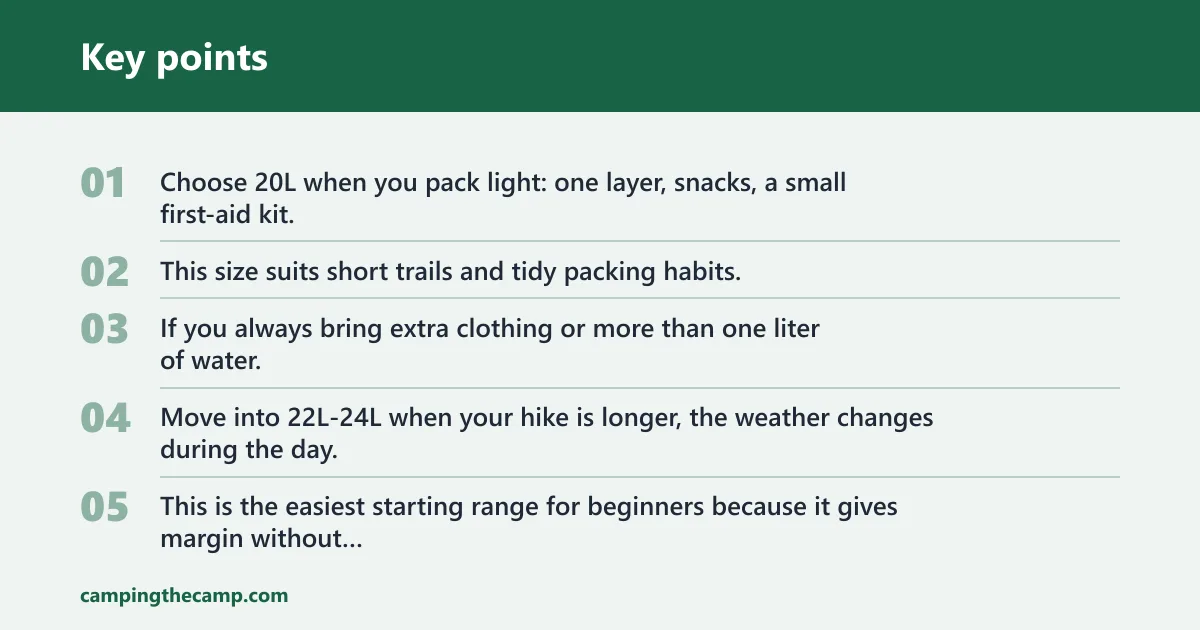
Choose 20L when you pack light: one layer, snacks, a small first-aid kit, and either a single bottle or a compact hydration setup. This size suits short trails and tidy packing habits. If you always bring extra clothing or more than one liter of water, 20L can get cramped fast.
When to move up to 22L-24L
Move into 22L-24L when your hike is longer, the weather changes during the day, or you carry a rain shell, lunch, and extra water. This is the easiest starting range for beginners because it gives margin without encouraging a backpacking load. It is often the best middle ground.
When 28L-33L makes sense
Go to 28L-33L when the day is long, the climate is hot, or your load is heavier than a simple bottle-and-snack setup. That extra room helps if you need more water, warmer layers, or larger camera gear. It can be too much for quick outings, though, because unused space invites overpacking.
A common first-timer mistake is choosing a 30-plus-liter pack for short local trails, then filling the empty space because it is there. The result is a heavier carry, less stable contents, and more movement on the back.
What features matter most in a beginner hiking backpack?
Fit, ventilation, and access matter most. A good beginner day-hike backpack should match your torso, carry weight without bouncing, and let you reach water and snacks without taking the pack off every five minutes.
Fit and torso adjustment
The harness should match your torso length and shoulder shape. Adjustable harnesses help beginners because they let you fine-tune the carry instead of forcing you into a one-size fit. Women-specific and men-specific models can matter here, but the real test is whether the straps and hip belt sit where they should on your body.
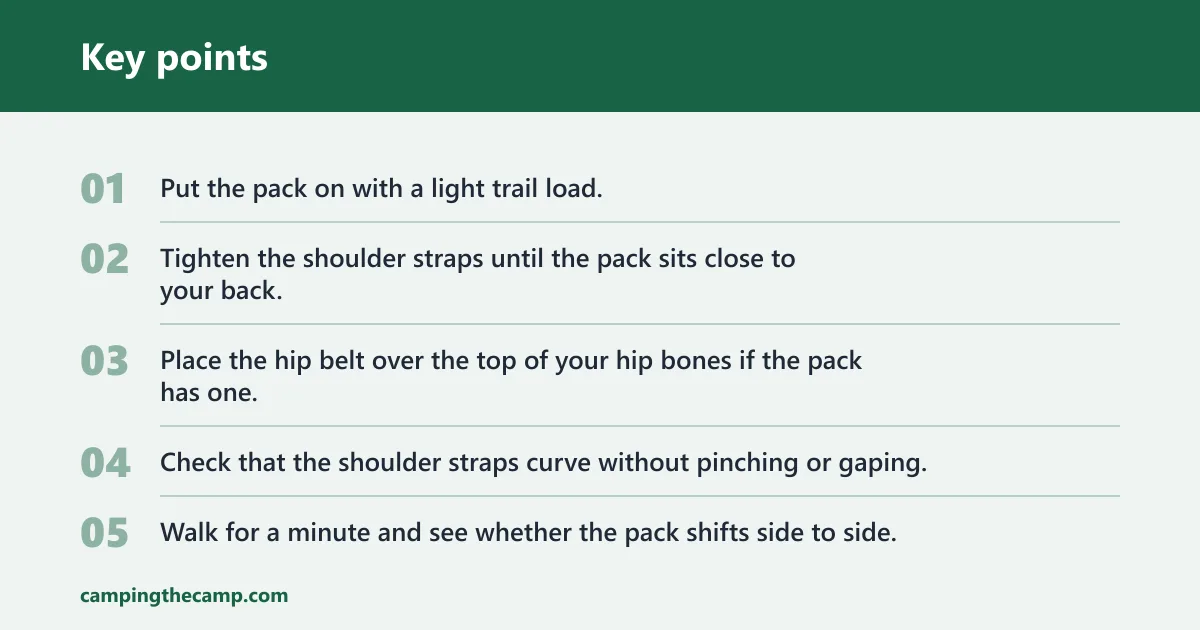
- Put the pack on with a light trail load.
- Tighten the shoulder straps until the pack sits close to your back.
- Place the hip belt over the top of your hip bones if the pack has one.
- Check that the shoulder straps curve without pinching or gaping.
- Walk for a minute and see whether the pack shifts side to side.
Ventilation and back panel design
Mesh or suspended back panels help reduce sweat buildup, especially in hot or humid weather. The trade-off is extra weight. That trade-off is worth it when your back gets hot on climbs or when humidity makes a close-fitting panel feel sticky and damp within minutes.
For cooler climates or short hikes, a simpler back panel can be fine. Ventilation is useful, but it is not mandatory for every beginner. Match it to the weather you usually hike in.
Hydration access and pocket layout
Look for a hydration sleeve or water bottle pockets, plus front stash pockets, hip pockets, and trekking pole attachments if you use them. Easy-access storage matters because snacks, rain layers, and your phone should be reachable while you are moving. Good pocket layout reduces stops and keeps the pack from turning into one deep hole.
Suppose you keep your rain layer buried under food, a headlamp, and a puffy jacket. On a fast weather change, that layout wastes time. A front stash pocket or top compartment solves that problem without requiring a larger pack.
Should beginners choose a framed or frameless daypack?
Beginners should choose a frame or light frame when the pack will carry more weight, sit on uneven terrain, or hold gear that shifts around. Frameless packs can work for very light loads, but a frame usually feels steadier once the carry gets heavier or the trail gets rougher.
When a light frame helps
A light frame improves load support and stability, which matters when you carry extra water, a heavier lunch, or layers for changing conditions. It also helps the pack sit closer and move less on rocky or uneven trail surfaces. The cost is added weight compared with a simpler pack.
When a simpler pack is fine
If your hikes are short and your load stays light, a simpler frameless pack can be enough. That is especially true for hot-weather strolls where low weight matters more than structure. Just do not expect it to feel stable with a bulky load or a half-empty, floppy body.
Back panel ventilation and load support solve different problems. Ventilation helps with heat and sweat. A frame helps with bounce and stability. A beginner pack does not need every feature, but it should have the right ones for the load you carry most often.
Start with capacity, then check fit, then look at features. The best daypack for a beginner is the one that matches your usual hike length and carry weight without forcing you to overpack or fight the harness.
Use this checklist before you buy
- Match the capacity to the hike: 20L for minimalist carry, 22L-24L for balanced day use, 28L-33L for heavier all-day loads.
- Check torso fit first, not color or brand.
- Make sure the shoulder straps lie flat and do not press into the neck.
- Use a hip belt if the pack will carry more weight.
- Look for a hydration sleeve or external water bottle pockets.
- Prefer front stash pockets or hip pockets if you want snacks and phone access while walking.
- Choose more ventilation for hot or humid hikes.
- Choose more structure if you carry extra water or hike uneven terrain.
What is the difference between a hiking backpack and a regular backpack? Hiking packs usually have better durability, more secure fit systems, and features built for trail access, load distribution, and weather use. A regular backpack can carry gear, but it often lacks the ventilation, hip belt, and stability that make a day hike more comfortable.
Best beginner options by trail style
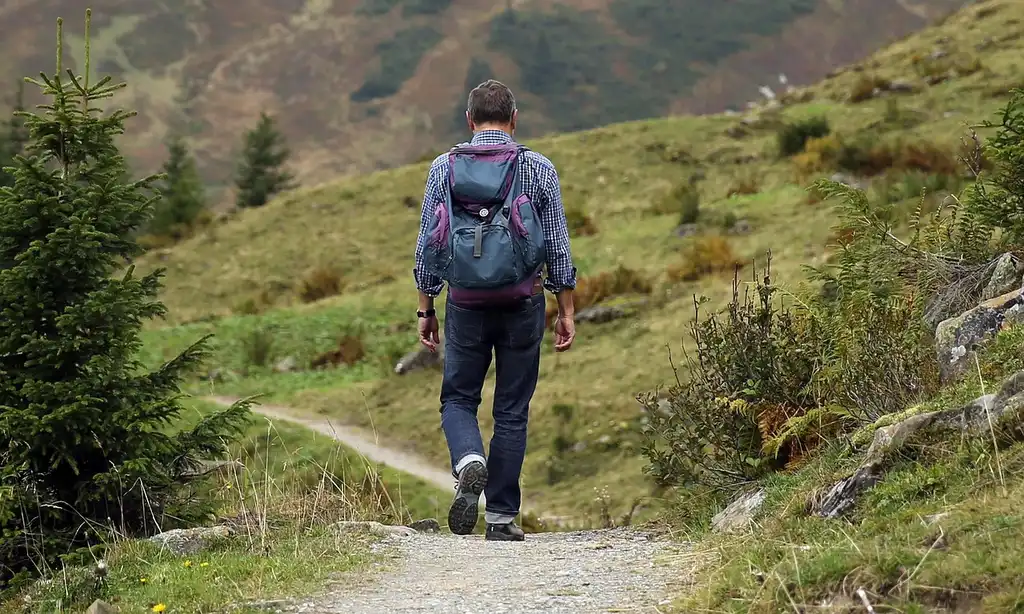
For hot-weather hikes, the best choice is usually a lighter pack with good airflow and easy water access. For fuller day loads, choose more support and a larger capacity. For budget buyers, a smaller pack can work if the load stays truly light.
Best for hot-weather hikes
The Cotopaxi Luzon Del Dia Pack is listed at 18 liters and 10.6 oz, which makes it a simple option for warm days when low bulk matters. Pair that kind of pack with bottle pockets or a hydration sleeve if your hikes are short and your load stays minimal. A ventilated back panel is a plus if the weather is humid.
Best for fuller day loads
The Osprey Tempest 33 is listed at 33 liters and 2.65 lb, which puts it in the larger day-hike band. That size makes more sense when you carry more water, extra layers, or gear that shifts inside the pack. The extra structure can help keep the load stable on longer trails.
Best for budget-conscious buyers
The FORCLAZ Foldable Backpack 10L is listed by Pack Hacker as best budget, but its 10L size is much smaller than most day-hike packs. It is only a fit for very minimal carry. Beginners should treat budget as a secondary filter after capacity and fit, not the other way around.
Frequently asked questions
What size hiking backpack do I need for a day hike?
Most day hikers do well in the 15L-30L range. Start around 20L if you pack light, move to 22L-24L for a more balanced load, and choose 28L-33L if you carry extra water, layers, or a longer-day kit. The right size depends on how much you actually bring.
Is a 20L backpack enough for day hikes?
Yes, 20L is enough for many day hikes, especially short trips with one water bottle, snacks, and a light layer. It becomes tight if you add bulky rain gear, lunch, camera equipment, or extra water. If you often run out of room, step up to 22L-24L.
How do I fit a hiking backpack properly?
Put the pack on with some weight inside, then adjust the shoulder straps, hip belt, and any sternum strap so the pack sits close without pressing hard anywhere. The hip belt should take some load if the pack is large enough for one. Walk a few steps and check for bounce or rubbing.
Which day hiking backpack is best for hot weather?
A hot-weather daypack should favor ventilation, easy water access, and light weight. Mesh or suspended back panels help reduce sweat buildup, and bottle pockets or a hydration sleeve keep water close at hand. For shorter hikes, a lighter 18L pack can work well if the load stays simple.