How to store a synthetic sleeping bag to avoid damage and odor

Store a synthetic sleeping bag fully dry, loosely in a large breathable sack or on a shelf, and avoid keeping it compressed for long periods. Storage that squeezes the fill flattens insulation, holds odor, and can shorten useful life. This guide covers drying, odor control, loose-storage options, and small-space ways to keep loft intact.
Synthetic bags are more forgiving than down, but storage damage still happens. Proper storage keeps warmth, comfort, and loft in shape, while poor storage can leave insulation flat, odors stuck in the shell, and mildew growth. That matters even more in apartments, where a bag may sit in a closet for weeks instead of going back on trail.
Why synthetic bags need different storage
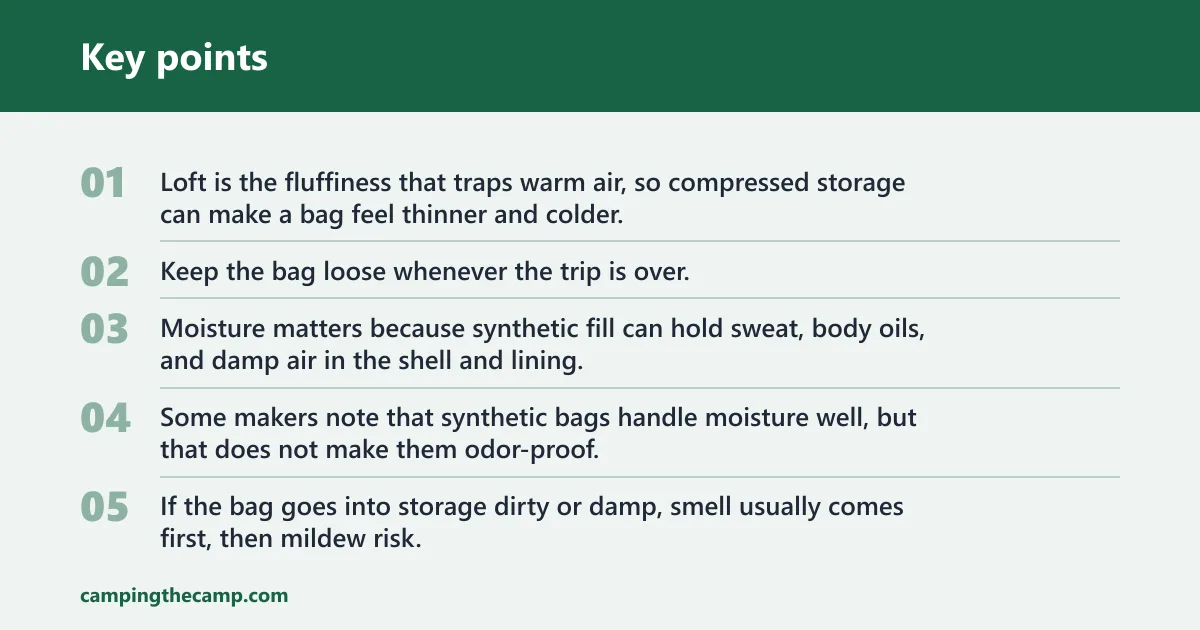
Synthetic sleeping bags hold up better than down and dry faster than down, but they still lose loft if stored under pressure. Loft is the fluffiness that traps warm air, so compressed storage can make a bag feel thinner and colder. Keep the bag loose whenever the trip is over.
Moisture matters because synthetic fill can hold sweat, body oils, and damp air in the shell and lining. Some makers note that synthetic bags handle moisture well, but that does not make them odor-proof. If the bag goes into storage dirty or damp, smell usually comes first, then mildew risk.
Think of synthetic storage in two parts: protect the loft, and control moisture. Those goals are separate. A bag can be fully dry and still be stored too tightly; it can also sit loose in a closet and still smell if it went away damp.
Loft and warmth
Loft is the insulation fluffiness that supports warmth. When long-term storage keeps the fill compressed, the bag has less space to rebound between trips. Storage that keeps the fill loose helps preserve warmth and comfort, which is why a loose sack or hanging storage is the better default than a stuff sack.
Rab describes sleeping bags as built for warmth, comfort, and durability, and notes that hand-filled bags were never compressed or stored harmfully before sale. The point is simple: the bag arrives with loft intact, and storage should leave it that way.
Why moisture matters more after trips
After a trip, the bag often carries invisible moisture from breath, sweat, and damp ground air. Synthetic fill is more forgiving than down, but trapped moisture still creates odor and can support mildew growth. A bag that feels merely cool or “probably dry” may still be too damp for storage.
Airing it out right after use reduces smell and gives hidden moisture a chance to leave the fabric and fill. If the weather was wet or the tent felt humid, add extra drying time before packing it away.
How synthetic fill differs from down
Down needs especially careful moisture control because it clumps and dries slowly. Synthetic fill is easier here: it dries faster and is less fragile in day-to-day storage. Even so, prolonged compression still flattens loft, and dirt or sweat still make odor more likely.
That difference changes the storage decision. Synthetic bags can recover from short mistakes better than down, but they still do best with loose storage, full drying, and periodic airing.
How dry should it be before storage?
A sleeping bag should be fully dry before storage, not just dry to the touch. For a synthetic bag, that means the shell, liner, hood, footbox, seams, and draft areas should all feel dry and show no cool, clammy patches. If any area still feels damp, keep drying.
Use two checks: a touch check for surface moisture and a smell check for trapped damp odor. If the bag still smells like wet fabric, basement air, or sour sweat, it is not ready for long-term storage yet. Dryness and odor often travel together.
Dry test
-
Check all shell panels. Run a hand across the outside, especially along seams, the footbox, and the hood. Any cool, sticky, or clammy section means the bag needs more air time before storage.
-
Open the lining fully. Turn the zipper area and hood inside open so air reaches hidden folds. A bag can feel dry on the outside while the lining still holds moisture where it folds.
-
Pause near thick areas. Press the footbox and collar with a clean hand for a few seconds. If they rebound cool or damp, do not pack the bag yet.
Picture a 20-degree synthetic bag that came back from a rainy weekend. The shell feels dry on the living-room floor, but the footbox still feels cool after the zipper is opened. That is a fail on the dry test, even if the outside seems fine.
Odor test
Hold the bag near your nose and smell the lining, hood, and footbox. A clean bag should smell neutral or faintly like laundry. A musty, sweaty, or damp odor means the bag needs airing or cleaning before it goes into storage.
Odor is useful because it often catches what touch misses. If the bag smells stale after a day of airing, that points to trapped body oils or leftover moisture, not just “sleeping bag smell.”
What to do if the bag still feels damp
-
Spread it flat. Lay the bag on a clean bed, table, or dry floor with the zipper open. This gives the fill the widest surface for drying and avoids fresh compression.
-
Move air around it. Put it in a room with steady airflow and out of direct sun. A fan can help, but keep heat gentle; hot air can stress fabrics and does not fix trapped moisture faster in a useful way.
-
Retest before packing. Repeat the dry and odor checks only after the thickest areas feel fully dry. Do not rely on a quick squeeze or a short hang if the bag still smells damp.
Best storage options for small spaces
For long-term storage, the best choice is a breathable storage sack or hanging storage in a cool, dry place. A stuff sack is for transport or short gaps only. If space is tight, a loose sack is usually the best apartment compromise because it protects loft without taking over a closet.
Storage choice should match your room, not just the calendar. A deep closet can hold a hanging bag. A shallow coat closet may work better with a loose cotton or mesh sack on a shelf. A stuff sack should stay reserved for packing and travel.
| Storage option | Best use | Space need | Loft risk | Odor risk |
|---|---|---|---|---|
| Stuff sack | Transport, short gaps | Lowest | High if used long term | Higher if bag is not fully dry |
| Loose breathable sack | Long-term home storage | Low to moderate | Low | Low if the bag starts clean and dry |
| Hang storage | Long-term home storage | Moderate to high | Low | Low in a cool, dry room |
Breathable storage sack
A breathable storage sack should fit loosely and be made from cotton or mesh. Rab advises storing sleeping bags loosely in a breathable storage sack, and that approach fits apartment storage well because it protects loft while keeping the bag compact enough for a shelf or closet floor.
Choose a sack that lets the bag sit without tight packing. The bag should look relaxed inside it, not jammed down. If the sack needs aggressive stuffing to close, it is too small for long-term use.
Hanging storage
Hanging storage is appropriate when you have a cool, dry place with room for the bag to hang free. Rab also says hanging storage in a cool, dry place is appropriate. This works well in a spare room or a deep closet where the bag will not get crushed by other gear.
Hang it by wide loops or a broad hanger, not a thin wire that creates a sharp fold. The goal is to let the fill rest without creasing the same spot over and over.
When a stuff sack is acceptable
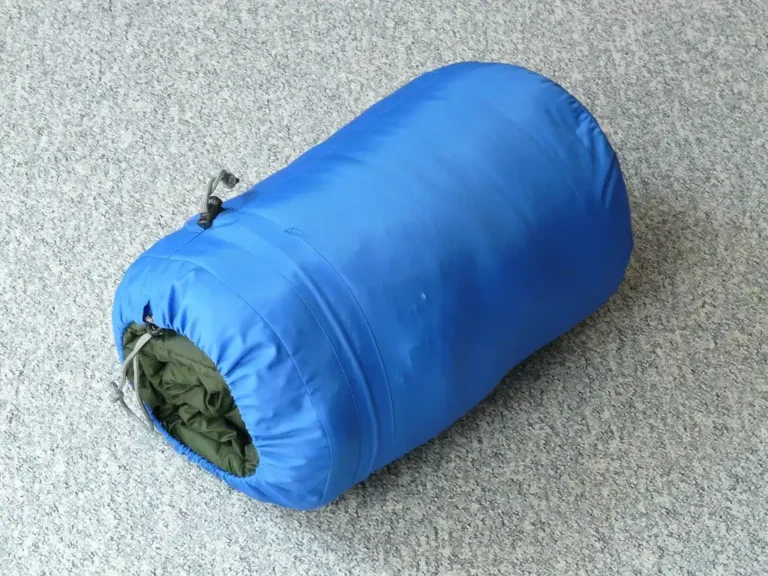
A stuff sack is acceptable for transport, for a weekend between trips, or for a very short gap before proper storage. It is not a long-term home. Long-term storage should avoid prolonged compression, and tight compression can damage insulation over time.
Suppose a camper is leaving for another trip in two days. A stuff sack is fine for that gap if the bag is dry and will be unpacked again soon. If the next trip is not near, move it to a breathable sack or hang it instead.
Synthetic sleeping bag storage check
Use this checklist before choosing where the bag lives next. Each item has a pass or fail rule, so you can sort loft protection, odor control, and space limits in one pass. If one step fails, fix that problem before picking the storage method.
| Check | Pass | Fail | What to do next |
|---|---|---|---|
| Dry test | All panels, seams, hood, and footbox feel fully dry and neutral | Any cool, clammy, or damp spot remains | Air the bag longer before storing |
| Odor test | Smells clean or neutral | Musty, sweaty, or damp smell remains | Air it out; clean it if the smell persists |
| Compression limit | Bag can sit loose or hang free | Would stay tightly compressed for weeks | Switch away from the stuff sack |
| Storage location score | Cool, dry, shaded, and airy closet or spare room | Damp, hot, sunny, or stagnant space | Move the bag to a better room |
| Bag type decision | Loose sack for most home storage; hang if space allows | Stuff sack would be the only choice | Use a loose sack or hang it instead |
-
Run the dry test. Check every thick area, not just the outer shell. If any part still feels cool or damp, storage stops here.
-
Run the odor test. Smell the hood, collar, and footbox. Any musty or sweaty note means the bag needs more airing or a wash before long storage.
-
Set the compression limit. Decide whether the bag can live loose, hang free, or must stay packed only until the next trip. If the answer is “weeks in a tight sack,” that is a fail.
-
Score the location. A closet or spare room with stable temperature and airflow passes. A damp basement, garage, attic, or sunny window area fails because moisture and heat work against the bag.
-
Choose the bag type. Use a loose breathable sack for most homes, hang it if you have the room, or use a stuff sack only for short transport. Do not keep it compressed long term.
Seven-day recheck routine
After storage, check the bag again in about 7 days. Open it, smell it, and feel the same high-risk spots: hood, footbox, and seams. If the bag smells stale or feels cool and damp, the storage room is wrong or the bag was not fully dry at packing.
- Day 7: Open the sack or unhang the bag and air it for a few hours.
- At the same time: Repeat the dry and odor tests.
- If it passes: Return it to the loose sack or hanger.
- If it fails: Move it to a drier room and repeat the full drying process.
How do you keep it from smelling musty?
Keep it from smelling musty by airing it after each trip, reducing sweat transfer with a sleeping bag liner, and cleaning it before long-term storage when odor or grime is present. A synthetic bag can be machine-wash friendly, but it should only be washed when dirt, sweat, or smell justifies it.
Musty odor usually comes from one of three places: trapped moisture, body oils, or a bad storage room. Fix all three. A clean bag stored in a damp basement can still smell bad, and a dry bag loaded with sweat can still sour in a closet.
Airing after use
Open the bag as soon as practical after a trip and let it ventilate fully. Even a short airing helps release moisture and odor before storage. If weather and space allow, hang it indoors or drape it flat until the fabric feels neutral again.
For short-term storage between weekends, airing matters as much as the sack choice. A dry bag that still carries camp smell will hold onto that smell longer once packed away.
Liner use
A sleeping bag liner helps reduce washing frequency, absorbs sweat and body oils, and keeps the bag fresher between cleanings. The same source recommends sleeping bag liners to add cleanliness. That matters because less oil on the lining means less odor in storage.
If odor is a repeat issue, a liner is one of the simplest fixes. It gives you a washable layer between skin and insulation, which helps the bag stay cleaner over a season of trips.
When to clean before long-term storage
Clean the bag before long-term storage if it smells sweaty after airing, has visible dirt on the lining, or was packed away damp at any point. Do not wash on a calendar schedule alone. Wash when the bag needs it, then dry it fully before storing.
A common first-timer mistake is to fold a bag after a muddy trip, leave it in a car trunk overnight, and then place it in a stuff sack the next day. That is a fast path to a stale smell and possible mildew. The fix is airing first, then cleaning if odor lingers.
Common storage mistakes that flatten loft
The main mistakes are prolonged compression, warm or damp storage, and packing away sweat or dirt. Those errors flatten insulation, feed odors, and make the bag feel less warm on the next trip. Synthetic fill is more forgiving than down, but it still needs space and dryness.
If a bag comes out of storage smelling stale or feeling thin in the same spots, storage conditions are the first thing to inspect. The bag itself may be fine; the way it was kept was not.
Storing it compressed too long
Long-term compression is the most direct way to reduce loft. A stuff sack is fine for transport, but it should not be the resting place for months. If the bag must stay packed for a short period, keep that period as short as possible.
How long can a sleeping bag stay compressed? The safe answer is not “all season.” Short trips, short gaps, and travel are fine; storage for weeks or months in a tight sack is not the goal. Move it loose as soon as you can.
Choosing a damp or hot location
Cool, dry storage locations with some airflow are generally a good place for the bag. A closet or spare room is usually suitable. Avoid damp basements and garages when they are humid, hot attics, and places with direct sunlight because heat and moisture work against the fabric and fill.
The storage room should feel stable, not swampy or baked. If the room smells musty to you, the bag will notice it too.
Packing away trapped sweat or dirt
Body oils and sweat do more than smell bad. They cling to the lining, make the bag less pleasant to open, and can turn into a stale odor in storage. Airing after use and using a liner both cut that risk.
If the bag has visible grime or a persistent odor after airing, do not hide the problem in a storage sack. Clean it first, dry it fully, and then store it loose.
Frequently asked questions
How do you store a synthetic sleeping bag after camping?
After camping, open the bag fully, air it until it is completely dry, and check the hood, footbox, and seams for any cool or clammy spots. Then store it loosely in a breathable sack or hang it in a cool, dry room. Do not return it to a tight stuff sack for long-term storage.
Can you store a sleeping bag in its stuff sack?
Yes, but only for transport or very short gaps between trips. A stuff sack keeps the bag compact, but prolonged compression can damage insulation and reduce loft. For home storage, switch to a loose breathable sack or hanging storage so the fill can stay fluffy.
Should I wash my synthetic sleeping bag before storing it?
Wash it when it is dirty, sweaty, or still smells musty after airing. There is no need to wash it every time if it is clean and dry, and a sleeping bag liner can reduce how often washing is needed. The key is to store it clean and fully dry.
How dry does a sleeping bag need to be before storage?
It needs to be fully dry, not just dry on the surface. Check the shell, lining, seams, hood, and footbox for any cool or damp feel, and use a smell check too. If any area feels clammy or smells stale, keep drying before packing it away.
What is the best place to store a sleeping bag at home?
A cool, dry place with airflow is best. A closet or spare room is usually a better choice than a damp basement, garage, or hot attic. Keep the bag out of direct sunlight and away from stagnant air so moisture and odor do not build up.
Is it okay to hang a synthetic sleeping bag for storage?
Yes. Hanging storage is appropriate if the room is cool, dry, and roomy enough that the bag will not press against other gear. Use a broad hanger or wide support so the fabric does not crease sharply. It is a good option when closet depth allows it.
How long can a sleeping bag stay compressed?
Only as long as needed for travel or a short gap before the next trip. Long-term storage should avoid prolonged compression because loft drops when insulation stays packed down. If the bag will sit unused for weeks or months, move it to a loose sack or hang it instead.