Camp cookware cleaning mistakes that can ruin your pots and pans

Avoid abrasive scrubbers, harsh detergents, and cold-water shocks on camp cookware. They scratch coatings, strip seasoning, and warp thin metal. Ignore those rules and you can ruin nonstick, stainless steel, cast iron, aluminum, and titanium in one cleanup. This guide lists the cleaning mistake, the damage it causes, and the safer method for each common cookware material.
Why camp cookware gets damaged during cleanup
Camp cleanup is harder on cookware than a kitchen sink because ash, dust, sand, and grit act like fine sandpaper. A pan that looks clean can still hold abrasive debris in the seam, rim, or handle joint.
Some damage is cosmetic. Light discoloration on stainless steel or a few faint marks on hard-anodized aluminum often change appearance more than function. Scratches through a nonstick layer, chips in enamel, rust on cast iron, and stripped seasoning are different. Those can shorten service life fast.
Nesting sets need extra care after washing. Pieces rub together in transit, so a clean pan can still get scarred before the next trip unless you separate them.
What you’ll need
- Warm water
- Mild dish soap
- Soft sponge or microfiber cloth
- Wooden or silicone scraper
- Nylon brush
- Paper towels or a dry cloth
- Cooking oil for cast iron seasoning touch-ups
- Paper liners, thin cloths, or pan protectors for nesting storage
How to clean camp cookware safely
-
Rinse grit first.
Flush ash, dirt, and loose food from the pan before you scrub. If the grit stays in place, every wipe drags it across the surface and turns a routine wash into abrasion. -
Soak only briefly.
Use warm water with a few drops of mild dish soap for 10 to 15 minutes on stuck food. Do not leave cast iron, carbon steel, or decorative enameled pieces sitting overnight. -
Use the softest tool that works.
Start with a sponge or nylon brush. If residue is stubborn, use a wooden scraper or silicone spatula instead of steel wool or a scouring pad. -
Dry at once.
Wipe every surface, seam, and handle joint dry before packing. Moisture left in seams can be a rust risk for cast iron and plain steel. -
Oil bare iron lightly.
Rub cast iron with a few drops of oil, then buff away the excess until it looks dry. A thin film protects seasoning better than a wet coating.
Cookware damage map
| Mistake | Likely damage | Safer fix |
|---|---|---|
| Scrubbing nonstick with steel wool | Scratches the coating; once the surface is cut through, food sticks in that spot | Use warm water, mild soap, and a soft sponge; lift stuck bits with a silicone or wooden scraper |
| Using a metal utensil on nonstick cleanup | Creates gouges that can spread under repeated heating | Switch to nylon, silicone, or wood for scraping and serving |
| Letting cast iron soak overnight | Rust spots form fast, and seasoning can soften or lift | Wash, dry immediately, then warm the pan briefly and oil it lightly |
| Scrubbing cast iron with harsh pads | Strips seasoning and can leave the surface dull and sticky | Use a nylon brush or coarse salt plus water only when needed, then re-oil |
| Using strong abrasives on stainless steel | Visible scratches and a rougher finish; functional, but less polished | Use a nonabrasive sponge; for burned-on residue, simmer water and soap first |
| Overheating stainless steel before washing | Blue or rainbow discoloration | Cool the pan gradually, then clean with baking soda paste or a stainless-safe cleaner |
| Scrubbing hard-anodized aluminum with scouring pads | Surface dulling and scratches that collect grime | Wash with mild soap, a soft sponge, and warm water; avoid abrasive powders |
| Using harsh alkaline cleaners on hard-anodized aluminum | Finish dulls or stains unevenly | Stick to mild dish soap and rinse well after washing |
| Knocking enameled steel against rocks or other cookware | Chips in the coating; exposed metal can rust | Wash with a soft cloth and dry carefully; pad each piece in storage |
| Using abrasive scrubbers on enameled surfaces | Scratch marks and a cloudy finish | Use a sponge, nylon brush, or wooden tool for stuck residue |
| Stacking nested sets with no separator | Transport scratches on stainless steel, anodized aluminum, and enamel edges | Place a cloth, paper towel, or pan protector between each piece |
| Putting damp cookware into storage | Rust, odor, and spotting in seams and handles | Dry every surface before packing, including rivets and folded edges |
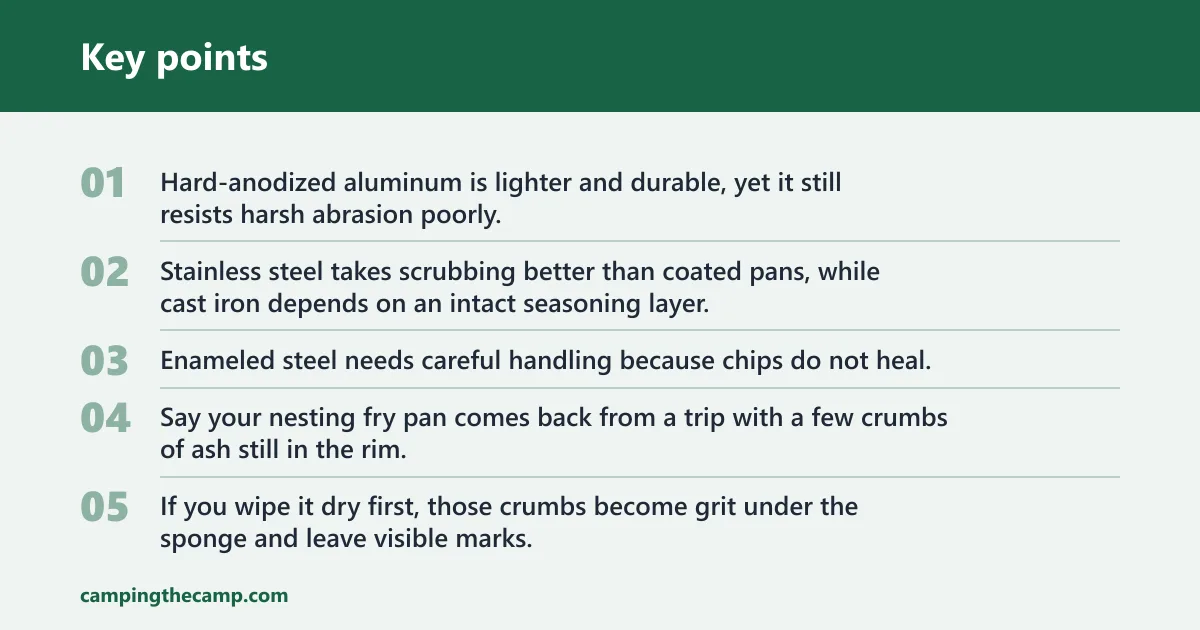
Nonstick camping cookware uses a scratch-sensitive coating that can be ruined by abrasive pads, metal utensils, or hard scrubbing. Hard-anodized aluminum is lighter and durable, yet it still resists harsh abrasion poorly. Stainless steel takes scrubbing better than coated pans, while cast iron depends on an intact seasoning layer. Enameled steel needs careful handling because chips do not heal.
Say your nesting fry pan comes back from a trip with a few crumbs of ash still in the rim. If you wipe it dry first, those crumbs become grit under the sponge and leave visible marks. A quick rinse before washing prevents that extra damage.
Can you wash camp cookware in a dishwasher?
Sometimes, yes. If the manufacturer says a piece is dishwasher-safe, the machine may be acceptable for that item, especially for plain stainless steel or some coated pieces. Even then, hand-washing is usually better for longevity, because dishwasher heat, detergents, and rattling can speed up finish wear.
Dishwasher-safe does not mean dishwasher-best. That matters most for nonstick, cast iron, enameled cookware, and nesting sets with handles or lids that can bang together. If you do use a dishwasher, place pieces so they cannot strike each other.
When a dishwasher is acceptable
-
Check the care label.
Look for the maker’s dishwasher-safe statement on the packaging or product sheet. If it is not listed as dishwasher-safe, hand-wash the piece instead. -
Load for clearance.
Put pans on a stable rack with space around them so metal edges do not tap together. That reduces rim dents and coating wear.
Why hand-washing is usually safer for camp gear
Hand-washing gives you more control over temperature, pressure, and contact with other gear. That matters for nonstick surfaces, cast iron seasoning, and enameled edges. It also keeps grit from being blasted across the cookware by spray arms.
What should you do after an accident?
Move fast, but match the fix to the material. Burnt residue usually responds to soaking and a soft scraper. Rust spots need drying, light abrasion only where safe, and oil if the cookware depends on seasoning. Scratched coatings cannot be restored, so the goal is to stop the damage from spreading.
Immediate rescue steps
| Accident | Immediate rescue steps |
|---|---|
| Burnt residue | Fill the pan with warm water and a few drops of soap, then wait about 10 to 15 minutes before lifting residue with a silicone scraper. If needed, simmer the water for 3 to 5 minutes before wiping. |
| Rust spots | Dry the cookware fully, then remove loose rust with a nylon pad or a paste of baking soda and water. Re-oil cast iron immediately after cleaning. |
| Scratched coatings | Stop using metal tools on that surface, wash it by hand, and inspect the scratch. If the coating is cut through, retire it from high-heat cooking and use it only if the maker allows continued use. |
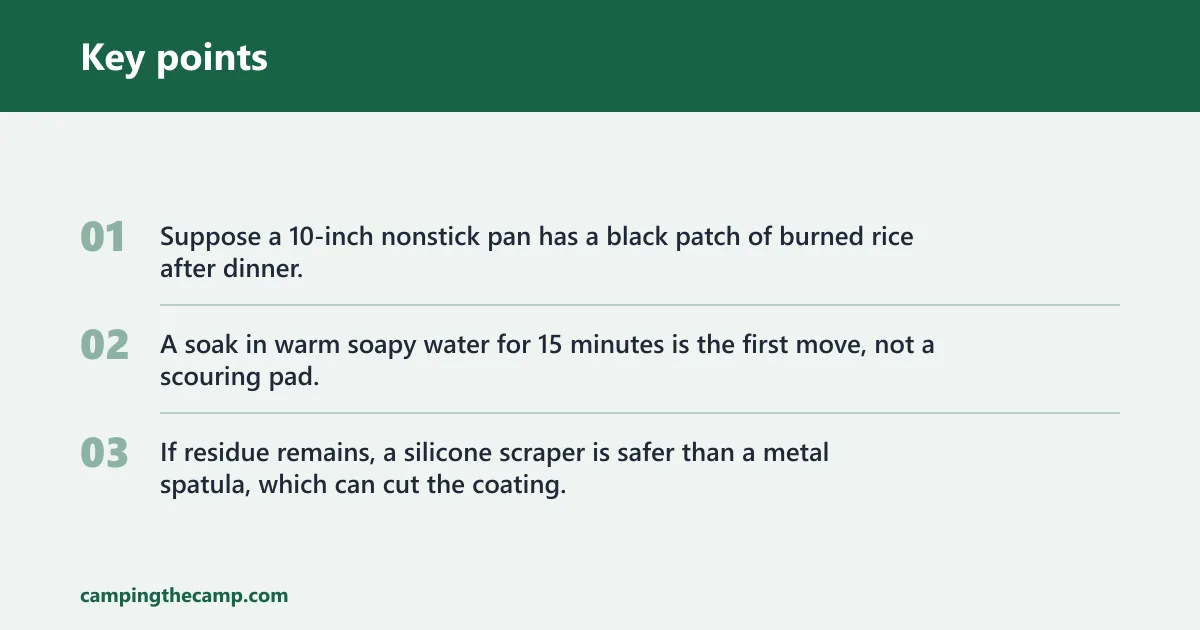
Suppose a 10-inch nonstick pan has a black patch of burned rice after dinner. A soak in warm soapy water for 15 minutes is the first move, not a scouring pad. If residue remains, a silicone scraper is safer than a metal spatula, which can cut the coating.
Common mistakes
Steel wool on camping pots and pans is the fastest way to damage coated surfaces. It can scratch nonstick, dull enamel, and rough up anodized aluminum. Use it only where the cookware maker specifically allows a rougher tool, which is uncommon for camp gear.
Soap on nonstick camp cookware is fine. Mild dish soap removes grease without harming the coating. The problem is not soap; it is abrasion, hard scraping, and leaving the pan wet or stacked against harder pieces.
Overnight soaking is a bad idea for cast iron and unprotected steel. A long soak can strip seasoning, invite rust, and leave water trapped in seams. Short soaking is safer, and even then you should dry immediately afterward.
Burnt food comes off best with warm water, mild soap, and a timed soak. If that fails, add heat to the equation with a brief simmer in the pan. Use a wooden or silicone scraper next, not a scouring pad.
Hard-anodized aluminum should be washed with mild soap and a soft sponge. Avoid harsh cleaners, abrasive pads, and aggressive powders. The finish is tougher than plain aluminum, but it still scratches and dulls.
What to use for burnt residue on each material
- Nonstick: warm water, mild soap, silicone scraper
- Cast iron: hot water, nylon brush, then dry and oil
- Stainless steel: soak, then a nonabrasive sponge; use baking soda paste for stubborn scorch marks
- Hard-anodized aluminum: warm soapy water and a soft sponge
- Enameled surfaces: nylon brush or soft cloth; avoid sharp tools that can chip the coating
What happens if you scrub nonstick cookware too hard? The coating can wear thin, then food starts sticking in those worn areas and the pan becomes harder to clean each time. If that begins, switch to soft tools immediately and avoid heat that may worsen the damage.
How do you keep camping cookware from scratching in storage?
Keep each nested piece from touching bare metal or enamel. Use a folded paper towel, thin cloth, or purpose-made pan protector between stacked pieces. That matters most for nesting cookware sets, where compact storage is the main benefit but transport abrasion is the tradeoff.
Dry every pan before it goes into the set. Then pack lids, pots, and handles so they cannot rattle. For cast iron, add a light oil film before storage. For nonstick and enameled surfaces, protect the finish with a separator rather than pressure alone.
Frequently asked questions
What cleaning mistakes ruin camp cookware?
The main failures are abrasive scrubbing, long soaking on rust-prone metals, harsh detergent on delicate finishes, and storing damp cookware. Each one maps to a specific kind of damage: scratched coatings, stripped seasoning, discoloration, or rust. Match the cleaner and tool to the material, then dry it completely.
Can you use steel wool on camping pots and pans?
Use it sparingly and only on bare metal that the maker allows. Steel wool can scratch nonstick, enameled surfaces, and anodized finishes, and it can also strip cast iron seasoning. A nylon brush or soft sponge is the safer default for camp cookware.
Should you wash nonstick camp cookware with soap?
Yes. Mild dish soap is the right choice for nonstick camping cookware, and it will not harm the coating. Pair it with warm water and a soft sponge. Skip metal scrubbers, and do not leave the pan to soak long enough for food to harden again.
How do you clean cast iron camp cookware without stripping seasoning?
Use hot water, a nylon brush, and, if needed, a short soak of a few minutes. Avoid long soaking; a common rule of thumb is to use only a brief soak, and to avoid steel wool and strong soap-heavy scrubbing. Dry it fully, warm it briefly, and wipe on a thin coat of oil before storage.
Can camp cookware go in the dishwasher?
Only if the maker says it is dishwasher-safe, and even then hand-washing is usually better for long-term condition. Dishwasher heat and movement can dull finishes and bang nested pieces together. For cast iron, enameled cookware, and most nonstick sets, hand-washing is the safer routine.
How do you clean anodized aluminum cookware safely?
Use warm water, mild soap, and a soft sponge. Avoid scouring pads, powdered cleaners, and harsh alkaline products that can dull or stain the surface. If food is burned on, soak first and then use a nylon brush rather than an abrasive pad.