How to clean camp cookware bottoms after cooking over fire

Use the least aggressive tool that will lift soot: a soft sponge or nylon scrub pad, warm water, dish soap, baking soda paste, and a plastic scraper or wooden utensil edge. Keep a clean towel nearby, plus a little cooking oil for cast iron after washing.
What you’ll need
- Soft sponge or nylon scrub pad
- Dish soap and warm water
- Baking soda paste made with a little water
- Plastic scraper or wooden utensil edge
- Clean towel
- Cooking oil for cast iron touch-up
For a Dutch oven, a lid brush or cloth helps with ash that settles on the outside and around the rim. A 20-piece camping cookware set may include stackable, dishwasher-safe pieces, but fire-blackened bottoms still need hand cleaning first if you want to protect finish and seasoning. A featured 10.5-inch pre-seasoned cast iron skillet, a 5-quart Dutch oven, and 14×16 griddles all collect soot in the same place: the underside.
How do you clean the black bottom of a pan after a campfire?
Start with dry removal, then move to warm water and soap if the material allows it, and finish with a targeted scrub only where soot or grease is still stuck. That order pulls off the black layer without grinding ash into the finish or stripping seasoning on cast iron.
- Let the cookware cool until you can handle it safely.
- Brush off loose ash and dry soot from the bottom first.
- Wipe the underside with warm water and dish soap.
- Apply baking soda paste to stubborn black residue.
- Scrub with the right pressure for the material.
- Rinse, dry, and oil cast iron if needed.
Say your Dutch oven bottom has a gray-black film after cooking over coals. A dry wipe removes the loose layer first, so the next pass with soap reaches grease instead of smearing ash across the surface. If the residue still looks patchy, the baking soda paste gives you a mild abrasive without jumping straight to metal scouring.
Cookware bottom cleaning decision table
This table matches residue to the least aggressive safe method. Treat the underside separately from the cooking surface, because soot, grease film, burnt carbon, rust, and heat discoloration do not respond the same way.
| Cookware material | Residue type | Recommended cleaner or tool | Soak time | Pressure level | What not to use |
|---|---|---|---|---|---|
| Cast iron | Soot, grease film, burnt-on carbon, rust | Warm water, dish soap, nylon pad; baking soda paste for stubborn spots | 0 to 5 minutes | Light to moderate | Long soaking, harsh scouring on seasoned surfaces |
| Stainless steel | Soot, grease film, burnt-on carbon, heat marks | Warm water, dish soap, nylon pad; baking soda paste for stuck-on soot | 5 to 10 minutes | Moderate | Metal pads on polished finishes if you want to avoid scratching |
| Nonstick | Soot, grease film, burnt-on carbon, scratch risk | Soft sponge or cloth, warm water, dish soap | 5 minutes or less | Light only | Steel wool, abrasive pads, harsh powders |
| Enamel | Soot, grease film, burnt-on carbon, chip risk | Soft sponge or nylon pad, warm water, dish soap; baking soda paste for spots | 5 to 10 minutes | Light to moderate | Metal scrapers, aggressive scouring |
| Aluminum | Soot, grease film, burnt-on carbon, discoloration | Warm water, dish soap, soft sponge; baking soda paste only on stubborn exterior soot | 5 minutes or less | Light | Strong abrasives that can dull the finish |
Step-by-step cleaning sequence
Use this sequence when the bottom is blackened after fire cooking. It works in the field with limited water and no sink, and it keeps you from over-scrubbing too early.
- Cool the cookware until the metal is safe to touch.
- Knock off ash and loose debris with a dry cloth, brush, or the edge of a wooden utensil.
- Wipe the bottom with warm water and dish soap.
- Mix baking soda with water until it forms a spreadable paste.
- Apply the paste to black patches and wait 2 to 5 minutes.
- Scrub with a nylon pad, soft sponge, or cloth using the pressure listed for the material.
- Rinse well, then dry immediately with a towel.
- For cast iron, place a thin film of cooking oil on the dry exterior if the finish looks dull or bare.
Suppose a camp pot has a greasy black ring under the base after a boil. A quick soap wipe may lift the film, but baked-on carbon often needs a short paste dwell time before scrubbing. If water is limited, use one damp cloth pass, then the paste on only the stained area instead of soaking the whole piece.
What removes soot from cast iron cookware?
Warm water, dish soap, and a nylon pad are commonly used to remove light soot from cast iron without being too aggressive. If the black layer has bonded to the surface, a baking soda paste helps lift it; steel wool should be reserved for bare cast iron only, and even then only when the residue will not come off another way.
Cast iron often has a pre-seasoned surface, so the goal is to clean the underside without stripping that protective layer. After washing, dry it fully. Cast iron left damp outdoors can spot-rust fast, especially on the bottom where water collects around the rim or foot ring.
Drying and oiling cast iron
Dry the pan with a towel right away, then let it air-dry briefly if needed so hidden moisture leaves seams, handles, and the underside. If the surface looks dry or chalky after washing, wipe on a thin coat of oil and buff off any excess. That keeps the finish from flashing rust after a wet cleanup.
How should you clean nonstick and enamel bottoms?
Use soft cloths or nylon pads only, and keep pressure light. Nonstick coatings scratch easily, and enamel can chip if you attack the bottom with steel wool or a metal scraper. Warm water, dish soap, and a brief soak usually do the first round of work.
For stuck-on soot, baking soda paste is the safest next step because it is milder than abrasive powders. Stop if the coating starts to dull or if you feel grit catching on the surface. A nonstick camping pan should not be treated like bare cast iron, even if the soot looks similar.
How to handle a Dutch oven bottom and lid
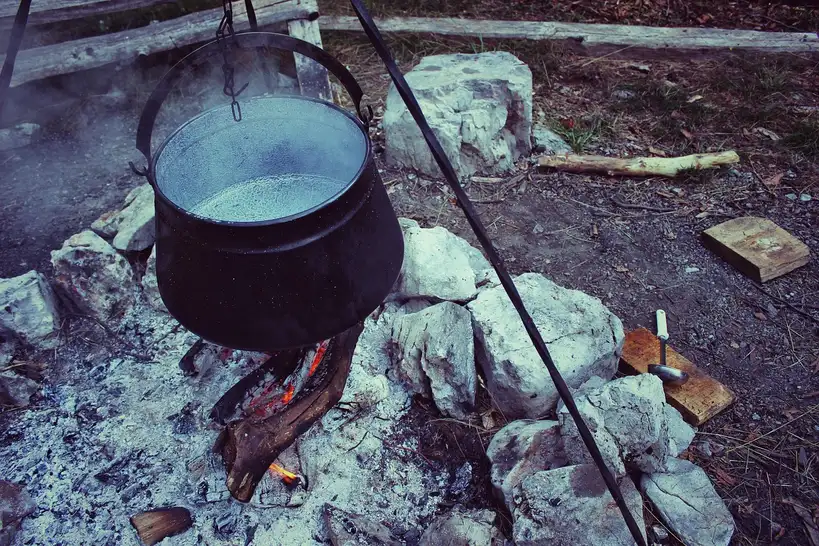
A Dutch oven often traps ash and carbon on the lid, around the rim, and on the underside after cooking over coals or an open fire. Wipe those areas first while the residue is dry, then use warm water and soap, followed by baking soda paste on the blackened patches. Keep water out of the oven if you do not need it.
Because a Dutch oven is heavy-duty campfire cookware, people often assume it can take any scrubber. It can tolerate more than a coated pan, but seasoning still benefits from gentle handling. The same rule applies to a 5-quart model or a smaller lid-heavy piece: clean the bottom, dry it, and re-oil if the seasoning looks dull.
Common mistakes
- Soaking cast iron too long. Short contact with warm water is fine; long soaking invites rust.
- Using abrasive pads on nonstick or enamel. Steel wool can scratch coatings and chip enamel edges.
- Leaving the bottom damp. Dry the underside first, especially on cast iron and aluminum.
- Cleaning only the interior. Soot on the outside bottom transfers to hands, packs, and tables.
- Using too much pressure on thin aluminum. Heavy scrubbing can dull the finish and make discoloration worse.
Picture a stainless steel pot that comes off the fire with soot on the base and a greasy film near the rim. If you skip the dry wipe and go straight to a hard scrub, the residue can smear instead of lifting. A brief soap wash first usually cuts the grease enough to make the next pass more effective.
What is the safest way to clean cookware after cooking over wood fire?
The safest method is dry removal first, then warm water and dish soap when the material allows it, then the gentlest scrub that will move the residue. That approach protects seasoning on cast iron, avoids scratching nonstick, and still clears soot from stainless steel, enamel, and aluminum.
For a lot of camp cookware, soap is acceptable after fire cooking. The key is using it correctly: short contact, soft tools, and immediate drying. When the residue is only soot, a nylon pad is usually enough. When the residue is burned carbon, baking soda paste is the next step before anything more aggressive.
Frequently asked questions
Can I wash camp cookware with soap after cooking over fire?
Yes, soap is fine for many camping cookware materials when used with warm water and a soft sponge or nylon pad. Keep the wash brief, rinse well, and dry cast iron right away. Soap is not the problem; harsh abrasion and lingering moisture are.
How do I clean burnt residue off the outside of a camping pot?
Start with a dry wipe to remove ash, then use warm water and dish soap on the outside bottom. If the burnt residue stays, apply baking soda paste to the spot and scrub lightly with a nylon pad. Avoid metal scouring on coated or polished finishes.
What should I use to clean camp cookware without scratching it?
Use a soft sponge, cloth, or nylon scrub pad with warm water and dish soap. That tool set is the safest for nonstick, enamel, and many stainless steel pieces. Reserve steel wool for bare cast iron only, and use it sparingly if gentler methods fail.
Can I clean nonstick camp cookware bottoms the same way as cast iron?
No. Nonstick bottoms need a softer approach: warm water, dish soap, and a cloth or nylon pad. Skip steel wool, abrasive pads, and metal scrapers. If soot is baked on, use baking soda paste lightly and stop as soon as the residue lifts.