Cast Iron vs Stainless Steel Camp Cookware: Which Is Better?

For most camping, stainless steel camp cookware is the better all-around pick. Choose cast iron only if you cook mostly over steady heat, want high heat retention, and can handle the weight. Pick wrong and you fight hot spots, derailed meal plans, and extra pack weight or cleanup. This guide compares both materials for wind, fire control, carry weight, cleanup, and the meals campers actually cook.
| Factor | Cast iron | stainless steel camp cookware | Winner |
|---|---|---|---|
| Backpacking fit | Poor fit; heavy and bulky | Better fit; lighter to carry | stainless steel camp cookware |
| Car camping fit | Strong fit for campfire and skillet meals | Strong fit for fast boil-and-sauce cooking | tie |
| Open-fire cooking | Excellent thermal mass and rugged handling | Usable, but more sensitive to flame pattern | Cast iron |
| Fuel efficiency | Slower preheat uses more patience and often more fuel | Faster response helps match changing heat | stainless steel camp cookware |
| Acidic meals | Reactive with tomato sauce, citrus, and wine | Non-reactive and inert | stainless steel camp cookware |
| Cleanup without running water | Needs careful wiping, drying, and seasoning care | Easier to wash and more forgiving | stainless steel camp cookware |
| One-pot meal versatility | Great for skillets, cornbread, and searing | Great for sauces, boiling, and mixed menus | stainless steel camp cookware |
What matters most at camp
The material that wins in a kitchen does not always win at a campsite. Wind, uneven flames, limited water, and how far you need to carry the pan change the decision fast.
Cast iron brings serious thermal mass, so it stays steadier once hot and handles searing well. Stainless steel camp cookware heats faster, weighs less, and fits a wider range of camp menus, especially when you need boiling, sauces, or quick heat changes.
What matters most on a campsite
At camp, the useful question is not which pan sounds tougher. It is which one matches your heat source, your meal plan, and your cleanup setup.
A pan that is easy to carry can still be the wrong choice if it sticks on tomato sauce or struggles with a windy stove. A heavier pan can still be the better pick if you are cooking over coals and want steady heat for a long skillet meal.
How each material performs by camping style
Camping style should drive the choice. Backpacking, car camping, RV cooking, and open-fire basecamps put very different demands on cookware, so the same pan can move from ideal to awkward without changing a single recipe.
Backpacking
Stainless steel camp cookware is often the practical pick for backpacking because weight and pack space usually matter most. A 12-inch cast iron skillet can weigh 8–12 lbs, while stainless steel cookware is described as lighter, around 3–5 lbs for a 12-inch pan.
That gap changes how the kit carries, how your pack balances, and how much room remains for food and water. In a backpacking setup, cast iron is usually the wrong tool unless the pan is staying in a vehicle or basecamp.
Car camping
Car camping is where cast iron can make real sense. If the pan rides in a trunk instead of on your back, the weight penalty matters less, and the thermal mass helps with breakfast skillets, burgers, and campfire sides.
Still, stainless steel camp cookware stays useful when the menu includes boiling pasta, simmering sauce, or handling mixed dishes that need quick control. Many car campers benefit from one cast iron pan plus one lighter pot or skillet.
RV and basecamp cooking
For RV or basecamp use, both materials can work well, but the menu should decide. Cast iron is strong for oven-to-table meals and rugged campfire handling, while stainless steel camp cookware is easier for frequent washing and varied indoor-outdoor use.
If your camp kitchen includes limited water or a small sink, stainless steel camp cookware cuts the cleanup load. If the cooking area centers on coals, grates, or a steady burner, cast iron can be the better specialty tool.
Open-fire cooking
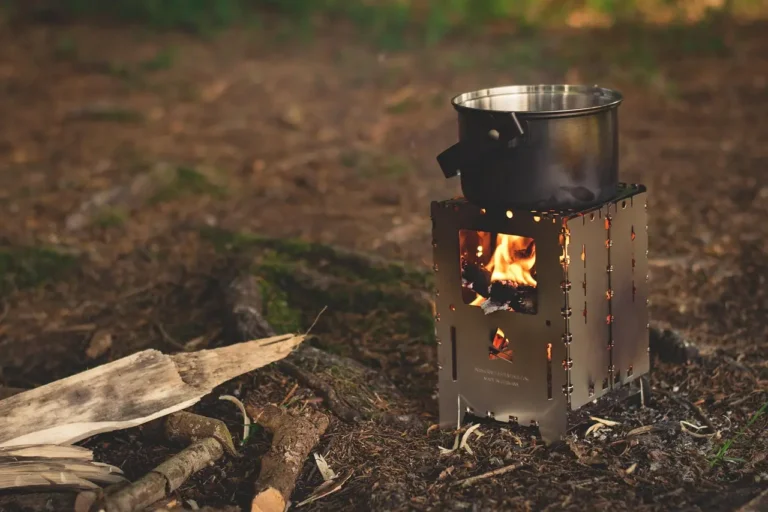
Cast iron is the stronger open-fire choice. It tolerates direct campfire use, handles uneven heat better than most pans, and keeps a stable cooking surface once it comes up to temperature.
Suppose you set about a 10-inch skillet over coals for cornbread and browned sausage. Cast iron will hold heat more steadily through flare-ups, while stainless steel camp cookware will demand more attention to avoid hot spots when the fire shifts.
Camp cookware decision matrix
This matrix scores the materials by camp condition, not by kitchen habit. The goal is simple: match the pan to the trip you are actually taking.
| Scenario | Cast iron | stainless steel camp cookware | Recommendation |
|---|---|---|---|
| Backpacking | Low score: heavy and awkward to pack | High score: lighter and easier to carry | stainless steel camp cookware |
| Car camping | High score for skillet and campfire meals | High score for varied meals and quick cleanup | tie |
| Open-fire cooking | High score: rugged and stable on coals | Moderate score: workable with more attention | Cast iron |
| Fuel efficiency | Lower score: slow preheat and more thermal lag | Higher score: faster to respond to heat changes | stainless steel camp cookware |
| Acidic meals | Lower score: reactivity is a concern | Higher score: non-reactive with acidic ingredients | stainless steel camp cookware |
| Cleanup without running water | Lower score: seasoning care and drying matter | Higher score: simpler wash-and-dry routine | stainless steel camp cookware |
| One-pot meal versatility | Good for searing and baked skillet meals | Better for sauces, boiling, and mixed menus | stainless steel camp cookware |
Backpacking scorecard
Backpacking points to stainless steel camp cookware because carry weight drives every other decision. Even if cast iron cooks well, it is the wrong burden for a pack that also holds food, fuel, and shelter.
Use the lightest workable pan you can, then pair it with simple meals that do not demand long heat retention.
Car camping scorecard
Car camping is often the closest thing to a tie. Cast iron wins when the menu leans toward breakfast skillets, burgers, and cornbread; stainless steel camp cookware wins when you want sauces, pasta, and easier cleanup.
The right answer often is not one pan for everything. It is one heavy skillet for the foods that need thermal mass and one lighter pan for the rest.
Cast iron vs stainless steel camp cookware scorecard
Cast iron wins here because open flames are messy, and cast iron handles messy heat well. Its thermal mass helps smooth out flare-ups and uneven coals, which matters when the fire is not perfectly controlled.
Stainless steel camp cookware can work over fire, but it asks for more attention. That makes it better as a secondary pan than as the main skillet for a fire-first trip.
Cast iron vs stainless steel camp cookware scorecard
Meal choice often settles the debate before the campsite does. Cast iron is the better match for searing, frying, and baked skillet meals; stainless steel camp cookware is the better match for sauces, boiling water, and one-pot dinners with acidic ingredients.
A common first-timer mistake is bringing a heavy skillet for a tomato-based pasta dinner and then finding that cleanup is harder than the cooking. Another is bringing only stainless steel when the trip plan centers on steaks, hash, and Dutch-oven style campfire meals.
Which heats more evenly?
Cast iron and stainless steel camp cookware behave differently because they store and move heat differently. Cast iron has more thermal mass, so it holds temperature well and keeps searing stable once it is hot, while stainless steel is favored for fast, responsive heating.
Thermal mass and heat retention
Thermal mass is the reason cast iron feels steady over coals or a burner that keeps drifting in output. Once it reaches cooking temperature, it resists quick swings better than thinner cookware.
That stability helps with searing and browning, but it also means cast iron can be slow to preheat. If you rush it, food can stick or cook unevenly before the pan is fully ready.
Responsive heating and hot spots
Stainless steel camp cookware reacts faster when you move it on or off heat. That is useful at camp, where wind can change burner output or coals can shift under the grate.
The tradeoff is that thin stainless cookware can show hot spots if the flame is uneven. You may need to rotate the pan more often, especially when cooking delicate sauces or eggs.
What tri-ply clad stainless changes
Tri-ply clad stainless steel uses layered construction, usually with an aluminum or copper core, to spread heat more evenly than thin single-layer cookware. That is why it is common in professional-kitchen use and why it adapts better to camp stoves than basic thin steel.
For camp cooking, tri-ply can narrow the heat-evenness gap without bringing cast iron weight. It is especially useful if you want stainless steel camp cookware that still behaves predictably on a burner or grate.
Can you cook acidic foods in cast iron?
Yes, but only with caution and usually not for long simmering. Cast iron is considered reactive with acidic foods, so tomato sauce, citrus, and wine can affect the surface and can pull seasoning apart if they sit in the pan too long.
Tomato sauce, citrus, and wine
Acidic meals matter more at camp because they often sit in the pan while you manage fire, side dishes, or cleanup. A short deglaze is different from a long simmer of tomato sauce or wine reduction.
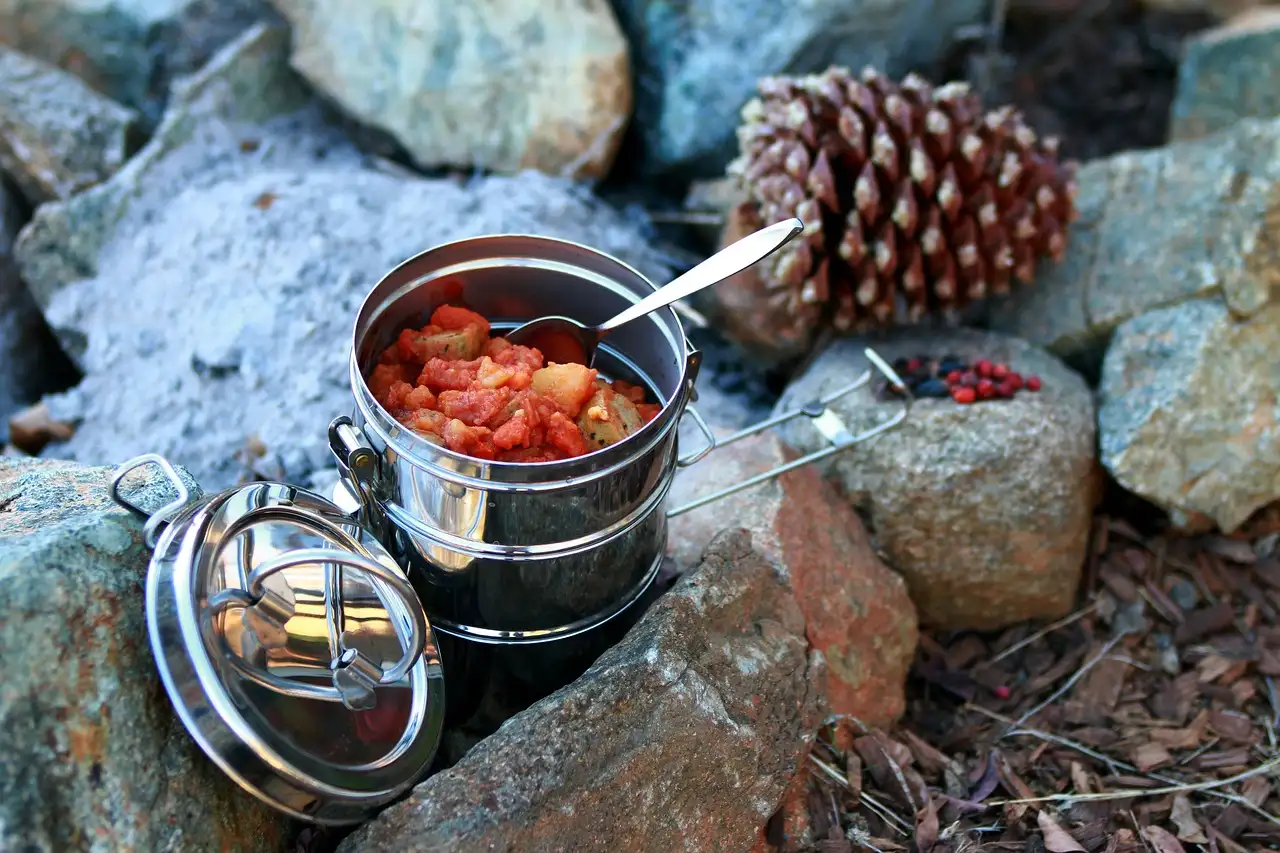
Stainless steel camp cookware is the safer choice for those meals because it is non-reactive and inert. Made In also describes stainless steel as non-reactive with acidic ingredients like tomato sauce, citrus, or wine.
Seasoning and reactivity
Seasoning is a polymerized oil layer that helps with rust prevention and improves the cooking surface over time. It does not make cast iron immune to acid, but it does help protect the pan when it is cared for properly.
Cast iron requires seasoning and regular care to prevent rust. That care matters even more after cooking damp or acidic food at camp, where drying time and storage conditions can be imperfect.
When stainless steel is the safer choice
If the menu includes chili, marinara, lemony pan sauce, or deglazed wine sauce, stainless steel camp cookware is the simpler and safer option. You avoid the reactivity issue and usually get easier cleanup afterward.
That makes stainless steel the better default for sauce-heavy menus and mixed trips where the food plan is not fully under your control.
Choose Cast iron if… / Choose stainless steel camp cookware if…
Choose cast iron if your trip centers on steady heat, campfire cooking, or skillet meals that benefit from thermal mass. Choose stainless steel camp cookware if you pack light, cook acidic foods, or need a pan that responds quickly to changing heat and cleans up with less effort.
Choose Cast iron if…
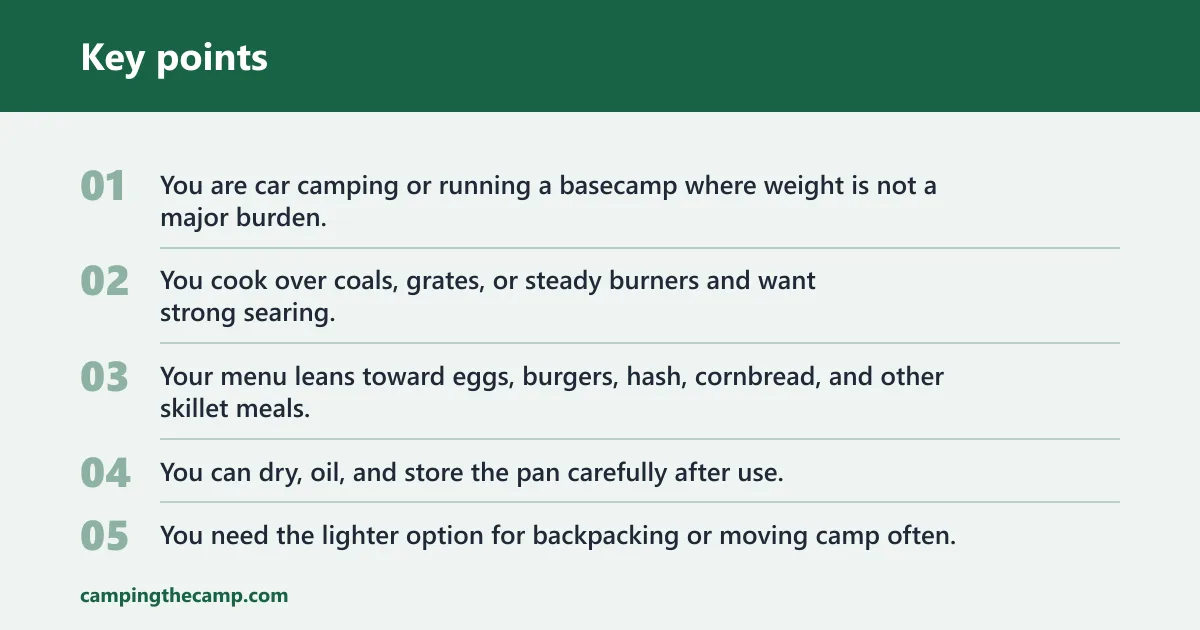
- You are car camping or running a basecamp where weight is not a major burden.
- You cook over coals, grates, or steady burners and want strong searing.
- Your menu leans toward eggs, burgers, hash, cornbread, and other skillet meals.
- You can dry, oil, and store the pan carefully after use.
Choose stainless steel camp cookware if…
- You need the lighter option for backpacking or moving camp often.
- You cook tomato sauce, citrus, wine, or other acidic meals.
- You want faster response to changing flame or burner output.
- You want easier cleanup after a long day without much water.
Bring both when your menu mixes skillets and sauces
Bring both when you want the best fit for each task. Cast iron can handle the breakfast skillet, while stainless steel camp cookware can cover boiling, sauces, and lighter jobs that do not need thermal mass.
If space allows, that mixed kit is often the most practical answer for car camping and basecamps. It lets you cook the way the campsite behaves, instead of forcing every meal into one pan.
Maintenance, cleanup, and storage at camp
Maintenance can tip the decision after the meal is over. Cast iron needs seasoning discipline, while stainless steel camp cookware is usually easier to wash and store when water is limited.
Seasoning and rust prevention
Seasoning is not optional for cast iron used at camp. The pan needs a clean, dry, lightly oiled surface to reduce rust risk, especially after moisture, steam, or acidic food.
That extra care is manageable at car camp or basecamp. It is much less appealing if your trip involves constant movement or wet weather.
Cleanup without running water
Without running water, stainless steel camp cookware usually wins on cleanup. Food residue is still possible, but the surface does not need the same drying and oiling routine that cast iron does.
Cast iron can still be cleaned in camp, but it asks for more discipline: scrape, wipe, dry thoroughly, and re-oil as needed. Skip that and rust becomes a real possibility.
Dishwasher-safe care and storage tradeoffs
Stainless steel is characterized as dishwasher friendly, which reflects its lower-maintenance reputation. At camp, that translates to simpler washing, less worry about water spots, and easier storage after a dirty meal.
Cast iron gives you ruggedness and fire compatibility, but that benefit comes with a storage cost. It should go away dry and protected, not damp and forgotten in a bin or cooler bag.
Frequently asked questions
Is cast iron or stainless steel better for camping?
Stainless steel camp cookware is better for most camping because it is lighter, more responsive, and easier to clean when water is limited. Cast iron is better when the trip centers on steady heat, campfire cooking, and meals that benefit from strong heat retention and searing.
What cookware is best for car camping versus backpacking?
For backpacking, stainless steel camp cookware is the better pick because weight matters more than thermal mass. For car camping, cast iron becomes practical if you want skillet meals and campfire use, while stainless steel still works well for boiling, sauces, and mixed menus.
Does cast iron work on a campfire?
Yes. Cast iron can be used on campfires, and it is well suited to coals, grates, and uneven flames. Its thermal mass helps it stay steady through shifting heat, which is why it is a strong choice for rugged open-fire cooking at basecamp.
Is stainless steel camping cookware dishwasher safe?
Stainless steel is characterized as dishwasher friendly, so it is usually the lower-maintenance option. That does not mean every camp setup has a dishwasher, but it does mean stainless steel is easier to wash, dry, and store when cleanup has to happen fast.
Can you cook acidic foods in cast iron while camping?
You can, but it is not the best choice for long cooks. Cast iron is reactive with acidic foods like tomato sauce, citrus, and wine, so stainless steel camp cookware is safer for those meals. Short contact is less of a problem than long simmering.
How heavy is cast iron compared with stainless steel cookware?
A 12-inch cast iron skillet can weigh 8–12 lbs. Stainless steel cookware is described as lighter, around 3–5 lbs for a 12-inch pan. That difference matters most when you carry the cookware any distance or pack for a trip with limited vehicle space.