What cookware is best for camping: Materials, types, and uses

The best camping cookware depends on the trip, the heat source, and the food you plan to cook. For many campers, hard-anodized aluminum is a practical middle ground, stainless steel is often the better durability pick, and titanium can fit ultralight trips. Pick the wrong material or pot shape, and you get hot spots, slow boiling, bent handles, and extra weight in your pack. This guide breaks down cookware materials, types, and the best uses for boiling, frying, simmering, baking, and backpacking.
Choose cookware for your trip and menu
The best camping cookware matches the trip, the heat source, and the food you plan to make. Backpackers often want titanium or a small hard-anodized aluminum set. Car campers can carry stainless steel, nonstick, or even cast iron. For most beginners, a lightweight pan plus a medium pot covers the widest range of meals.
Match cookware to your trip style
Think in terms of movement, not brand names. If you carry everything on your back, weight matters first. If you cook beside a vehicle or at a fixed site, stability, capacity, and cleanup matter more. Multi-piece sets can save space or money, but only if each piece fits the way you cook.
Match cookware to the food you cook
Different meals need different shapes. A frying pan helps with eggs and pancakes. A stockpot suits soup and pasta. A Dutch oven handles browning, braising, simmering, and even baking bread. If your meals are mostly boil-and-eat, do not buy a heavy set just because it looks complete.
Camping cookware materials by use
Material choice changes how fast cookware heats, how well it browns food, and how much abuse it can take. Stainless steel is a strong all-around option for searing and frequent packing. Hard-anodized aluminum is lighter and common in camp sets. Titanium is often considered the lightest mainstream cookware choice, but it can give up some heat retention.
Stainless steel for searing and daily use
Stainless steel suits searing, sautéing, and braising. It handles frequent packing and unpacking better than many thin, coated pans, and it is often usable on gas, electric, and induction when the base is magnetic. It is heavier than titanium, though, so it makes more sense for car camping or mixed-use kitchens than for a long carry.
Cast iron for heat retention and campfire cooking
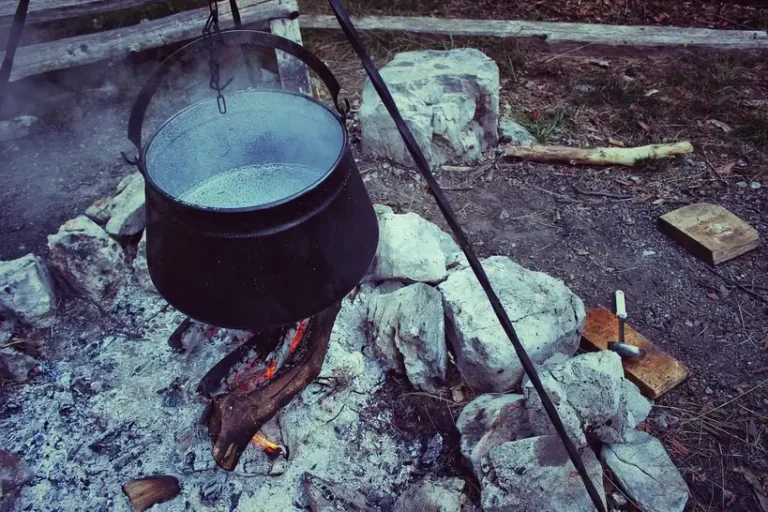
Cast iron keeps heat very well, which helps when you want steady browning on burgers, bacon, or cornbread. It also sits securely on campfires and grills. The tradeoff is weight. It is bulky for transport and needs seasoning and basic care to stay in good shape.
Hard-anodized aluminum for lighter all-purpose use
Hard-anodized aluminum is durable and lightweight, which is why it shows up in many camp sets. It is more scratch-resistant than bare aluminum, and many versions pair that body with a nonstick coating. That makes it a practical middle ground for campers who want lighter gear without going ultralight.
Titanium for backpacking
Titanium is used for cookware because it is light, and it is the best fit when every ounce matters. It is ultralight, often minimalistic, and usually sold in small capacities. The tradeoff is lower heat retention than cast iron and a higher price for its weight. It makes sense for simple boils, not for serious browning.
Nonstick for easy cleanup and eggs
Nonstick cookware is good for eggs, pancakes, and other delicate foods that cling to bare metal. It is also easy to wash after a short meal. Outdoors, though, the coating wears faster with abrasion, so it is usually not the first choice for rough camp use or for cookware that gets banged around in a bin.
Which cookware type fits your trip?
The right shape matters as much as the material. A stockpot, Dutch oven, flat-bottomed pan, or mess kit each solves a different outdoor job. Beginners often buy a pot and a pan first, then add specialty pieces only after a meal plan or trip style demands them.
Stockpot for soups, pasta, and group meals
A stockpot is great for soups or boiling pasta. It is useful when you cook for several people or want one vessel for large-batch meals. The downside is bulk. It is usually larger than a single pan, so it takes more room in a tote or bin than a compact solo setup.
Dutch oven for browning and baking
A Dutch oven can brown, braise, boil, and bake bread. It works well for campfire cooking and for one-pot meals that start on high heat and finish low and slow. The drawback is weight and size. If you rarely cook beyond basic boiling, it is more cookware than you need. (Consumerreports)
Flat-bottomed pans for stable stove contact
Flat-bottomed cookware matters because stable burner contact reduces wobble and helps heat spread more evenly. This is especially useful on smooth-top ranges and on some camp stoves. A warped base can rock on the grate, slide on uneven ground, or leave you chasing hot spots instead of cooking.
Mess kits for minimalist eating
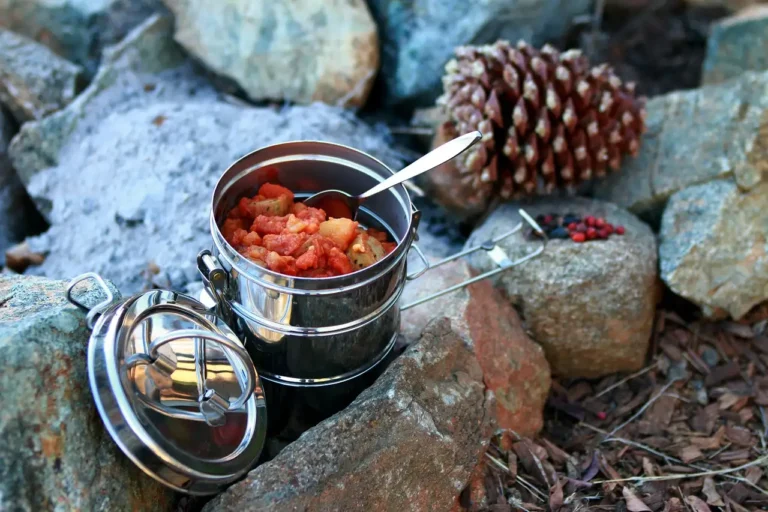
A mess kit is ultralight and often includes cups, bowls, and utensils. It suits minimalist eating, especially when your cooking is limited to a mug, a bowl, or one small pot. It is not a full cooking solution, so do not count on it for frying, baking, or feeding a group.
Cookware decision table
This table gives a practical first-buy map. It separates backpacking, car camping, and mixed-use setups so you can pick by job rather than by brand or package size.
| Trip type | Heat source | Cookware material | Best use | Main drawback | First-buy recommendation |
|---|---|---|---|---|---|
| Backpacking | Small gas burner | Titanium | Boiling water, dehydrated meals, simple soups | Lower heat retention and small capacity | Yes if weight is the main concern |
| Backpacking | Small gas burner | Hard-anodized aluminum | More versatile cooking than titanium | Heavier than titanium | Yes if you want a better balance of weight and use |
| Car camping | Camp stove or grill | Stainless steel | Searing, sautéing, braising, daily use | Heavier than titanium | Yes for a durable first pan or pot |
| Car camping | Camp stove or campfire | Cast iron | Steady heat, searing, one-pot meals | Very heavy and needs seasoning | No as a first purchase unless you cook mostly at a base camp |
| Mixed-use RV or cabin | Gas, electric, or induction | Stainless steel or induction-compatible hard-anodized aluminum | General cooking across different burners | Must check base shape and magnetic fit | Yes if you move between kitchens and campsites |
| Mixed-use RV or cabin | Portable burner or grill | Nonstick frying pan | Eggs, pancakes, delicate foods | Coating wears faster outdoors | Maybe as a second pan, not the only pan |
Say your trip is a two-night car camp with four people and one propane stove. A stockpot plus a flat-bottomed skillet is a better first buy than a tiny titanium set, because you can boil pasta and make eggs without crowding the burner.
Suppose you are hiking in with one pack and cooking only dinner and breakfast. A small titanium pot or a light hard-anodized aluminum pot is the smarter pick, because the low weight matters more than browning power.
Can you use the same cookware on every heat source?
Some cookware crosses between heat sources well, but not all of it does. Camp stoves, grills, campfires, induction tops, and smooth-top burners place different demands on the base. Before you buy, check for flatness, magnetic compatibility, and handle stability, not just the listed material.
Camp stoves and portable burners
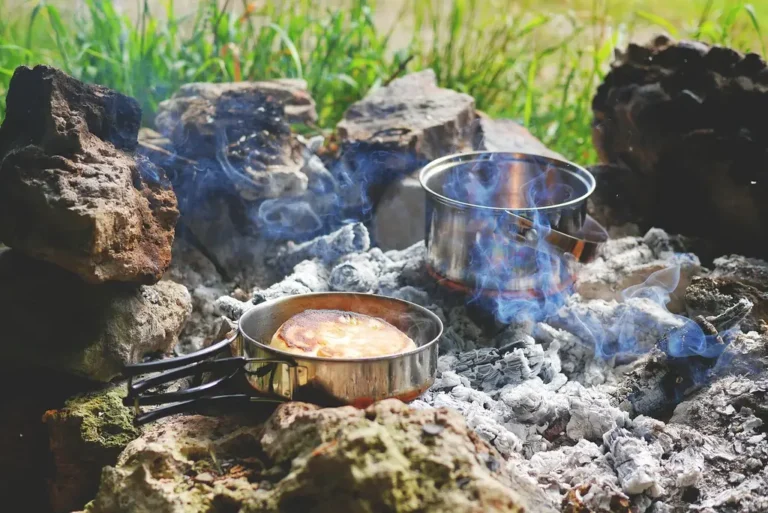
Flat-bottomed cookware is the safest choice on camp stoves because it sits more steadily on the grate. That helps with even contact and reduces wobble while you stir. Loose handles and thin warped bases are common failure points here, especially after repeated heating and packing.
Campfires and grills
Cast iron is the easiest material to trust over a campfire or grill because it stays stable and keeps heat well. Stainless steel also works, especially for searing or braising. Thin, coated pans are more likely to suffer from hot spots, worn coatings, or handle fatigue when exposed to rough fire use.
Induction and smooth-top setups
Induction-compatible cookware needs magnetic properties, so check it with a magnet before you buy. Packaging is usually marked for induction when the base qualifies. Flat-bottomed cookware matters here too, because smooth-top ranges need contact that stays even; a warped pan can heat badly or wobble.
How much cookware do beginners need?
Most beginners need less cookware than they think. A single pot or pan can cover many meals if you cook simply. Buy a small set only when the added pieces match your meals, your group size, and your cleanup routine. Otherwise, open-stock pieces are often the smarter start.
Single-piece starter setup
One medium pot or one about 8- to 10-inch pan can often cover basic camping meals for one or two people. Choose a pot if you mostly boil, simmer, or rehydrate. Choose a pan if you cook eggs, burgers, or pancakes. This is the cheapest path and the easiest to pack.
Small set for two to four people
A small set makes sense when you need both boiling and frying on the same trip. Some camp cookware sets include a non-stick pot with a lid, which helps with cleanup and covered simmering. For a two-to-four-person camp kitchen, a pot plus a frying pan usually beats a pile of mismatched pieces.
When to buy open-stock instead of a set
Choose open-stock when one part of a set does not fit your stove, your food, or your storage space. F1: Camping cookware choices should consider sets versus open stock. A set can save room, but it can also force you to carry a piece you never use. Buy piece by piece when your cooking is specific.
- Pick your main meal pattern.
Start with the food you make most: boils, eggs, one-pot meals, or browning. That choice tells you whether you need a pot, a pan, or both, and it prevents a box full of unused cookware.
- Match the heat source.
Check whether you will use a camp stove, grill, fire, or induction top. For induction, confirm magnetic compatibility before you buy. For camp stoves, favor a flat bottom that sits steady on the grate.
- Choose the lightest fit.
Use titanium only when weight is the main concern and capacity can stay small. Choose hard-anodized aluminum for a lighter all-purpose setup. Choose stainless steel when durability matters more than pack weight.
What should you avoid when buying camp cookware?
A few buying mistakes create most camp-cooking frustration. Warped bases wobble on grates. Loose handles make moving a hot pan awkward. Coatings that wear too fast turn easy-clean cookware into a maintenance problem. Check these details before you decide, because they matter more outdoors than on a kitchen shelf.
Warped or unstable bases
F15: Camp cookware performance depends on stability and structural tolerance. A pan that rocks on a burner wastes heat and makes stirring harder. On an uneven campsite, that wobble gets worse. Flat-bottomed cookware is especially important for smooth-top ranges and for portable stoves with narrow supports.
Loose handles and weak lids
Handles should feel solid when the cookware is full. Loose hardware is a problem after repeated heating and packing. Lids should sit well enough to keep steam where you want it. A poor lid can slow boiling, spill when moved, or make simmering harder to control.
Coatings that wear too fast
Nonstick cookware is convenient, but it is less durable outdoors than bare metal. Coatings can wear faster with metal utensils, stacked bins, and gritty cleanup. Can you use nonstick cookware over a campfire? Yes, in some cases, but it is usually not ideal for rough camp use or direct fire abuse.
Frequently asked questions
What cookware is best for camping?
The best camping cookware depends on the trip. Hard-anodized aluminum is the most balanced choice for many campers. Stainless steel is the better pick for durability and searing. Titanium makes sense when weight matters most. Match the material to the food, the heat source, and how far you carry it.
Should I buy stainless steel, cast iron, or nonstick for camping?
Buy stainless steel if you want a durable all-around pan or pot for searing, sautéing, and repeated packing. Choose cast iron only if you can handle the weight and want excellent heat retention for campfire cooking. Choose nonstick if you want easy cleanup for eggs and delicate foods, but expect less durability.
What is the best cookware material for backpacking?
Titanium is the best material for backpacking when pack weight is the top priority. It is ultralight and easy to carry, but it does not hold heat as well as cast iron and usually comes in smaller capacities. Hard-anodized aluminum is the better choice if you want a little more versatility.
What cookware do I need for car camping?
For car camping, a medium pot and a flat-bottomed pan cover most meals. Stainless steel works well if you want durability and browning. Hard-anodized aluminum is a lighter option for general use. Add a stockpot for groups or a Dutch oven if you plan to cook one-pot meals, braise, or bake.
Is titanium cookware worth it for camping?
Titanium is worth it when your trip rewards every ounce saved. It is especially useful for backpacking, solo trips, and simple boiling tasks. It is usually not the best value for car camping, where stainless steel or hard-anodized aluminum gives you more cooking flexibility for the money.
How do I choose camping cookware that is easy to clean?
Choose nonstick if cleanup is your top priority and you mainly cook eggs, pancakes, or delicate foods. For a longer-lasting option, pick smooth stainless steel or hard-anodized aluminum and cook with enough oil to prevent sticking. Avoid rough scrubbing tools, because they wear coatings and finish faster outdoors.