Best materials for family camp cookware: Pros and cons

For many family camping trips, hard-anodized aluminum is often a strong all-around cookware choice. It heats quickly, stays light, and cleans more easily than bare steel or cast iron. Choose stainless steel if you want durability, and cast iron only when weight matters less. Pick wrong, and you haul extra pounds, fight hot spots, and scrub longer than you eat. This guide compares common cookware materials by weight, cleanup, kid-safety, heat performance, and the meals they suit best.
What family camp cookware needs
For family car camping, cookware has three jobs: pack small, handle messy cleanup, and work on the heat source you actually bring. A set that suits backpacking can still be a poor fit if it tips on a two-burner stove, gets too hot for kid helpers, or eats up too much space in the car.
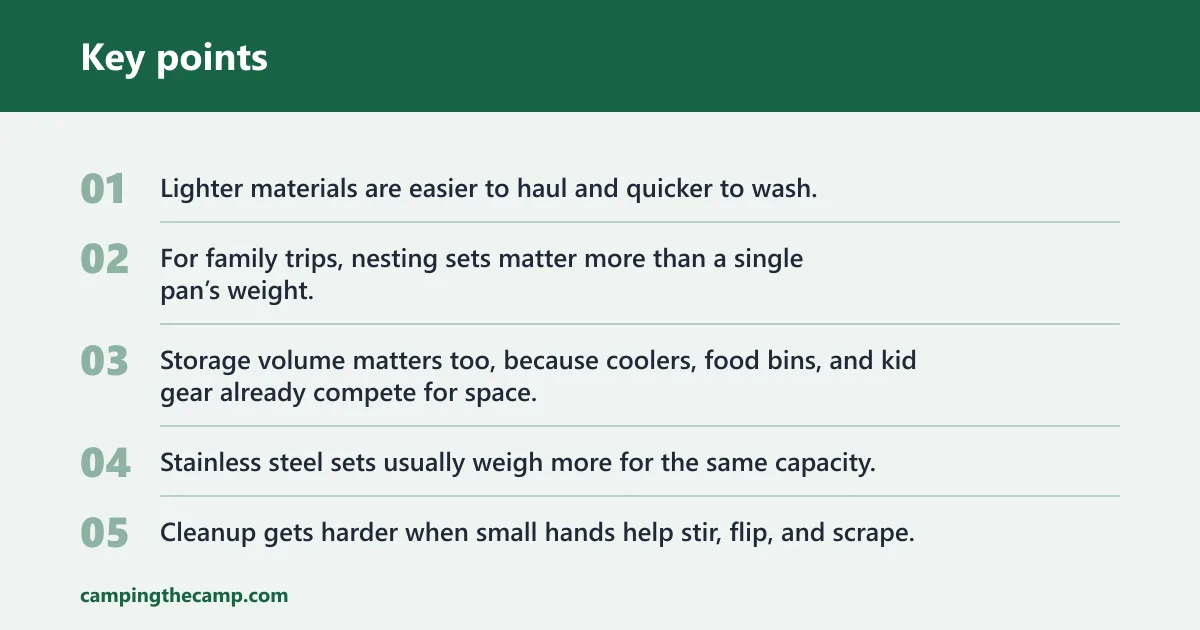
The trade-off is straightforward. Lighter materials are easier to haul and quicker to wash. Heavier materials sit steadier and often suit fire cooking better, but they take more room in storage and more effort to move. The right choice depends on boiling pasta on a stove, searing burgers over coals, or keeping chili warm for a second round.
Weight and packability for car camping
For family trips, nesting sets matter more than a single pan’s weight. A common nested aluminum family set may weigh only a few pounds total, while a comparable cast iron setup can often weigh well above 10 pounds once lids and a Dutch oven are included. Storage volume matters too, because coolers, food bins, and kid gear already compete for space.
Hard-anodized aluminum is common in nested camping pot sets because it gives you a lighter load with better durability than plain aluminum. Stainless steel sets usually weigh more for the same capacity. Cast iron and thick carbon steel are the least friendly when you need to fit cookware around chairs, water jugs, and a week’s worth of snacks.
Cleanup when kids help cook
Cleanup gets harder when small hands help stir, flip, and scrape. Nonstick surfaces are the easiest to wipe clean, but they need gentle utensils and lower heat. Bare metal takes more scrubbing, and cast iron adds seasoning care on top of washing, drying, and oiling.
A common first-timer mistake is choosing a pan that cooks well on paper but leaves browned egg residue after every breakfast. Suppose your 10-inch nonstick skillet takes scrambled eggs cleanly at medium heat, but you slide a metal spatula across it. One scratched coating can shorten its useful life, even if the pan body is still fine.
Stove, fire, and meal fit
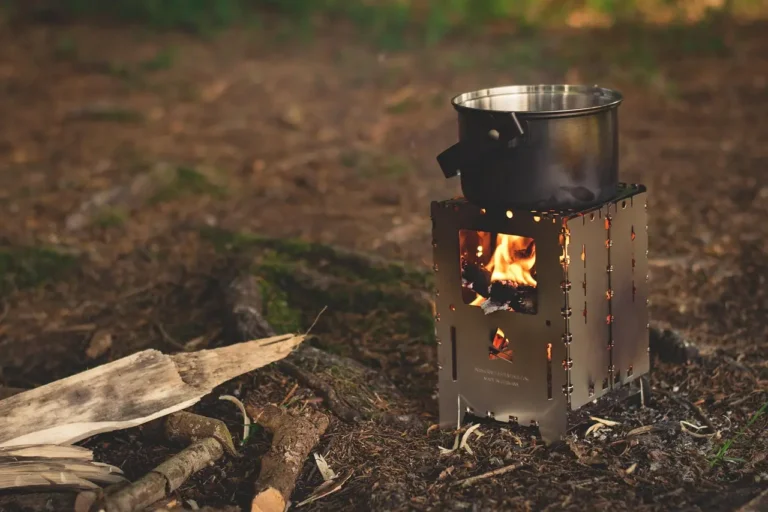
Flat-bottom pans are often the safer match for camp stoves because they tend to sit steadier and spread heat more predictably. Over a campfire, uneven flame and soot make material choice more important. Cast iron and stainless steel tolerate direct fire better than coated pans, while nonstick coatings and thin pans are more likely to suffer from hot spots, warping, or soot buildup.
Handle design matters too. Long handles should stay cool enough to move without gloves, and lid handles should be easy to grab with a mitt. If you use induction at home or at a campsite with an induction setup, check for induction compatibility; many stainless steel pans work, while aluminum generally needs an induction-ready base.
Camp cookware materials matrix
| Material | Weight | Heat speed | Heat retention | Cleanup difficulty | Best family use case |
|---|---|---|---|---|---|
| Hard-anodized aluminum | Light | Fast | Moderate | Low to moderate | Nested family pot sets, pasta, pancakes, one-pot meals |
| Stainless steel | Moderate to heavy | Slow to moderate | Moderate | Moderate | Boiling, simmering, durable stove use, occasional fire use |
| Cast iron | Very heavy | Moderate | Very high | High | Campfire searing, Dutch ovens, long simmering, heat holding |
| Carbon steel | Moderate | Fast | Moderate to high | Moderate | Searing, sautéing, lighter fire cooking than cast iron |
| Nonstick-coated pan | Light to moderate | Fast | Low to moderate | Very low | Eggs, pancakes, easy family breakfasts on a stove |
Which material fits each camp meal?
Meal choice changes the winner. Eggs and pancakes reward easy release and quick cleanup. Pasta and chili reward even heating and enough volume for family portions. Searing rewards heat retention and a pan that can tolerate direct flame or very hot burners.
Eggs and pancakes
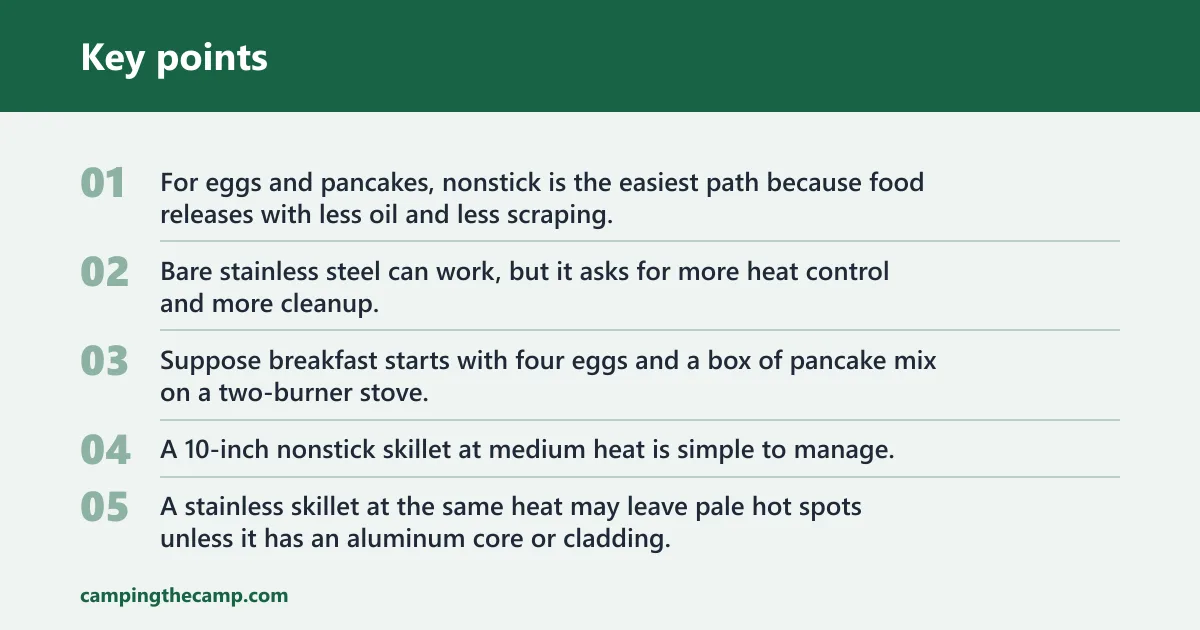
For eggs and pancakes, nonstick is the easiest path because food releases with less oil and less scraping. Hard-anodized aluminum is the next practical choice if the pan has a good surface coating or if you are comfortable using a bit more fat. Bare stainless steel can work, but it asks for more heat control and more cleanup.
Suppose breakfast starts with four eggs and a box of pancake mix on a two-burner stove. A 10-inch nonstick skillet at medium heat is simple to manage. A stainless skillet at the same heat may leave pale hot spots unless it has an aluminum core or cladding.
Pasta, chili, and one-pot meals
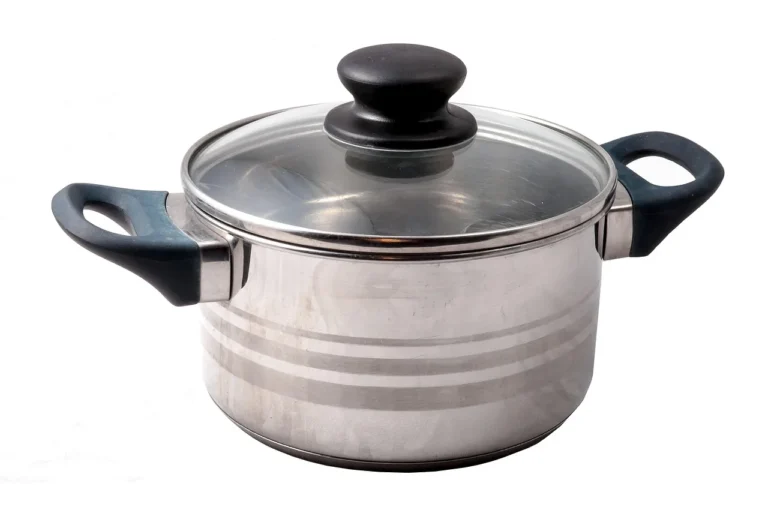
For boiling pasta and simmering chili, stainless steel and hard-anodized aluminum are both practical. Stainless steel is durable and resists corrosion, which helps when salty water, tomato sauce, and repeated washing are part of the trip. Hard-anodized aluminum heats faster, which can save fuel and time on a family stove.
For large one-pot meals, look for a pot with a stable base and enough depth to reduce boil-overs. A thick bottom helps with hot spots. Thin stainless can scorch at the center if the flame is too wide, while aluminum spreads heat better across the base.
Searing and high-heat cooking
For searing burgers, chops, or vegetables, cast iron and carbon steel are the strongest fits. Cast iron holds heat best, so it recovers after cold food hits the pan. Carbon steel responds faster and weighs less, which makes it easier to move around a family site.
Nonstick is a poor fit for high-heat searing because the coating’s heat limit is lower than bare metal. Stainless steel can sear well, but you need more patience and enough preheat time to avoid sticking. Hard-anodized aluminum can brown food, but it is still not the top choice for very hard sears.
| Material | Eggs | Pancakes | Pasta | Chili | Searing | Avoid if… |
|---|---|---|---|---|---|---|
| Hard-anodized aluminum | Good | Good | Good | Good | Fair | You need the toughest direct-fire pan |
| Stainless steel | Fair | Fair | Good | Good | Good | You want the lightest setup or the fastest heat-up |
| Cast iron | Good | Good | Good | Excellent | Excellent | Weight and maintenance matter on every trip |
| Carbon steel | Good | Good | Fair | Good | Very good | You do not want seasoning and rust care |
| Nonstick-coated pan | Excellent | Excellent | Fair | Fair | Poor | You cook over very high heat or use metal utensils |
Is stainless steel or aluminum better?
For family camping, aluminum is usually better when you want lighter weight and faster heating, while stainless steel is better when you want toughness and corrosion resistance. If heat spread matters, hard-anodized aluminum usually beats plain stainless. If abuse, rough handling, and repeated washing matter more, stainless steel earns its place.
Hard-anodized aluminum
Hard-anodized aluminum is a surface treatment rather than a separate base metal. The anodized layer makes the aluminum harder and more scratch-resistant than plain aluminum, which is why it is common in nested family camping sets. It is still aluminum at the core, so it keeps the light weight and good heat conduction that families want.
Most hard-anodized cookware is not truly nonstick unless it also has a coating. That distinction matters. The anodized surface helps durability, but food release still depends on whether the pan includes a coating or a polished surface and enough cooking fat.
Plain and clad stainless steel
Stainless steel is durable and corrosion-resistant, but it is usually heavier and slower to heat than aluminum. In a plain stainless pan, heat can pool under the flame and create hot spots. Many good camping pieces solve that with cladding or an aluminum core, which spreads heat more evenly across the base.
Stainless steel is a solid choice for boiling, simmering, and rough camp use. It also tends to tolerate repeated scrubbing better than coated cookware. For family cooks who want one set that can survive years of moving between home, campsite, and sink, stainless steel often lasts a long time.
How do cast iron and carbon steel compare?
Cast iron and carbon steel both favor high-heat cooking, but they are not interchangeable. Cast iron holds heat better and is the better campfire tool. Carbon steel is lighter, heats faster, and is easier to move, but both need seasoning and rust prevention.
Heat retention and searing
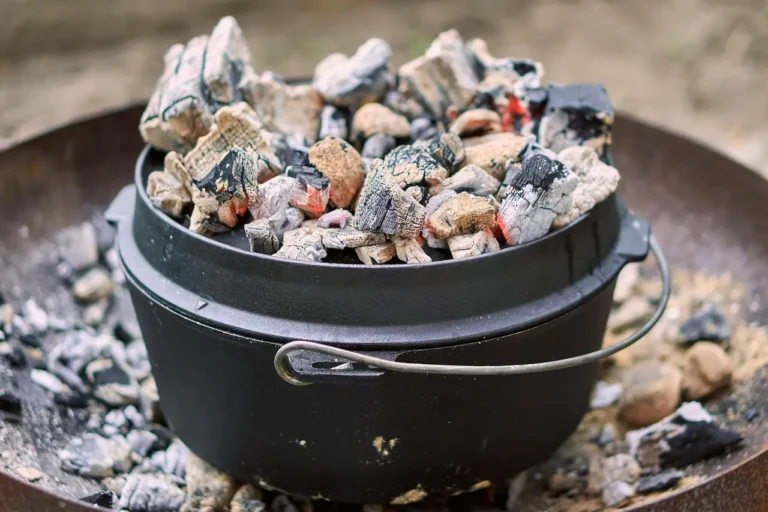
Cast iron has very high heat retention, which helps when cold food hits the pan or when you want steady heat from coals. That also makes it the best material for Dutch ovens and true campfire searing. It is a poor fit when every ounce counts or when you need to carry cookware far from the car.
Carbon steel behaves more like a lighter, quicker version of cast iron. It develops seasoning over time, which helps with release and protects the surface. It is a useful middle ground for family cooks who want a real searing pan without cast iron’s full weight penalty.
Seasoning, rust, and maintenance
Both cast iron and carbon steel need drying and a thin oil layer after washing if you want to prevent rust. Carbon steel is more likely than cast iron to show rust quickly if left wet, because it is thinner and often used in lighter pans. Cast iron can also rust, especially after a rainy trip or a rough scrub.
A simple care routine helps both materials last: wash, dry fully, warm briefly, and wipe with a thin film of oil. If that routine sounds too fussy for your family trips, stainless steel or hard-anodized aluminum is the easier choice.
What to check before you buy
Before you buy any family camp cookware, check whether it matches your stove, your fire plan, and the food-contact claims on the box. A pan can look sturdy and still be a bad fit if the handles get too hot, the base is unstable, or the coating is not suited to your cooking style.
Camp stove compatibility
-
Check the base first. Choose flat-bottom pans for camp stoves, because rounded bottoms waste heat and wobble on grates. If you use induction at home or at camp, confirm induction compatibility before buying, since aluminum needs a compatible base.
-
Inspect the handle design. Look for handles that stay stable over a burner and do not swing into the flame. Long handles should feel secure with a mitt, and lids should have knobs or grips that tolerate heat without forcing you to use a towel.
-
Match size to your stove. A large skillet that hangs too far over the burner can heat unevenly and warp thin metal. A pot that is too wide for the flame can also leave food undercooked at the edges and scorched at the center.
Campfire durability
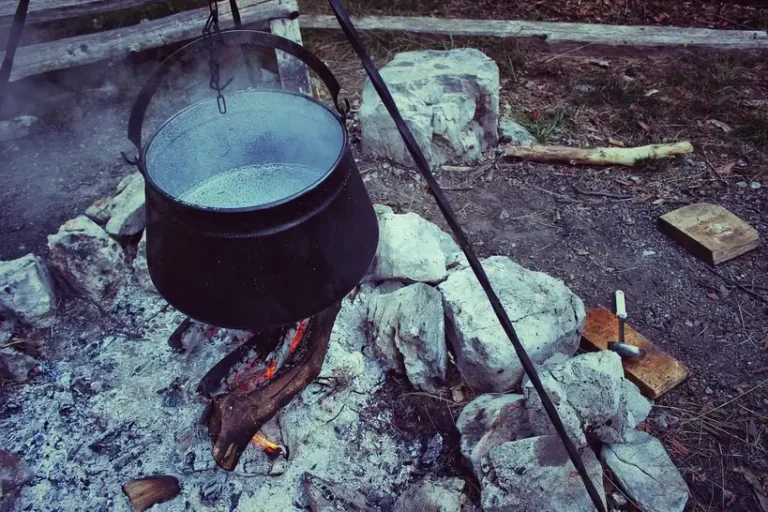
Direct flame and glowing coals expose cookware to uneven heat, soot, and more sudden temperature swings than a stove. That is why cast iron and stainless steel are stronger fire-cooking choices. Thin pans, some coatings, and weak handles are more likely to warp or discolor under that kind of use.
For fire cooking, choose a material that can tolerate rough heat and still stay usable after soot scrubbing. Lid fit matters too, because a loose lid leaks heat and ash, while a secure one helps a pot perform more like a small oven.
Food-safe and coating claims
For food-contact surfaces, look for products that are intended for cookware use and that make clear claims about their coating and materials. For nonstick cookware, current consumer guidance often points to PFAS-free or non-PFAS claims when that matters to you, but the coating still needs sensible heat and utensil care. For ceramic-coated options, look for lead-free and cadmium-free claims.
Dishwashing and abrasion safety matter too. Some coatings survive hand washing better than machine washing, and even hard surfaces can lose performance if you use metal tools or abrasive pads. If kids are helping with cleanup, smooth stainless steel or hard-anodized aluminum can be easier to keep in shape.
Frequently asked questions
What are the best materials for family camp cookware?
For most family camping, hard-anodized aluminum gives the best balance of light weight, fast heating, and manageable cleanup. Stainless steel is a good second choice when durability matters more. Cast iron belongs with campfire cooking and Dutch ovens, while nonstick is best for easy breakfasts and low-stress cleanup.
Is stainless steel or aluminum better for camping cookware?
Aluminum is usually better if you want faster heat-up and lighter weight. Stainless steel is better if you want a tougher pan that resists corrosion and rough handling. For the best heat spread in stainless steel, look for cladding or an aluminum core rather than plain single-layer metal.
Is cast iron too heavy for family camping?
For many family trips, yes. Cast iron is excellent for heat retention and campfire cooking, but it is very heavy once you include a lid or Dutch oven. If your cooking stays on a car-camping stove and you move gear often, lighter cookware is usually more practical.
Is nonstick cookware safe for camping with kids?
Nonstick cookware can be a practical family choice if you use it within its heat limits and treat the coating gently. Look for current coating claims that fit your preference, and avoid high heat, metal utensils, and abrasive scrubbers. For kid-led cleanup, that care matters a lot.
What cookware material heats fastest over a camp stove?
Plain aluminum heats fastest, and hard-anodized aluminum keeps much of that speed with better durability. Carbon steel also heats quickly. Stainless steel usually heats more slowly, especially without an aluminum core, while cast iron takes longer to come up to temperature but holds heat better once hot.
Which camp cookware is easiest to clean on a family trip?
Nonstick is usually easiest to clean because food releases with little scrubbing. Hard-anodized aluminum is also manageable if the surface is smooth and you avoid burned-on residue. Stainless steel and cast iron need more care, and cast iron also needs drying and oiling to keep rust away.