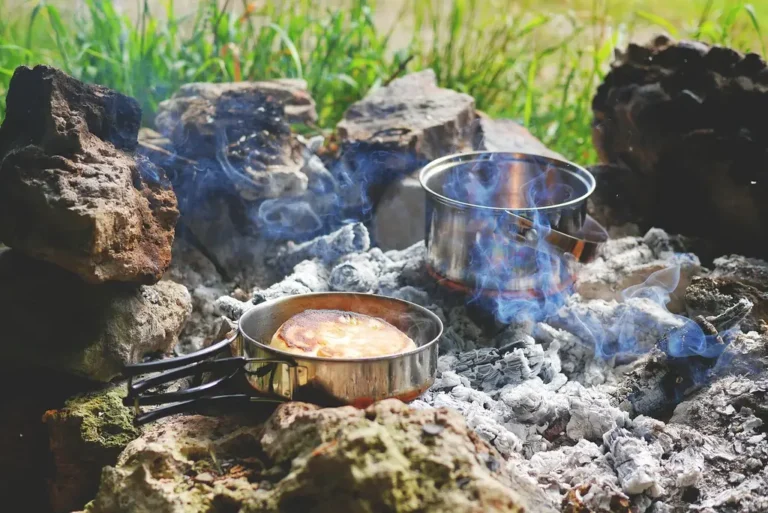
Is aluminum camp cookware safe for cooking and boiling water?

Plain aluminum camp cookware is generally considered safe for boiling water and most non-acidic meals, but it is commonly advised to avoid long cooking or storage of acidic foods in bare, scratched, or pitted aluminum. That split matters because tomato, citrus, and salty liquids can react with damaged surfaces, leaving a metallic taste and increasing aluminum transfer from worn metal. This guide covers when aluminum is fine, when to pass on it, and how to inspect a pot in 60 seconds before you pack it.
Boiling water versus acidic foods
For boiling water, yes, usually. For acidic meals, the answer depends on the finish and condition of the pot: bare aluminum is least forgiving, hard-anodized and stainless-clad surfaces are better, and worn or pitted cookware needs extra caution.
Short answer for boiling water
Boiling water is the easiest task for aluminum camp cookware because plain water is far less reactive than tomato, citrus, or salty mixtures. ATSDR says very little aluminum enters your body from cooking utensils, and EFSA’s broader food guidance treats cookware as one food-contact source among several, not a special hazard by itself.
Short answer for acidic meals
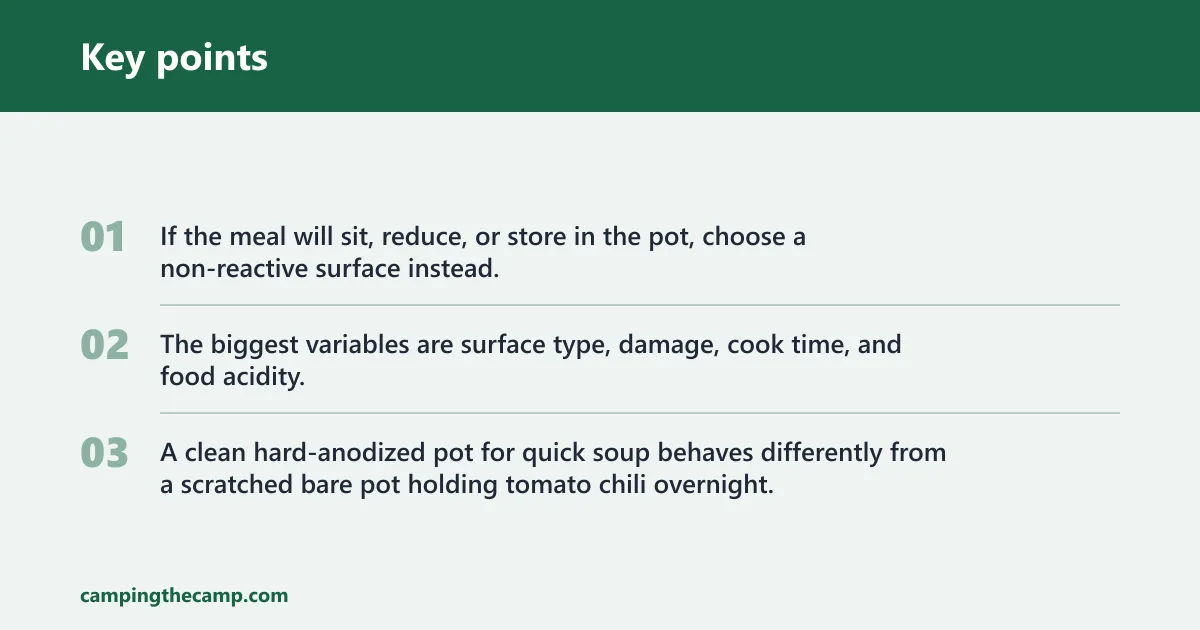
Acidic meals are the real divider. Tomato sauce, citrus, vinegar, and brines can react with bare aluminum, especially during long simmering, and that can darken or pit the pan. If the meal will sit, reduce, or store in the pot, choose a non-reactive surface instead.
What changes the risk
The biggest variables are surface type, damage, cook time, and food acidity. A clean hard-anodized pot for quick soup behaves differently from a scratched bare pot holding tomato chili overnight. Health Canada also warns that worn or pitted aluminum pots can transfer more aluminum or lead, which makes condition matter as much as material.
Camp aluminum safety matrix
Use this table as a quick pre-trip filter. It separates boil-only use from acidic cooking, because those are different risk profiles.
| Cookware type | Safe for boiling water | Safe for tomato/citrus meals | Storage allowed | Damage warning signs | Recommended camper use case |
|---|---|---|---|---|---|
| Bare aluminum | Yes, if clean and intact | No for long simmering; caution for brief use | No leftover storage | Pitting, deep scratches, dark corrosion, rough spots | Boil-only use, quick non-acidic meals |
| Hard-anodized aluminum | Yes | Usually yes for normal cooking, if surface is intact | Short-term food holding only if maker allows it | Gouges through the anodized layer, flaking, exposed base metal | General camping meals with better food contact safety |
| Clad cookware | Yes | Yes | Yes, if the product is designed for it | Dents that expose layers, warped rims, loose handles | Camp cooks who want a non-reactive stainless cooking surface |
| Cast aluminum cookware | Depends on finish and origin | Depends on coating and listing | Use caution; follow maker guidance | Unknown origin, rough interior, missing coating, questionable labels | Only after verifying the exact product and country of origin |
What kind of aluminum are you carrying?
Not all aluminum cookware acts the same. Bare aluminum can react with food, hard-anodized aluminum puts a tougher oxide layer between food and raw metal, clad cookware gives you a stainless food surface over an aluminum core, and cast aluminum varies more by finish and product source.
Bare aluminum cookware
Bare aluminum is raw food-contact metal. It heats well and stays light, but acidic ingredients can react with it, and the surface may darken, pit, or corrode over time. That makes it a better fit for boiling water and quick, non-acidic cooking than for long tomato braises or storage.
Hard-anodized aluminum
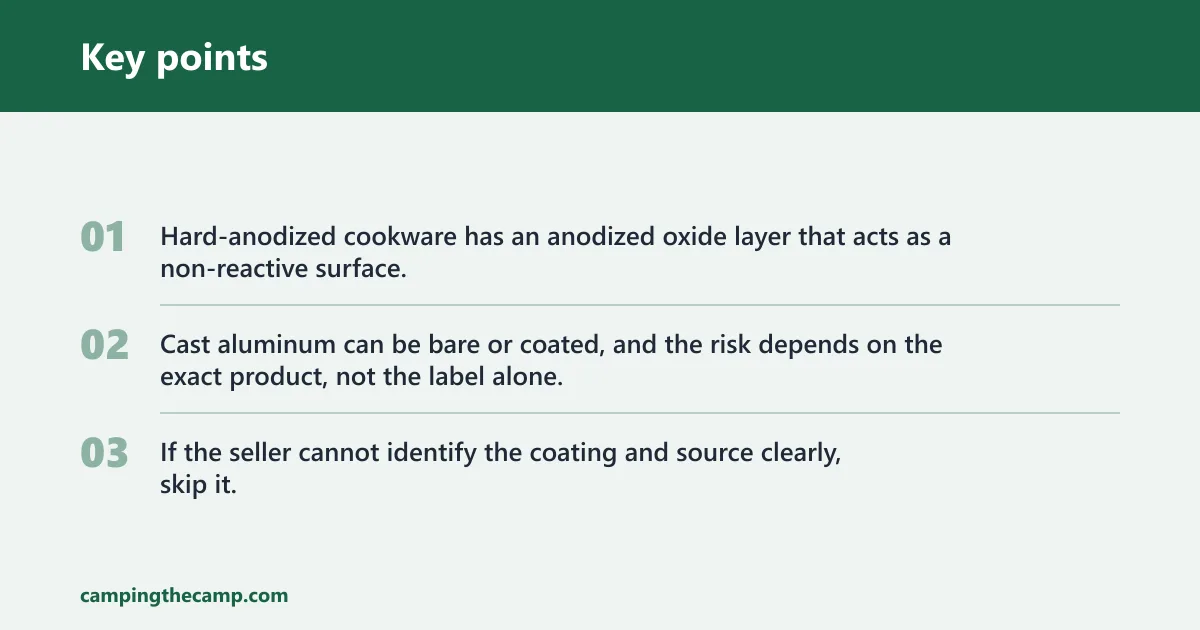
Hard-anodized cookware has an anodized oxide layer that acts as a non-reactive surface. Calphalon describes hard-anodized cookware as non-reactive, and the food contacts that finished surface rather than raw aluminum. That makes it a stronger choice when you want the speed of aluminum without direct food contact with bare metal.
Clad cookware
Clad cookware typically has an aluminum core inside stainless steel, so the food generally touches stainless steel rather than raw aluminum. For camp use, that matters when you want a pan that can handle acidic food or a short leftover hold without the same surface reactivity that bare aluminum brings.
Cast aluminum cookware
Cast aluminum can be bare or coated, and the risk depends on the exact product, not the label alone. Some imported traditional pots have drawn FDA concern because certain imported pots can leach lead, so origin and product listing matter. If the seller cannot identify the coating and source clearly, skip it.
Why acidic and salty food matters
Acidic and salty foods are more likely to interact with bare aluminum than plain water. Tomato sauce, citrus, vinegar, and brines can increase metal transfer, especially during long simmering or when food sits in the pot after cooking.
Tomato, citrus, and long simmers
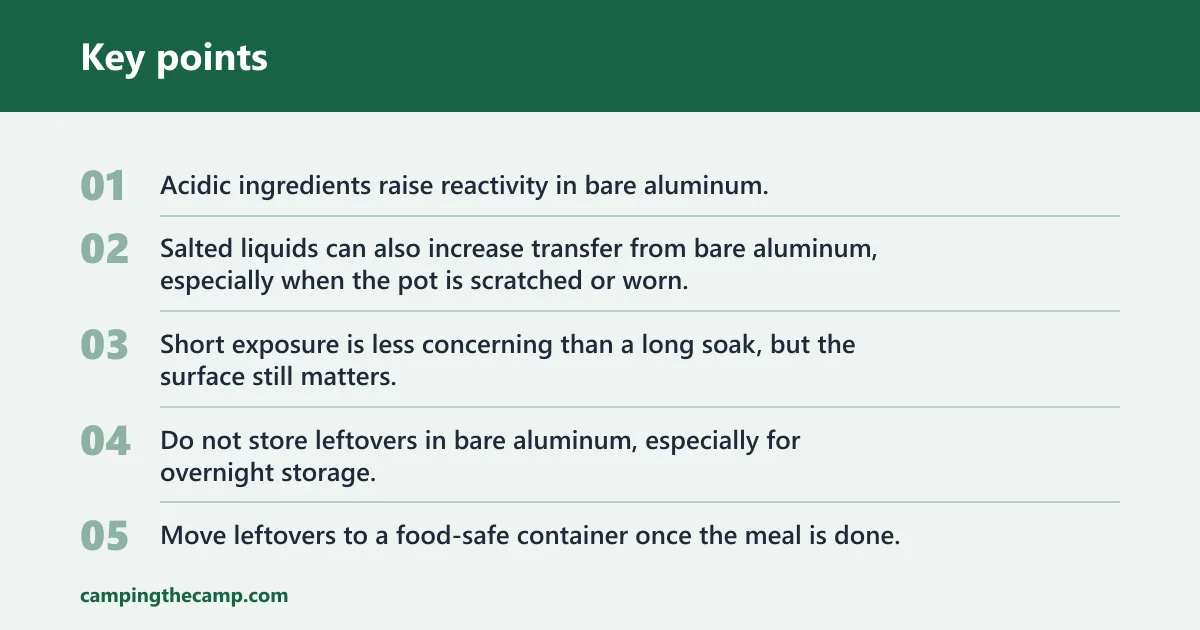
Acidic ingredients raise reactivity in bare aluminum. Nordic Ware notes that acidic ingredients may darken, pit, or corrode the pan, and that is why a one-pot tomato dinner is a different test than a pot of boiling water. Long simmering gives the reaction more time.
Brines and salted liquids
Salted liquids can also increase transfer from bare aluminum, especially when the pot is scratched or worn. That matters for ramen water, brined beans, or salted pasta water if the cookware already has wear. Short exposure is less concerning than a long soak, but the surface still matters.
Storage after cooking
Do not store leftovers in bare aluminum, especially for overnight storage. Food that sits overnight in a reactive pot has more time to pick up taste and metal from the surface, and the risk rises if the pan is pitted or scratched. Move leftovers to a food-safe container once the meal is done.
Say your 2-liter bare aluminum pot has one tomato meal planned for a single dinner. A quick simmer is one thing. Leaving the sauce in the pot for the rest of the night is the part that changes the risk.
How to inspect a pan in 60 seconds
A fast pre-trip check can stop most bad surprises. Look for surface damage, coating failure, and suspicious product labeling before the pot goes into the pack. If any of those show up, swap cookware rather than hoping the problem stays small.
-
Check the cooking surface. Look for pitting, deep scratches, flaking coating, or rough corrosion inside the pan. Health Canada says worn or pitted pots can transfer more aluminum or lead, so visible wear is not cosmetic.
-
Run a fingertip lightly. Feel for rough spots, gouges, or sharp edges around the rim and base. A smooth surface is easier to clean and less likely to shed material during cooking or nesting.
-
Inspect the label closely. Check the origin, product name, and material description. If an imported pot is vague about finish or origin, treat that as a warning sign because FDA has found some imported pots can leach lead.
-
Retire damaged cookware. If the pan is badly pitted, peeling, or corroded, move it out of camp duty. A damaged pot is a poor choice for acidic food, long cooking, or food storage.
Suppose a nesting pot has spent a season rattling against a stove stand and spoon. The outside scuffs are usually fine, but a scratch that cuts through the interior finish is the detail that can change whether it belongs in a boil-only kit or in the recycle bin.
Should you avoid imported aluminum cookware?
Not every imported aluminum pot is a problem, but origin matters enough to check carefully. FDA has warned that some imported pots can leach lead, so buyers should confirm where the cookware was made and whether the product listing names a safe food-contact finish.
Why origin matters
The concern is not “imported” by itself. It is the combination of unknown materials, poor labeling, and some traditional pots that may contain lead. A well-labeled imported pan from a reputable seller is different from an unmarked market find with no finish details.
How to check the listing
-
Read the exact product name. Look for the words bare aluminum, hard-anodized, stainless clad, or coated. If the listing only says “aluminum pot,” you do not have enough information.
-
Confirm the country of origin. The listing or packaging should name it. If the seller cannot provide that detail, do not assume the cookware is safe for food contact.
-
Look for food-contact details. A clear interior finish description matters more than a generic camping label. If the product says nothing about coating or anodizing, move on.
When to walk away
Walk away if the pot has no clear origin, a questionable finish, visible flaking, or a history you cannot verify. Imported cookware does not need to be perfect, but it does need to be identifiable. Unknown material plus visible wear is a poor camping bet.
Is aluminum or titanium better for camping?
Aluminum is usually better for even heating and boil performance, while titanium is lighter and more durable in thin-walled cookware but heats less evenly. For most campers, the choice comes down to whether weight or cooking control matters more on that trip.
Heat spread and boil performance
Aluminum spreads heat more evenly, which helps reduce hot spots in sauce pots and frying pans. Titanium is often used when ultralight weight matters most, but its heat spread is less even, so it can be fussier for simmering or browning food.
Weight and durability tradeoffs
Titanium wins on weight. Aluminum often wins on cooking comfort. In a nested camp kit, that difference matters because thin lightweight pans can also pick up dents and abrasion from other gear, especially when packed with a stove, spoon, or fuel canister.
Best use case by trip type
For boil-only backpacking, hard-anodized aluminum or titanium both make sense. For car camping or meal-heavy trips, aluminum’s better heat spread is easier to live with. If you plan acidic one-pot meals, titanium is not a substitute for a non-reactive surface, and clad or hard-anodized cookware still makes more sense.
A common first-timer mistake is packing a bare aluminum pot for chili, then leaving the leftovers in it while camp is broken down. The safer move is simple: cook the meal, serve it, wash the pot, and move any remaining food to a separate container.
Frequently asked questions
Is aluminum camp cookware safe for boiling water?
Yes, boiling water is generally the lowest-risk use for aluminum camp cookware, especially if the pot is clean and intact. The same source says very little aluminum enters your body from cooking utensils, and plain water is far less reactive than tomato, citrus, or salty foods.
Can you cook acidic food in aluminum camp pots?
You can, but bare aluminum is a poorer choice for long simmering or storage of acidic foods. Tomato sauce, citrus, vinegar, and brines can increase reactivity, and the pan may darken, pit, or corrode. Hard-anodized or stainless-clad cookware is the better option.
Does worn or pitted aluminum cookware leach more metal?
Yes. The same source says worn or pitted aluminum pots can transfer more aluminum or lead, so damage changes the risk. If the cooking surface is rough, deeply scratched, or corroded, retire the pot rather than using it for acidic meals or leftovers.
Is hard-anodized aluminum safer than bare aluminum?
For food contact, yes. Hard-anodized cookware has an anodized oxide layer, and Calphalon describes it as non-reactive. The food touches that finished surface, not raw aluminum, which makes it a better choice for camp meals that are more acidic or more frequent.
Should I avoid imported aluminum camp cookware?
Do not avoid it automatically, but verify it carefully. FDA has found some imported pots can leach lead, so check the country of origin, the exact finish, and whether the product listing names a food-contact surface. If those details are missing, choose a different pot.
Does aluminum cookware cause Alzheimer’s disease?
The evidence does not support a simple yes. ATSDR and EFSA are often cited as focusing on total exposure from food and utensils rather than making a direct claim that normal cookware use causes Alzheimer’s disease. The practical takeaway is to limit unnecessary exposure from damaged cookware and to follow the usual food-safety checks.