Can metal utensils damage camp cookware materials?

Yes, metal utensils can damage soft or coated camp cookware, but they are usually fine on bare cast iron and most stainless steel; use wood, silicone, or plastic on nonstick and anodized aluminum. Left alone, the result is scratched coatings, flaking finishes, stuck food, and, with damaged nonstick, a shorter path to replacement. This guide matches common camp cookware materials to the safest utensil, the damage risk, and the first sign to stop using metal.
Cookware and utensil compatibility
Material choice changes more than cleanup. It changes how fast the cooking surface wears, whether acidic food can reach the base metal, and how much force a utensil can take without leaving marks. A metal spoon may be harmless in a stockpot, while the same spoon can scratch a coated skillet on the first scrape.
What counts as damage also depends on the surface. A shiny mark on stainless steel may be cosmetic, while a nick in enamel or a gouge in nonstick can lead to stuck food, faster wear, or a surface that no longer belongs in camp rotation.
What counts as damage versus normal wear
Normal wear is light discoloration, faint utensil marks on durable metal, or a little seasoning loss on cast iron that you can rebuild. Damage is different: exposed base metal on a coated pan, pitting in stainless from bad salt timing, chipped enamel, flaking nonstick, or deep grooves that trap food and are hard to clean.
Occasional contact is not the same as repeated scraping. A single soft tap from a metal spoon may leave no real consequence on stainless steel, but a stiff spatula dragged across the same spot every meal can leave visible tracks, thin coatings, and rough edges that keep getting worse.
Utensil compatibility matrix
This matrix gives the safest utensil family for each common camp cookware surface, the metal-utensil risk level, the likely damage type, and the best camp-use call. Use it as a default, then check the manufacturer instructions for your exact pot or pan.
| Cookware material | Safe utensil options | Metal-utensil risk level | Likely damage type | Camp-use recommendation |
|---|---|---|---|---|
| Aluminum | Wood, silicone, plastic; soft nylon for stirring | High | Scratches, dulling, faster surface wear | Use non-metal cooking utensils |
| Anodized aluminum | Silicone, wood, plastic; avoid aggressive scrapers | Medium | Surface wear, scuffing, loss of easy-clean finish | Metal is less risky than bare aluminum, but non-metal is still the safer default |
| Copper, usually coated | Wood, silicone, plastic; soft sponge for cleaning | High | Coating wear, exposed copper, damage from scouring | Keep metal off the interior unless the maker allows it |
| Stainless steel | Metal spatulas, spoons, tongs, whisks are generally fine; wood or silicone also works | Low | Minor scratching, possible pitting if salted too early | Good camp choice for high-heat and rougher use |
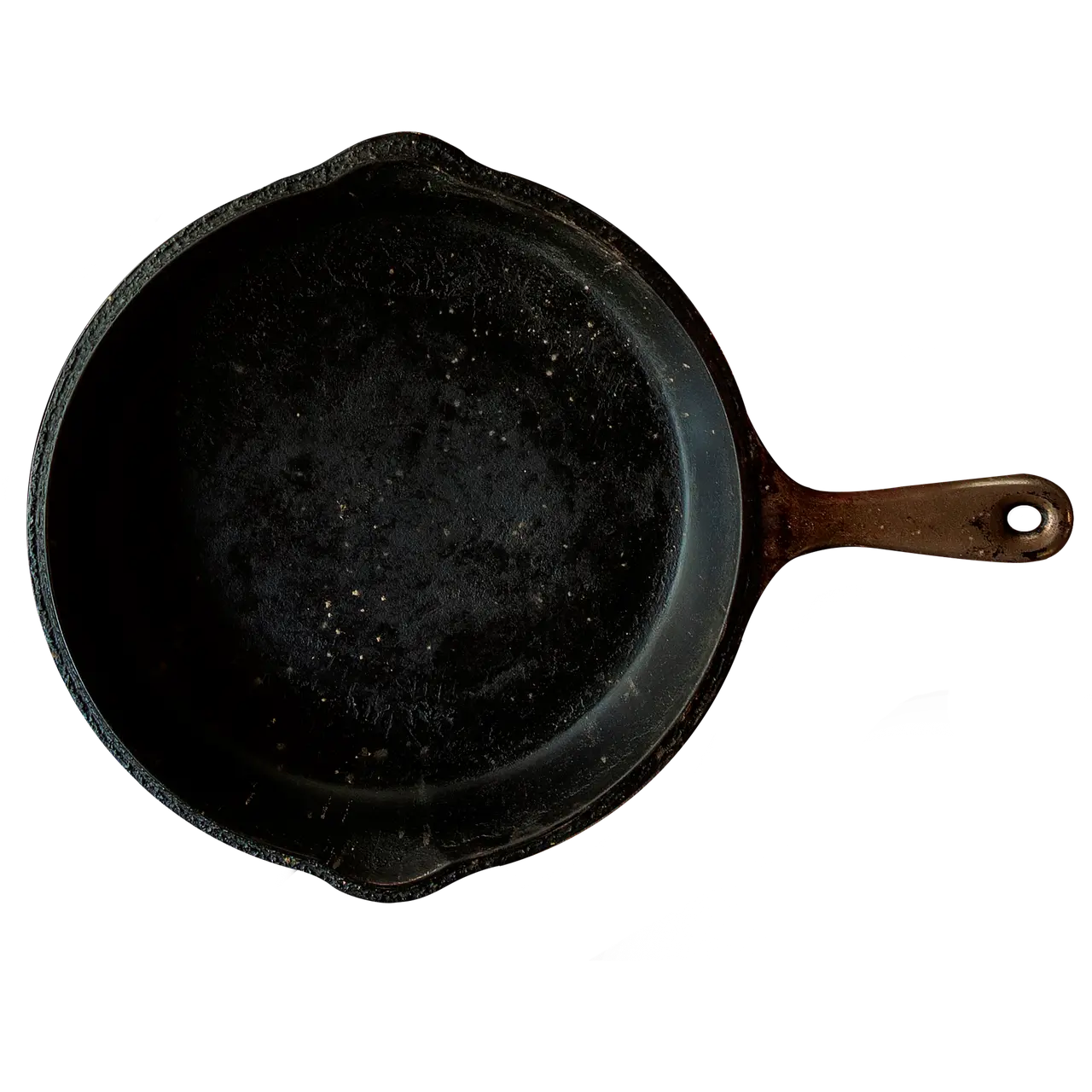
| Cast iron | Metal spatulas, spoons, tongs; wood for gentler stirring | Low | Seasoning wear, light scuffing, edge chipping if abused | Good for searing and one-pot meals; avoid long acidic storage |
| Ceramic | Silicone, wood, plastic; non-metal scrub pad if approved | High | Glaze wear, chips, visible scratches | Use silicone for cooking and cleanup |
| Enamel | Silicone, wood, plastic; gentle sponge for washing | High | Chips, glaze damage, edge wear | Avoid hard tools and rough scouring |
For camp cooking, the simplest rule is this: use metal where the surface is plain metal and durable, and switch to silicone, wood, or plastic where the finish is a coating or glaze. That holds for most nonstick, ceramic, enamel, aluminum, and anodized aluminum cookware.
Can metal utensils damage nonstick camp cookware?
Yes. Metal utensils can scratch nonstick camp cookware quickly, especially if you use a sharp edge, press hard, or scrape stuck food while the pan is still hot. Once the coating breaks, food tends to stick more easily and the damaged area can spread with repeated use.
What to use instead of metal
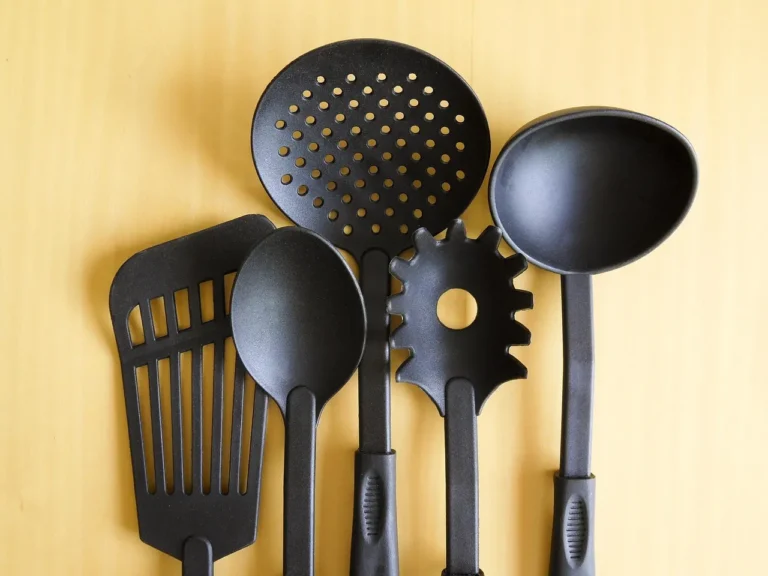
Silicone utensils are the best all-around choice for nonstick camp cookware because they reduce surface damage and still handle stirring, flipping, and serving. Wood and plastic can also work, but silicone is usually the better match for heat, cleanup, and fit on curved camp pans.
For cleanup, use a soft sponge or non-abrasive pad. Avoid metal scrubbers, chain-mail cleaners, and sharp turners. Those are the tools most likely to turn a small nick into a larger patch of flaking finish.
What early damage looks like
The first sign is usually a visible gray line, a rough patch, or food starting to cling where it used to release. A common first-timer mistake is thinking that one thin scratch is harmless because the pan still looks usable; on nonstick, that scratch often becomes the first weak point.
Suppose a 10-inch nonstick skillet gets one scrape from a metal spatula while making eggs at medium heat. If the eggs begin to catch on that same spot during the next meal, the coating has already changed enough to justify switching to silicone and watching for further wear.
What should you use with aluminum and anodized aluminum?
Aluminum camp cookware is lightweight, conducts heat well, and is fairly inexpensive, but it scratches easily. Health Canada recommends non-metal cooking utensils for aluminum to prevent surface damage. Anodized aluminum is tougher: it has a hard, non-stick surface that is scratch-resistant, durable, and easy to clean, and it reduces aluminum transfer, especially with acidic foods like tomatoes and rhubarb.
Bare aluminum
Use non-metal utensils on bare aluminum: silicone, wood, or plastic. That is the safest choice for stir-fries, boiling, and one-pot meals. Metal spoons and spatulas can leave visible scratches, and repeated scraping can make the surface look dull and feel rough.
What happens if you use metal utensils on aluminum cookware? Usually you get cosmetic scratching first, then more surface wear if the contact repeats. In camp use, that matters because lightweight cookware often sees constant stirring over flame or coals, which gives the utensil plenty of chances to abrade the surface.
Anodized aluminum
What utensils should I use with anodized aluminum cookware? Start with silicone or wood for the lowest risk. Anodized aluminum is more forgiving than bare aluminum, but aggressive metal tools can still wear the hard surface over time, especially when you are scraping browned bits after sautéing.
If you occasionally touch anodized aluminum with a metal spoon, that is usually less serious than repeated scraping with a stiff spatula. Stop using metal when you see a chalky patch, a roughened spot, or a coating that no longer wipes clean as easily as before.
Are metal tools safe on stainless steel and cast iron?
Stainless steel and cast iron are generally acceptable for metal utensils. Both are built for harder use than coated pans, so metal spatulas, spoons, tongs, and whisks are usually acceptable.
Stainless steel
Are metal spatulas safe on stainless steel camp cookware? Usually yes. Stainless steel has a protective layer related to chromium, and that layer helps it resist rusting and staining. Metal utensils may leave fine marks, but those are generally less important than on coated cookware.
The main caveat is salt. Adding salt only after water is boiling helps avoid surface pitting in stainless steel cookware. If salt sits on the bottom of a cool pot, especially in a damp camp setup, it can concentrate and leave pits that are more than cosmetic.
Cast iron
Can I use metal tools on cast iron while camping? Yes. Cast iron is one of the most metal-friendly camp materials, and a metal spatula is often the right tool for flipping, scraping, and serving. The key exception is long storage of acidic foods in uncoated cast iron.
Health Canada advises not to cook or store acidic foods in uncoated cast iron for long periods. Tomato sauce left in the pot after dinner can react with the surface, and in camp that means faster seasoning loss and possible metallic taste in the next meal.
Picture a skillet used over a stove grate for fajitas. A wide metal spatula is fine for turning peppers and meat, but if you leave salsa in the pan overnight, the issue is not the spatula; it is the acid sitting against uncoated cast iron for too long.
What about copper, ceramic, and enamel cookware?
Copper cookware sold in Canada is generally coated with another metal to prevent transfer into food, so the safe utensil depends on that coating. Ceramic, enamel, and glass cookware can be heated to fairly high temperatures, but their surfaces are less tolerant of hard tools than bare metal is. Glaze quality matters here.
Copper and plated copper
Copper cookware is often coated with another metal, and that layer can be dissolved by acidic food or damaged by scouring. Nickel-coated copper should be decorative only for anyone with a nickel allergy. Keep metal utensils away from the interior unless the manufacturer specifically allows them.
If a copper pan has a worn spot that exposes the base metal, the risk is no longer just surface wear. At that point, the protective barrier is compromised, and the pan may no longer be a good camp cooking choice for acidic meals.
Ceramic and enamel surfaces
Do silicone utensils work better than metal for ceramic camp cookware? Yes. Silicone is the safer default for ceramic because it avoids scratching the glaze and still works for stirring, flipping, and serving. The same logic applies to enamel, which may chip or damage with hard tools.
Will a metal spoon scratch enamel camp cookware? It can, especially if you knock the spoon against the rim or scrape hard at stuck food. Enamel is glass-like glaze on metal, so chips are the real concern, not just tiny marks. Once the glaze chips, the exposed edge may worsen with more use.
Ceramic, enamel, or glass cookware can also raise concern when pigments contain lead or cadmium. That issue is about the quality of the product itself, not just the utensil choice. If the glaze is already damaged, do not keep using sharp tools on it in camp.
When to stop using a utensil or pan
Stop using metal on a pan when the damage stops being cosmetic. A few faint marks on stainless steel are not the same as flaking nonstick, a chipped enamel edge, exposed copper, or a scratched ceramic glaze that traps food. Replacement is the better call when the surface can no longer be cleaned normally or looks unstable.
Scratch, chip, pit, or coating wear
-
Inspect the cooking surface.
Look for flaking, chips, pits, or areas that feel rough to the touch. On coated cookware, any exposed base metal means the protective layer is failing, not just marked. -
Check how food behaves.
If eggs, rice, or sauce now sticks where it used to release, the surface has changed in a functional way. That is a stronger warning than a cosmetic line in the finish. -
Test the cleanup pattern.
If normal washing leaves residue in scratches or at chip edges, the damage is starting to matter in camp. Food trapped in rough spots is harder to remove and can keep the surface degrading. -
Retire the piece if needed.
Replace cookware when the damage spreads, when the coating sheds, or when chips and pits create cleaning or food-contact concerns. For stainless steel and cast iron, small marks are usually less urgent than deep pitting or stripped seasoning.
When replacement is the better call
Replace nonstick when the coating is flaking, peeling, or scratched through to the base in several places. Replace enamel or ceramic when chips expose the metal beneath or the glaze is damaged enough to catch a sponge and hold grime. For aluminum, retire pieces with heavy gouging or warped surfaces that no longer cook evenly.
Stainless steel and cast iron usually last longer in camp, but they are not invincible. Deep pitting in stainless or badly stripped cast iron seasoning can turn a dependable pot into one that stains, sticks, or is hard to maintain between trips.
Frequently asked questions
What utensils should I use with anodized aluminum cookware?
Silicone, wood, or plastic are the safest choices for anodized aluminum cookware. The surface is harder and more scratch-resistant than bare aluminum, but metal tools can still wear it over time. If you want the longest life from a camp pan, avoid stiff scraping and use soft-edged utensils.
Are metal spatulas safe on stainless steel camp cookware?
Usually yes. Stainless steel is strong and long-lasting, and it is built to handle metal utensils better than coated cookware can. Fine scratches are usually cosmetic. The bigger issue is pitting from poor salt timing, so add salt after the water is boiling when you can.
Can I use metal tools on cast iron while camping?
Yes. Cast iron is durable and handles metal spatulas, spoons, and tongs well. The main caution is acidic food: do not cook or store it in uncoated cast iron for long periods. Metal utensils are rarely the problem on cast iron; the food chemistry and seasoning care matter more.
Do silicone utensils work better than metal for ceramic camp cookware?
Yes. Silicone is a better match for ceramic because it reduces glaze wear and lowers the chance of chips from hard edges. Ceramic can handle heat well, but the glaze is still more vulnerable than bare metal. For cleanup, a non-abrasive sponge is safer than a metal scrubber.
Which cookware materials are most scratch-resistant for camping?
Stainless steel and cast iron are generally the most scratch-resistant camp choices. Anodized aluminum comes next because its hard surface stands up better than bare aluminum. Ceramic, enamel, and nonstick are more likely to show utensil marks, chips, or coating wear if you use metal tools often.
When should I replace scratched cookware instead of just switching utensils?
Replace cookware when scratches or chips are no longer cosmetic: flaking nonstick, chipped enamel, exposed base metal on copper, rough ceramic glaze, or pits that trap food and are hard to clean. If the surface no longer releases food well or cleans normally, switching utensils alone will not fix it.