How to fix a tent zipper that won’t close or stay zipped

Clean the zipper teeth first, then add a light coat of lubricant. If the zipper still separates, pinch the slider slightly with pliers. If that does not hold, replace the slider. If teeth or coil are damaged or missing, the zipper may need replacement. Leaving it alone can mean rain inside, bugs in the tent, and a zipper that fails on the next pull. This gives you a quick diagnosis, so you can choose the right fix in minutes.
What you’ll need
- Zipper lubricant: silicone spray, graphite powder, or candle wax
- Pliers with smooth jaws
- Seam ripper
- Replacement tent slider with a double pull tab
- Replacement slider in the correct size: #5, #8, or #10
- Industrial thread such as Tex 40 or Tex 60
- Needle or sewing tool for closing the seam after a slider swap
- Small flashlight or bright headlamp for inspecting the track
How do you diagnose the zipper problem?
Start with the track, then check the slider, then inspect the stops. A sticky zipper usually means dirt or a dry coil, a zipper that opens behind the slider usually points to a worn slider, and missing or torn coil means the zipper itself is failing. Check both sides of the tent so damage hidden by the flap does not get missed.
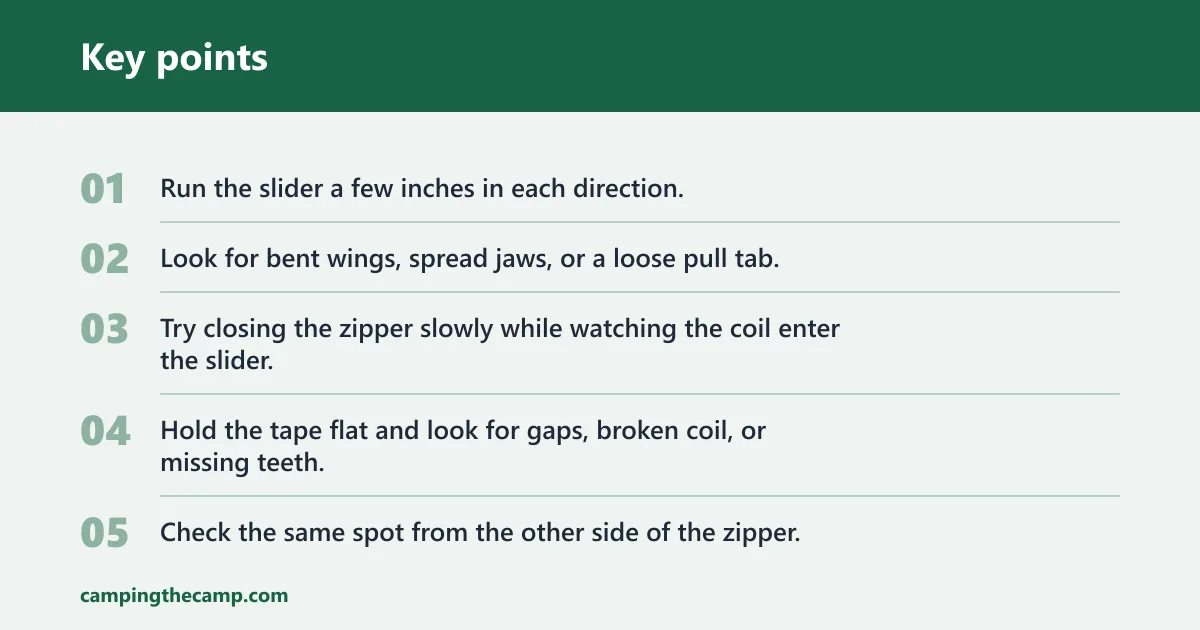
Check the slider first
- Run the slider a few inches in each direction.
- Look for bent wings, spread jaws, or a loose pull tab.
- Try closing the zipper slowly while watching the coil enter the slider.
If the zipper closes but opens behind the slider, the internal grip is likely worn. That is a common slider failure, and it can happen even when the coil still looks fine.
Inspect the coil or teeth
- Hold the tape flat and look for gaps, broken coil, or missing teeth.
- Check the same spot from the other side of the zipper.
- Move the slider past the damaged area only if the track is intact.
If the zipper coil is visibly damaged, a full replacement is likely needed. A worn slider can separate without coil damage, but torn coil usually will not recover with a new slider.
Look at the stops and seam ends
- Inspect the top and bottom stops for damage or loss.
- Check whether the zipper end is buried under a sewn seam.
- Confirm the zipper tape is aligned on both sides before repair.
Damaged stops can let the slider run off the end, which can make the problem look worse than it is. If the track is sound but the slider cannot hold the teeth together, the repair path is usually shorter.
Tent zipper decision table
Use this table to match the symptom to the next move. It separates stuck, separating, and won’t-stay-closed failures so you do not skip straight to a full replacement.
| Symptom | Likely cause | Quick test | DIY fix | Tool needed | When to stop and replace the zipper |
|---|---|---|---|---|---|
| Slider sticks or drags | Dirt, dry coil, or light misalignment | It moves easier after the track is cleaned by hand | Clean and apply silicone spray, graphite powder, or candle wax | Cloth, lubricant | Stop if the coil is torn or missing |
| Zipper closes, then separates behind the slider | Worn slider grip | Teeth look intact but the gap opens right after the slider passes | Tighten the slider or replace it | Pliers, replacement slider | Stop if the slider will not hold after replacement or coil damage is visible |
| Zipper will not stay zipped from either side | Slider jaws spread or bent | Press gently on the slider body and retest | Pinch the slider slightly, then test again | Pliers | Stop if the slider is cracked, badly bent, or the coil is worn |
| Slider will not pass one area | Broken coil, bent teeth, or damaged stop | The same spot binds every time | Straighten minor tooth bends or replace the stop if possible | Pliers, seam ripper | Stop if coil damage runs along the track |
How to read YKK size markings
| Common tent size | How to identify it | What to match |
|---|---|---|
| #5 | Look for a stamped #5 on the slider or check manufacturer info | Slider size and tooth/coil type |
| #8 | Look for a stamped #8 or a product listing from the tent maker | Slider size and double pull tab style |
| #10 | Look for a stamped #10 or the tent’s spare-parts description | Slider size, pull orientation, and shape |
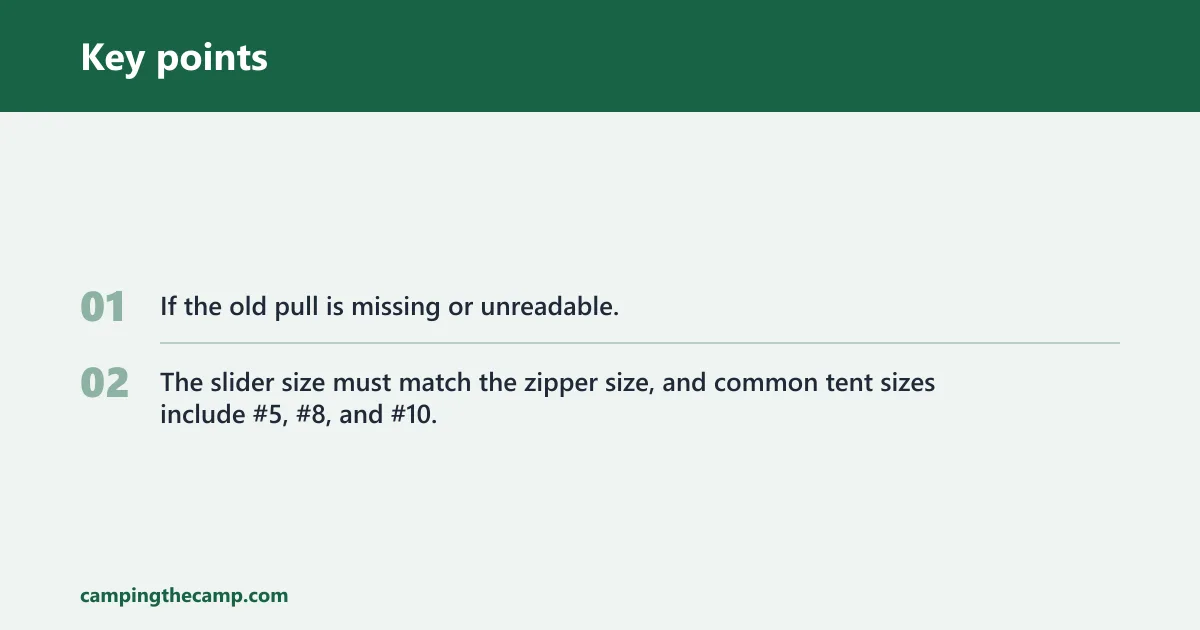
If the old pull is missing or unreadable, the tent maker’s parts listing is the cleanest match. The slider size must match the zipper size, and common tent sizes include #5, #8, and #10.
How do you fix a tent zipper?
Begin with cleaning and lubrication, then move to slider repair only if the track still looks sound. A worn tent zipper slider often causes separation, so a replacement slider is usually the next step before any full zipper job.
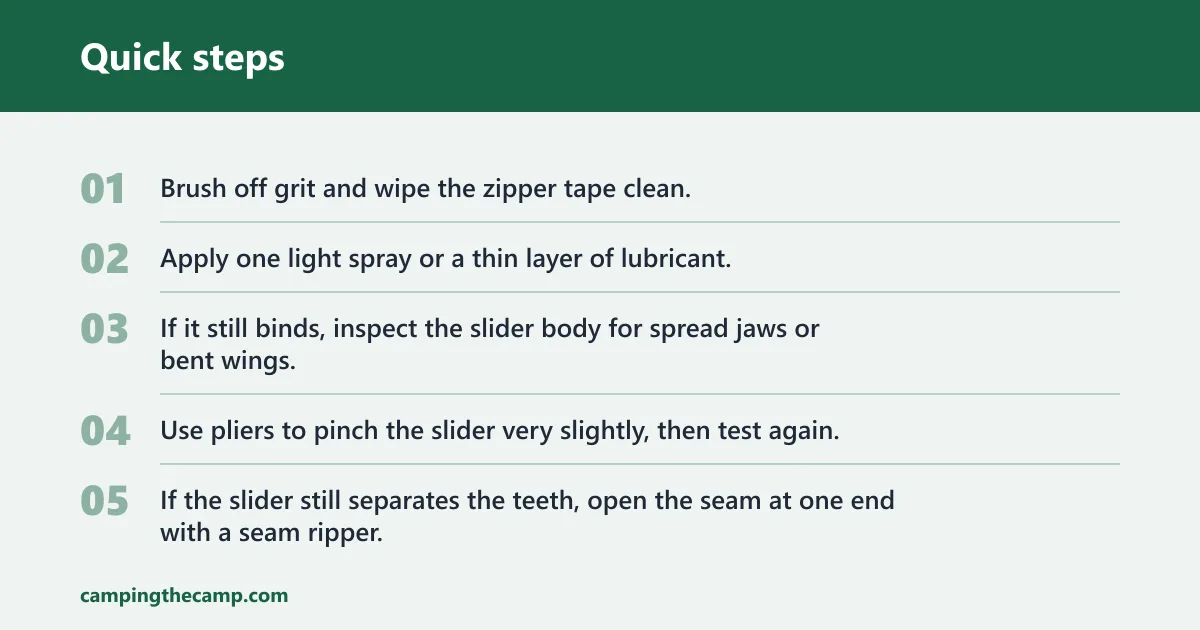
- Brush off grit and wipe the zipper tape clean.
- Apply one light spray or a thin layer of lubricant, then work the zipper back and forth about 5 to 10 times.
- If it still binds, inspect the slider body for spread jaws or bent wings.
- Use pliers to pinch the slider very slightly, then test again.
- If the slider still separates the teeth, open the seam at one end with a seam ripper.
- Remove the old slider before installing the new one.
- Feed the back end of the slider on first, then align both sides of the coil and run it through slowly.
- Close the seam end with industrial thread such as Tex 40 or Tex 60, then test from both the inside and outside.
Say your tent has a #8 zipper and the slider closes for 2 feet, then pops open near the door curve. That pattern usually points to slider wear if the coil still looks even. A replacement double pull tab slider is the cleaner fix than forcing the old one.
Suppose the zipper sticks only at the last few inches near the bottom stop. If the coil there is intact, lubricant and a careful alignment check may solve it. If the same spot shows broken coil, the repair stops being a slider job.
When should you replace the whole zipper?
Replace the whole zipper when the coil is torn, badly worn, or missing teeth in a long section. A slider swap will not hold if the track itself is damaged, and sewing time starts to outweigh the value of a patch repair.
Full zipper replacement is also the better call if the stops are destroyed, the tape is frayed along a long run, or the zipper must be opened in several places. That job is labor intensive and sewing-heavy, so many campers choose a pro repair when the tent body is still worth saving.
Cost matters here. A replacement slider and basic supplies usually stay far below a full zipper replacement. Rugged Thread lists tent slider replacement repair costs at $40-60, which gives a useful benchmark if you are deciding between a DIY part swap and paying for a larger sewing job.
Common mistakes
Using the wrong slider size is the fastest way to waste time. A #5, #8, and #10 tent slider do not interchange, so match the size to stamped markings or the tent maker’s parts info before you buy.
Another mistake is over-squeezing the slider. Pliers can help with a loose slider, but too much pressure can crush the body or make the jaws bind. If the slider is cracked or badly spread, replace it instead of chasing a tighter fit.
Do not skip the final test. Run the zipper from both sides after the repair, because tents with double pull tabs should open and close cleanly from inside or outside. If it separates again at the same point, stop and recheck the coil.
What if the slider is missing or unreadable?
Match by the zipper size in the tent maker’s parts info, or compare the old track to a known #5, #8, or #10 slider from the same brand. If the replacement slider does not fit the coil width cleanly, do not force it; the wrong part can damage the track further.
Frequently asked questions
How do I fix a tent zipper that won’t close?
Clean the track first, then use a lubricant and run the zipper several times. If the zipper still will not close, inspect the slider for looseness and pinch it slightly with pliers. If the coil is damaged or missing, replace the zipper rather than forcing the slider.
Why does my tent zipper keep separating?
A worn slider is a common reason a tent zipper separates when the coil still looks intact. The internal grip can stop pressing the teeth together tightly enough, so the zipper opens behind the slider. If the coil itself is bent, torn, or missing sections, the problem is the track instead.
Can I fix a tent zipper with pliers?
Yes, if the slider is loose or the zipper teeth are slightly bent. Use light pressure only, then test the zipper right away. If the slider body cracks, the jaws stay spread, or the zipper still separates, replace the slider instead of squeezing harder.
How do I know if my tent zipper needs a new slider?
If the zipper closes but opens again right behind the slider, the slider is likely worn. Check for spread jaws, bent wings, or a loose pull tab. A replacement slider is the next step when the coil looks sound and the size matches the tent’s zipper.
What size zipper slider do I need for my tent?
Most tent repairs use #5, #8, or #10 sliders. Read the stamped marking on the old slider if it is still there, or check the tent maker’s parts info. The replacement slider must match the zipper size and the pull style.
Can a tent zipper be repaired without replacing the whole zipper?
Yes, if the problem is lubrication or a worn slider. Clean the track, try lubricant, then replace the slider if needed. If the coil is torn, broken, or heavily worn, a full zipper replacement is the more dependable repair.
How do I fix a zipper that won’t stay zipped from the inside and outside?
Use a double pull tab replacement slider so the tent can open from both sides after the repair. Install it with the back end going on first, then test the zipper from inside and outside. If it still separates, the coil or stops may need repair too.
When is a tent zipper too damaged to repair?
If the coil is visibly damaged, missing in sections, or badly worn along much of the run, the zipper is past a simple slider fix. That is also true when the stops are broken and the tape is frayed. At that point, full replacement is usually the better choice.
Prevention
Keep the zipper clean, add lubricant before it starts to drag, and open and close it gently so the slider stays aligned. Check the tent zipper before a trip, not at camp, because a fast test at home is easier than repairing a stuck door in wet weather.