Best camp stove for families: Top picks That Fit

For most families, a common choice is a stable 2-burner propane model with about 20,000 to 30,000 total BTUs; move to 3 burners or an oven only if you regularly cook full breakfasts or bake at camp. Pick the wrong format and meals slow down, cookware crowds together, fuel use climbs, and spills around kids become more likely. This guide uses burner count, stove size, wind performance, griddle support, and fuel setup to match your group size and cooking style.
The overall top pick for most family campers is a wide, stable two-burner propane stove because it cooks the meals families actually make at camp, pasta, pancakes, eggs, sauces, and one-pot dinners, without taking over the picnic table.
Quick picks
- Best overall for most families: wide 2-burner propane camp stove with strong simmer control, full side windscreen coverage, and enough grate width for two real pans.
- Best for 5-plus people: extra-wide 2-burner or compact 3-burner propane stove, chosen by whether your meals need a third active pan or simply more side-by-side space.
- Best camp stove with oven: Camp Chef Outdoor Camp Oven for families that will actually bake, roast, or heat casseroles at camp.
- Best budget family stove: basic 2-burner propane stove with a stable base and usable low flame, even if it gives up some wind protection and grate width.
Family stove decision table
This matrix scores stove formats the way family campsites actually work: can it simmer oatmeal without scorching, hold two pans without crowding, stay steady when someone bumps the table, and keep fuel use in check in wind?
| Stove type | Burners | Simmer control | Stability | Wind protection | Cleanup | Setup time | Oven usefulness | Kid-safety risk | Best family match |
|---|---|---|---|---|---|---|---|---|---|
| Compact 1-burner canister stove | 1 | 3/5 | 2/5 | 1/5 | 4/5 | 5/5 | 1/5 | High | Skip for most family meals |
| Tabletop 1-burner butane stove | 1 | 4/5 | 3/5 | 1/5 | 4/5 | 5/5 | 1/5 | Medium-high | Backup or short day use |
| Narrow 2-burner propane stove | 2 | 3/5 | 3/5 | 3/5 | 3/5 | 4/5 | 1/5 | Medium | Budget 2-4 people |
| Wide 2-burner propane stove | 2 | 4/5 | 5/5 | 4/5 | 4/5 | 4/5 | 1/5 | Low | Best for 3-6 people |
| Extra-wide 2-burner with tall windscreens | 2 | 4/5 | 5/5 | 5/5 | 3/5 | 3/5 | 1/5 | Low | Strong pick for windy camps |
| Compact 3-burner propane stove | 3 | 3/5 | 4/5 | 3/5 | 3/5 | 3/5 | 1/5 | Medium | 5-plus people, full breakfasts |
| Freestanding 3-burner camp stove | 3 | 4/5 | 5/5 | 4/5 | 3/5 | 2/5 | 1/5 | Low-medium | Large groups with table space limits |
| 2-burner stove with oven | 2 plus oven | 3/5 | 4/5 | 3/5 | 2/5 | 2/5 | 5/5 | Medium | Families that bake often |
| Large flat-top griddle stove | 2-3 zones | 2/5 | 5/5 | 2/5 | 2/5 | 3/5 | 1/5 | Medium | Pancakes and burgers, not mixed meals |
How the matrix scores family-use criteria
For 2- to 4-person families, the wide 2-burner propane format often ranks well because it balances meal output, simmer control, and a size that still fits a campground table. For 5-plus people, an extra-wide 2-burner can still work for simpler meals, but a 3-burner can be more useful when one burner can hold a side or keep food warm.
The oven format rises only when baking is a real part of your meal plan. If the oven will mostly reheat rolls once a trip, it adds bulk, setup time, and cleanup without giving much back.
Best match for 2- to 4-person families
Pick a wide 2-burner propane stove. It handles a skillet plus a saucepan, or a griddle plate plus a kettle, while keeping the footprint small enough for most campground tables.
Best match for 5-plus-person families
Pick an extra-wide 2-burner if meals are pasta, chili, tacos, or soup. Pick a 3-burner if breakfast means pancakes, eggs, bacon, and a warming pot all at once.
When the oven format moves up or down
It moves up for families making biscuits, pizzas, baked pasta, or casseroles. It moves down for quick weekend trips where the oven gets preheated once, then sits unused.
What is the best camp stove for families?
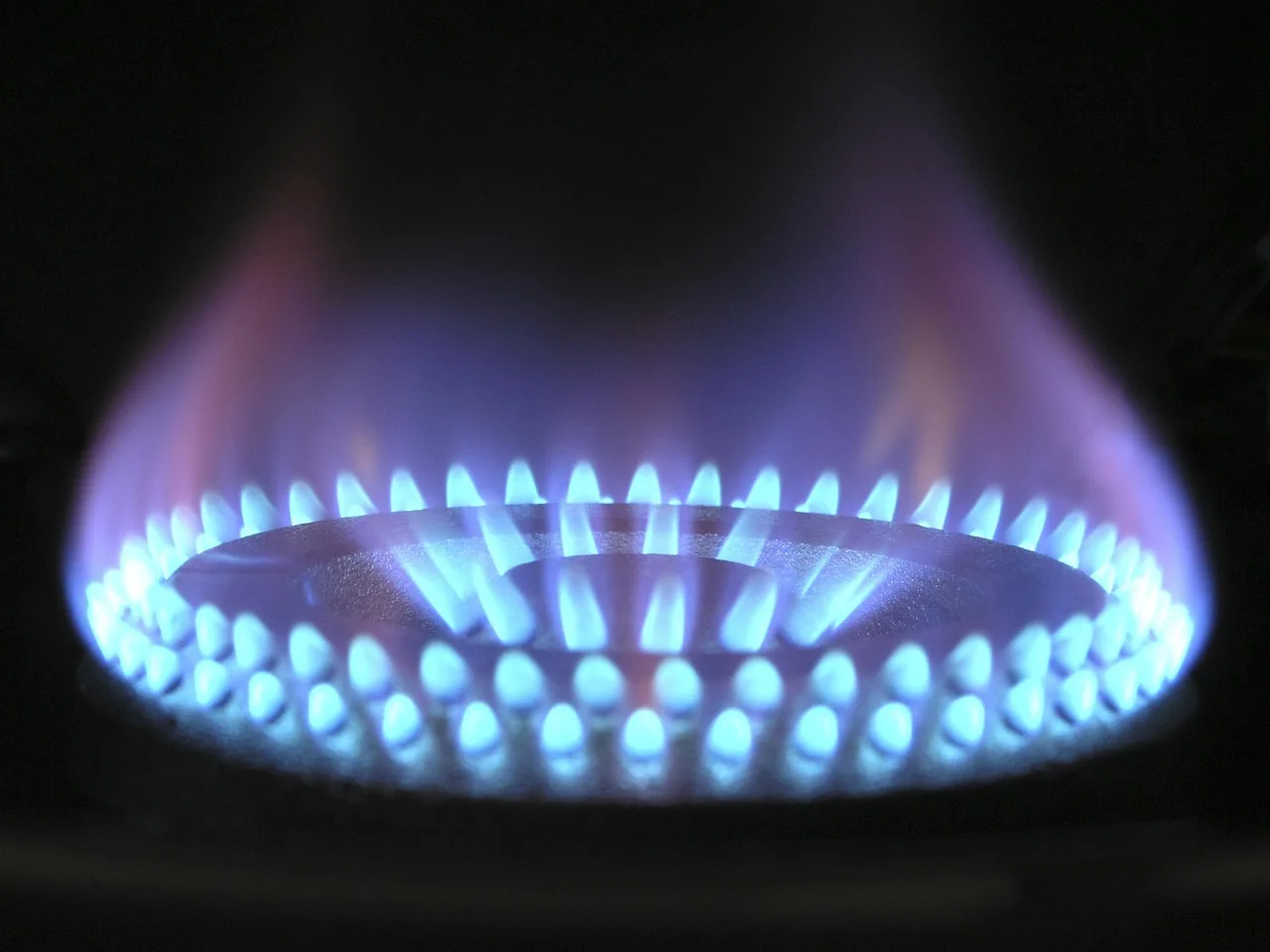
For most families, the best camp stove is a stable two-burner propane model with enough grate width for two full-size pans, dependable low-heat control, and windscreens that protect both burners. That format covers the most common family meals for 3 to 6 people without the bulk, cost, or table-space demands of larger stoves.
Why a stable two-burner propane stove is the default top pick
A family stove has to do more than boil water fast. It needs to simmer boxed mac and cheese without scorching, hold a sauce while another pan cooks, and stay planted when somebody brushes the table.
That is why the usual sweet spot is a two-burner propane camp stove in the common 20,000 to 30,000 total BTU class. This output band is easy to find across major camping brands, brings a pot to boil fast enough for family dinners, and still tends to offer better low-end flame control than many very high-output burners.
Propane fits the way most car-camping families cook because the fuel is easy to find, easy to pack, and common in full-size tabletop stoves. Many models screw directly onto a 1 lb bottle, and most can also run from a larger bulk cylinder with the right hose and regulator. For weekend use, a small bottle is convenient; for longer trips or bigger breakfasts, a bulk tank cuts bottle swaps and usually lowers fuel cost per meal.
When a larger stove beats the default choice
A larger stove wins when meal output, not raw heat, is the limit. If your group often needs one burner for pasta water, one for sauce, and one to keep vegetables warm, a 3-burner setup has a clear job.
Suppose dinner is spaghetti for six. Two burners can cover a stockpot and sauce pan, but garlic bread or a warming side has nowhere to go. A third burner fixes that. If dinner is chili plus rice, the third burner often sits idle and only adds width and weight.
Who should skip the oven format?
Skip a stove-oven combo if your family rarely bakes, camps mainly for one or two nights, or already keeps meals simple. The oven section adds mass, takes longer to preheat, and creates another hot surface at kid height.
What makes a camp stove family-friendly?
The best family camp stoves balance stability, cooking space, and simple flame control. The supporting guide breaks down the features that matter most, including burner count, BTU range, wind protection, ignition, and how easy the stove is to clean and carry. Those details help you avoid common problems like uneven cooking, spills, and a setup that feels cramped when kids are nearby.
If you are narrowing down options, the camp stove guide shows how to compare models quickly so you can match the stove to your group size, meal style, and campsite conditions.
Best for 3 to 4 people: two-burner propane camp stove
The burner and grate size that works for weeknight-style camp meals
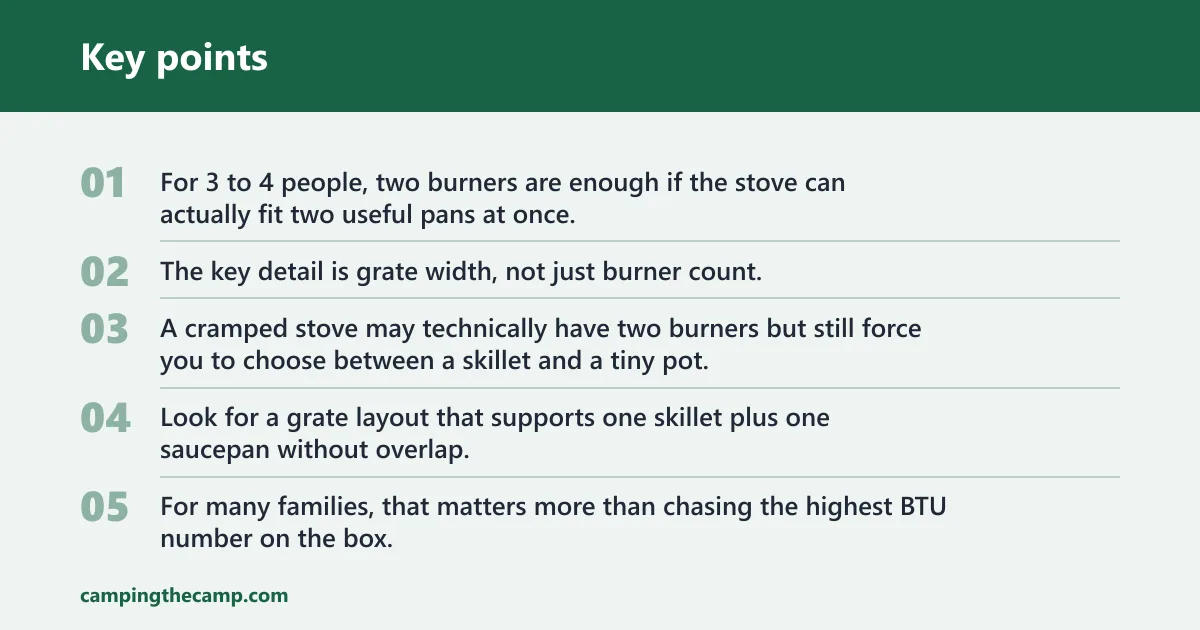
For 3 to 4 people, two burners are enough if the stove can actually fit two useful pans at once. The key detail is grate width, not just burner count. A cramped stove may technically have two burners but still force you to choose between a skillet and a tiny pot.
Look for a grate layout that supports one skillet plus one saucepan without overlap. That lets you cook pancakes and eggs together, or boil pasta while sauce simmers. For many families, that matters more than chasing the highest BTU number on the box.
Say your family of four cooks oatmeal in one pot and browns sausage in a skillet. On a narrow stove, the pot handle can crowd the skillet and turn both burners into awkward half-burners. On a wide stove, both pans sit flat and meal timing gets easier.
What good simmer control looks like on a family stove
Good simmer control means more than a knob that turns low. It means the flame stays lit at a reduced setting, spreads heat evenly enough for sauces and rice, and lets one burner run gently while the other still boils.
Family meals expose weak simmering fast. Pancakes burn on the first batch. Cheese sauces split. Beans stick while you turn to the other burner. A stove that only cooks well at full blast wastes fuel and narrows your menu.
The weight and pack-size range that still makes sense for car camping
For car camping, a two-burner stove can be heavier and larger than a backpacking setup, but it still has to earn its table space. Carry handles, locking lids, and a folded shape that slides beside a camp bin matter more than saving a pound.
Most families do best with a tabletop stove that sets up in a minute or two, stores flat in the car, and does not push food prep off the picnic table. Extra width helps cooking, but oversized frames become a problem at smaller sites.
Where windscreen design matters most
Wind protection is one of the biggest differences between a family-friendly stove and a frustrating one. Side windscreens, a recessed burner box, and grates that hold cookware close to the flame all help.
Wind affects more than boil speed. It can push flame away from the pan, make low settings unstable, and drive up fuel use. Outdoor-only use is still the rule, and the stove should sit well away from tents, dry gear, and any traffic path where kids pass close.
Best for 5-plus people: wide two-burner or three-burner stove
How extra cooking width changes meal throughput
For bigger families, extra width often matters as much as an extra burner. A wide two-burner stove can hold larger cookware, which means more pancakes per batch, more pasta in one pot, or a wider sauté pan for stir-fry.
If the stove can support two larger pans without handle collisions, it may beat a cramped 3-burner model. Meal output comes from usable cooking area, not burner count alone.
When a third burner helps and when it only adds bulk
A third burner helps when a meal needs three active heat jobs: boil, fry, and hold warm. It also helps when kids eat in waves and one small pot needs to stay ready without overcooking the main dish.
It only adds bulk when one burner becomes storage for a kettle or stays off all trip. In that case, the larger stove crowds the campsite table and asks you to carry more hardware for no gain.
Table space, campsite fit, and setup tradeoffs
Big family stoves can fix cooking bottlenecks and create campsite bottlenecks. Check the folded footprint against your usual table, especially if you also set out a wash bin, cutting board, and serving dishes.
A common first-timer mistake is buying a full-width 3-burner for a family of four, then finding that the stove leaves no prep space. Meals slow down because the cutting board ends up on a cooler lid three feet away.
Best for baking: camp stove with oven
What the oven adds for family meals
An oven stove adds one thing other camp stoves do not: separate enclosed heat for baking and roasting while the top burners stay available. That is useful for biscuits, nachos, baked pasta, and reheating foil-pan meals without tying up the stovetop.
The Camp Chef Outdoor Camp Oven combines two 7,500 BTU brass burners with a 3,000 BTU oven burner. Its total output is listed as 18,000 BTU. The oven capacity is 11″ L x 16″ W x 9″ H, it fits 9×13 pans, and the maximum oven temperature is 400°F.
It also includes a built-in thermometer and glass viewing window, which matters with kids nearby because you can check progress without opening the door as often. Its street price is commonly around $250-$300 on Amazon, which places it above many standard family two-burner stoves.
Capacity limits, pan fit, and thermometer usefulness
Pan fit matters more than the word oven on the label. The Camp Chef unit fitting 9×13 pans makes it far more useful for family casseroles and brownies than smaller ovens that force tiny bakeware.
The built-in thermometer is another practical detail. Oven stoves can run hotter or cooler than expected, and visible temperature feedback cuts guesswork during a meal with kids waiting.
The VEVOR Outdoor Camping Oven pushes harder on maximum heat. It can reach 518°F in 10 minutes and 662°F in 15 minutes, and it includes a 60-minute timer function. That makes it more interesting for pizza or faster high-heat baking, but families still need to weigh size, control, and campsite workflow.
Bulk, preheat time, and why some families should pass
Oven stoves are worth it only if the oven changes your menu often enough. They are heavier, taller, slower to set up, and usually harder to clean than a plain two-burner stove.
Picture a two-night trip where dinner is tacos, breakfast is eggs, and lunch is sandwiches. An oven-capable stove can do all of that, but so can a simpler two-burner with less bulk and less hot metal at child reach height.
How many burners do you need for family camping?
Many families do fine with two burners rather than three. Two burners handle simple breakfasts, pasta dinners, soups, tacos, and one-pan meals for 3 to 6 people if the stove is wide enough for real cookware. Move to three burners when meals regularly need a third pan for sides, warm holding, or a separate kid-friendly item.
Two burners for simple breakfasts and one-pot dinners
Two burners are enough for adults with one or two kids, and often enough for a family of five when meals stay simple. Think oatmeal plus sausage, pancakes plus eggs, or pasta plus sauce.
For a four-person family, the right size is usually a two-burner propane stove with enough grate room for a skillet and a saucepan at once. That setup covers most campsite meals better than a narrower 3-burner.
When three burners help with sides and warm holding
Three burners help when your meal workflow includes one burner that stays on low while the other two do active cooking. That might be rice holding warm, a small pot of beans, or a separate pan for a child who needs plain food.
For 5-plus-person groups, that third burner becomes more valuable as meal complexity rises. For low-complexity meals, width still beats count.
Why grate width can matter more than burner count
Burner count looks good on product pages. Grate width decides whether you can use the stove comfortably. A well-spaced two-burner with full-size cookware support often beats a tightly packed 3-burner where each flame competes for pan space.
What BTU rating is good for a family camp stove?
A good BTU rating for a family camp stove is usually in the 20,000 to 30,000 total BTU range for a standard two-burner propane model. That is enough for fast boiling and weeknight-style camp meals, but the burner split, low-flame control, cookware fit, and wind protection matter more than the headline total.
Total BTU versus burner BTU split
Total BTU tells you the stove’s ceiling, not how well it cooks. A balanced burner split is often more useful for families than one very hot burner paired with one weak one.
Family cooking often needs one burner at a rolling boil and the other at a calm simmer. If both burners only work well near high output, dinner gets harder, not easier.
Boil speed versus low-heat control
Higher BTUs usually mean faster heat-up. That helps with pasta water and big pots, but a stove that cannot hold a gentle flame can ruin pancakes, sauces, and rice.
The Camp Chef Outdoor Camp Oven is a useful example of why raw BTU totals do not tell the full story. Its listed total is 18,000 BTU, yet its appeal for some families is not sheer burner output. It is the ability to cook on top while baking below.
How wind and cookware change real cooking performance
Wind can erase a paper advantage quickly. A lower-rated stove with better shielding may boil sooner in a breezy campsite than a hotter stove with exposed burners.
Cookware also matters. A large pan spreading over both burners changes how usable the stove feels. So does a stockpot that blocks knob access or catches wind above the flame line.
How to choose a safe family camp stove
Choose a safe family camp stove by starting with stability, then flame control, then fuel setup. A wide base, secure legs or feet, windscreens that shield rather than trap heat, clear controls, heat-safe handles, and a fuel connection that does not force awkward bottle placement matter more than maximum output when kids are nearby.
Stable legs, base width, and anti-tip design
A stable stove is harder to knock, easier to stir on, and less likely to spill boiling food. Wide feet, rigid sidewalls, and a lid that locks open or stays out of the way all help.
Narrow bodies and tall cookware are a bad mix around children. If the stove rocks on the table or the feet fold loosely, move on.
Flame shielding, wind protection, and safe placement
Good windscreens protect the flame without crowding the pan so tightly that hot surfaces become harder to avoid. Set the stove outdoors only, on a level surface, with clear space around all sides and no hanging towels, chairs, or toy traffic beside it.
Place it where kids cannot reach the knobs or grab pan handles. Turn handles inward and route the fuel line behind the table edge to reduce snags.
Propane bottle versus bulk tank setup
A 1 lb bottle keeps the system compact, but it can put the bottle close to the stove body and may require more changes over a busy weekend. A bulk cylinder connected by the correct hose and regulator moves the tank away from the heat source and reduces interruptions during longer stays.
For a short weekend with simple meals, the smaller bottle is often enough. For several days of family breakfasts and dinners, bulk propane is usually the less annoying choice.
Handles, latches, and visible controls with kids nearby
Heat-safe handles, secure lid latches, and controls that are easy to read and turn matter more than they sound. On oven units, a visible thermometer reduces door opening and the hand traffic that comes with it.
Setup checklist
- Pick a stable spot. Use a level picnic table or camp kitchen surface with room on every side. Leave enough distance from tents, dry grass, and loose gear so nobody has to brush past the flame zone.
- Check the fuel connection. Thread the 1 lb bottle straight, or connect the bulk hose and regulator fully before opening the tank. A clean connection prevents weak flame, flare-ups, and mid-meal shutdowns.
- Open windscreens fully. Set the side panels as designed and keep them clear of oversize pans. The goal is steadier flame and lower fuel waste, not trapping excess heat against controls.
- Stage cookware first. Put the pan and pot you plan to use within reach before lighting. That cuts knob fiddling and carrying hot cookware around kids once the stove is running.
- Assign a kid boundary. Mark a no-step zone around the table or stove stand before cooking starts. Families that do this early usually avoid last-second corrections when burners are already hot.
Frequently asked questions
Is a camp stove with an oven worth it for families?
It is worth it only if baking is part of the plan on most trips. An oven helps with biscuits, casseroles, pizza, and reheating large pans, but it adds bulk, setup time, and another hot surface. For simple weekend meals, a plain two-burner stove is usually the better buy.
What camp stove is easiest to use with kids around?
The easiest stove to manage with kids nearby is a wide, low tabletop two-burner propane model with a stable base, clear control knobs, strong windscreens, and secure latches. That format keeps pans flatter, lowers tip risk, and avoids the extra reach and heat zones of larger or taller stove setups.
What size camp stove do I need for 4 people camping?
For four people, start with a two-burner propane stove that can hold a skillet and a saucepan side by side without crowding. That size handles most breakfasts and dinners well. Go larger only if your family routinely cooks three separate items at once or uses oversized cookware.
How do I choose a safe camp stove for family camping?
Start with a stove that stays steady on a picnic table, shields the flame from wind, and keeps handles and knobs easy to manage. Then match the fuel setup to the trip length. A safe family stove reduces tip risk, limits reaching over flames, and keeps fuel lines or bottles out of traffic.
What fuel type is best for a family camping stove?
For most car-camping families, propane is the best fuel type because it is easy to find, simple to connect, and common in the standard two-burner format. A 1 lb bottle is convenient for shorter trips, while a bulk cylinder with the correct hose and regulator makes more sense for longer stays.