
Why does my tent get condensation and how can I stop it?

Your tent gets condensation when moist air inside cools on a colder surface, usually the fly or wall. If the tent is touching wet fabric or ventilation is blocked, fix that first. Left alone, it soaks sleeping bags, drips onto gear, and can make a dry night feel damp and cold. This guide shows how to tell whether humidity, site choice, airflow, or tent design is the main cause, and which fix matches each one.
Condensation diagnosis table
Use the symptom first. Then match it to the fastest check and the most likely fix. That is faster than guessing, and it keeps you from treating a leak problem as a ventilation problem, or the reverse.
| Symptom | Likely cause | Fastest test | Best fix |
|---|---|---|---|
| Wet fly only | Normal condensation on the outer layer, especially after a cool night with high relative humidity | Touch the inside of the fly before packing. If the inner tent is dry and the wetness is on the fly fabric, condensation is likely. | Open vents, improve crossflow, and keep the inner tent from touching the fly. |
| Dripping ceiling | Condensate building on a cold roof area, then dropping from the highest point | Look for droplets on the underside of the fly or roof panel, especially after a still night. | Increase airflow through peak vents, wall vents, and mesh openings. Reduce moisture inside the tent. |
| Pooled water at beam bases | Inflatable tent air tubes staying cooler than the air around them, with condensate running down and collecting low | Check whether the wettest area sits along the base of the tubes rather than on a torn seam. | Boost ventilation, avoid sealing the shelter too tightly, and wipe the pooled water with an absorbent cloth. |
| Frost turning to water in the morning | Moist air has frozen on a colder surface, then thawed as the tent warms | See whether the fabric starts as frost or ice crystals, then becomes liquid after sunrise. | Limit indoor moisture, keep vents partly open, and wipe surfaces before the thaw spreads. |
| One-sided wall moisture | Blocked airflow on one side, often from a windbreak, a tree line, or gear packed against the wall | Check whether the dry side is the side with moving air and the wet side is sealed off. | Clear space from the wall, open vents on both sides if possible, and avoid pressing gear against fabric. |
Why does my tent get condensation inside?
How warm moist air turns to liquid
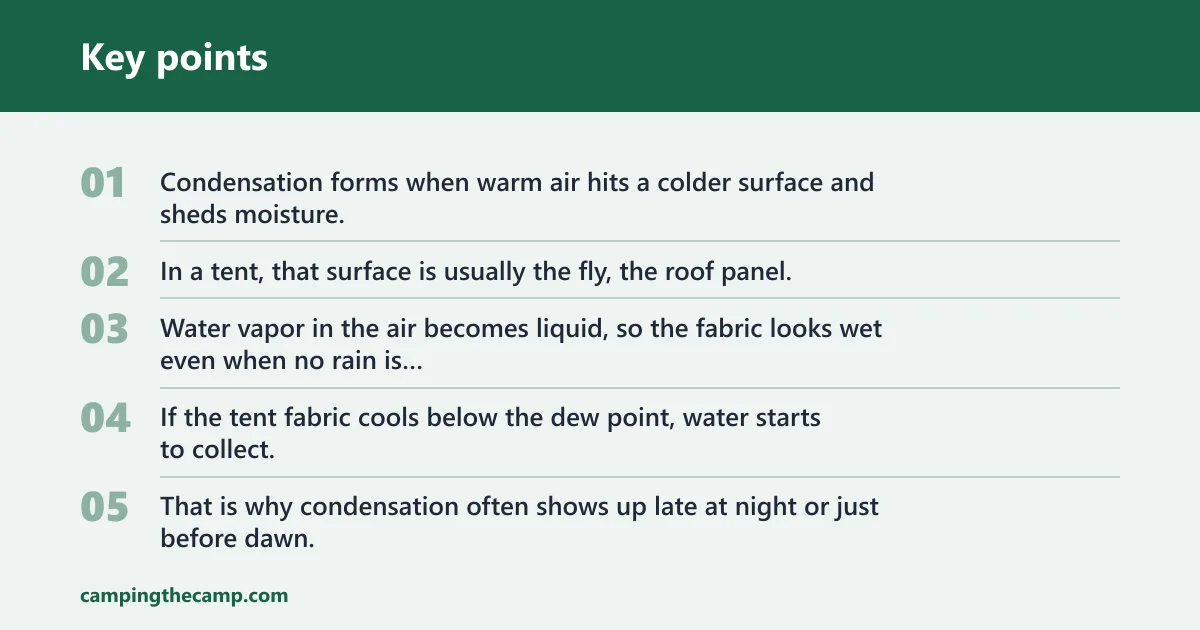
Condensation forms when warm air hits a colder surface and sheds moisture. In a tent, that surface is usually the fly, the roof panel, or a tube wall that cooled faster than the air inside. Water vapor in the air becomes liquid, so the fabric looks wet even when no rain is falling.
The key point is temperature change. If the tent fabric cools below the dew point, water starts to collect. That is why condensation often shows up late at night or just before dawn, when the shelter and the air around it have cooled the most.
What dew point means in a tent
Dew point is the temperature where air can no longer hold the moisture it contains. Once tent fabric drops below that point, water leaves the air and lands on the colder surface. A fast overnight temperature drop makes this more likely, especially in clear weather or still air.
That is why a tent can look fine at bedtime and wet by morning. The air inside may start out comfortable, then cool as the night progresses while breath, sweat, and damp gear keep feeding moisture into the shelter.
Why relative humidity matters overnight
Relative humidity tells you how much water the air already holds. Higher humidity means the air is closer to saturation, so it takes less cooling to push moisture onto the tent walls. That is why damp sites, still air, and wet ground all raise condensation risk.
A person can add enough moisture through breath and sweat during the night to make a small tent noticeably damp by morning. Those figures explain why a closed tent can get wet even without rain.
How can you tell condensation from a leak?
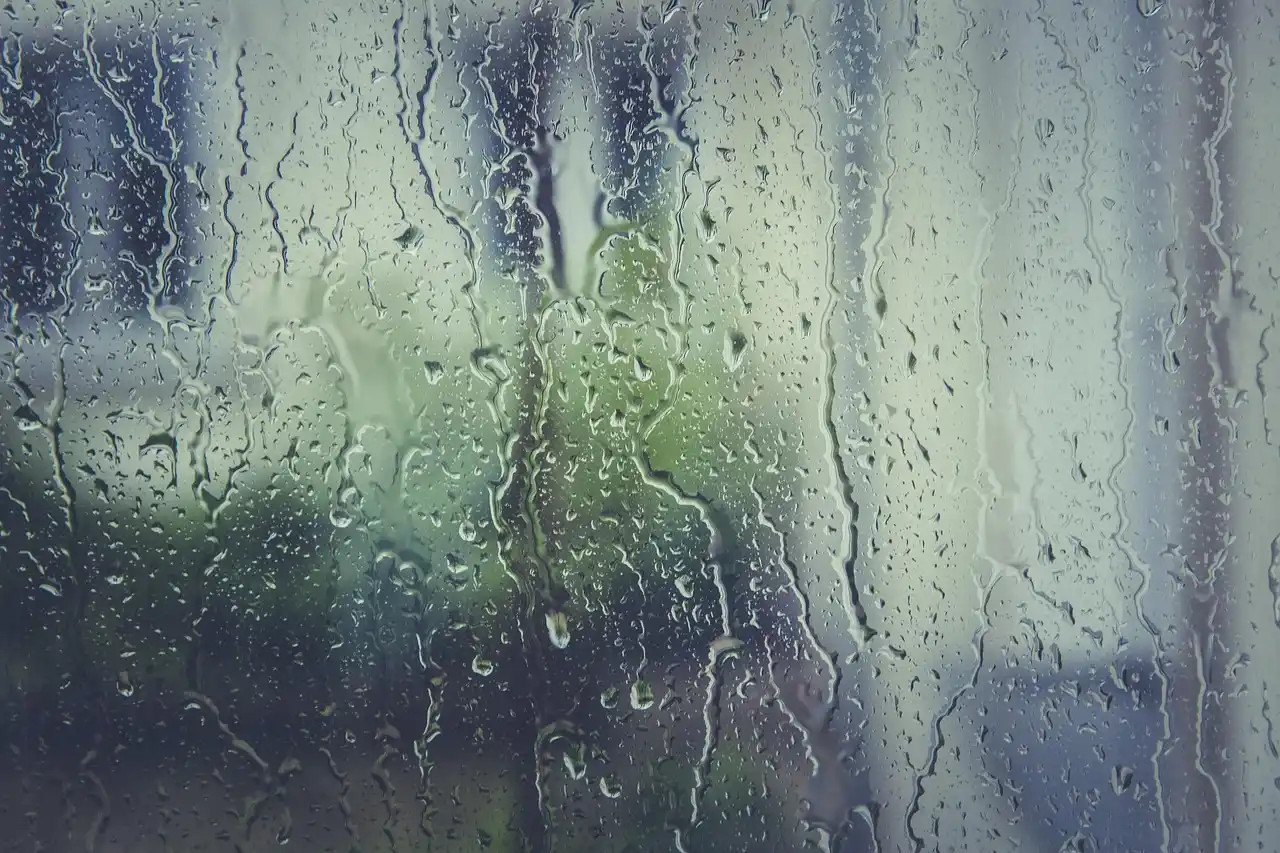
Condensation usually shows as a wide film, small beads, or drips on the colder parts of the tent, while a leak often traces back to a seam, puncture, or rain impact point. The difference matters because the fix is different. If you misread the source, you may open vents when the fabric actually needs repair, or patch the tent when the real issue is trapped moisture.
Quick field checks for rain leakage
Start with the weather pattern. If the tent got wet during rain, inspect seam lines, pole crossings, zipper areas, and the side that faced wind-driven rain. A leak often leaves a more direct trail than condensation, and it may keep showing up in the same location after a dry night.
Suppose the ceiling is wet in a narrow line under a seam, while the rest of the fly is dry. That points more toward a leak than general condensation. If the entire inner face is damp after a still night, condensation is more likely.
Signs of ground moisture or splashback
Wetness low on the tent can come from splashback, pooled ground water, or groundsheet seepage. Check whether the wet area starts from the floor edge and climbs upward, especially after rain. If the ground is soft or saturated, water can move into the shelter from below or bounce up onto the wall.
Also check whether the tent sits in a slight hollow. Water running downhill can collect there during the night, even if the pitch looked dry at setup.
Clues that point to fabric condensation
Condensation often shows up where warm air meets cold fabric: the roof, the fly, or the upper side wall. If the tent is dry near the floor but wet overhead, and the wetness changes with airflow, that pattern points to moisture in the air rather than a fabric failure.
A common first-timer mistake is to assume any wet fabric is a hole. In many cases, the tent is simply collecting water from the air inside.
What tent features make condensation worse or better?
Double-wall tents and the air gap
Double-wall tents typically use an inner breathable tent plus a separate rainfly, with an air gap between them. That thermal break helps keep the inner sleeping space farther from the cold outer surface. It also gives condensation somewhere else to form, which reduces direct drip risk onto occupants.
That does not eliminate moisture. It just changes where it lands. In a double-wall tent, the fly usually takes the wetting first, while the inner tent stays drier if you keep the two layers from touching.
Single-wall tents and direct fabric contact
Single-wall tents have no air gap, so the inside surface cools more quickly and reacts more strongly to ventilation mistakes. Without that air gap, the tent is more sensitive to breath moisture, damp gear, and poor site choice.
With this design, you need to be more careful about keeping vents open and avoiding contact between sleeping bags, clothing, and the wall. Even a small cold spot can turn wet in a hurry.
Inflatable tent air tubes and pooling at the base
Inflatable tent air tubes can cool quickly, and moisture may collect on the surface and run downward. Condensate can create drips and even pool on the floor. That is why the base of the beam can look wetter than the upper wall.
If the wettest spot sits low along the frame, do not ignore it as random splash. Check airflow first, then look at how the shelter is pitched and whether the inner space is sealed too tightly against the outer skin.
Does ventilation really stop tent condensation?
Ventilation is the main control for most tent condensation problems because it moves humid air out before it cools onto the fabric. But even with good airflow, cold, still, or very humid weather can still produce heavy condensation. It works only if you open the right points and leave them open enough for exchange. A shut tent traps the moisture you create during the night.
Which vents to open first?
Open the highest exhaust points first, then add lower intake openings so air can move through the shelter. Maximize airflow by opening doors and air vents. Rear vents help air exit the tent, and wall vents beneath windows bring air in at ground level.
That pattern matters. Air needs an exit and an entry, or it just swirls inside. If your tent has a peak vent, a rear vent, and a mesh door, use them as a system, not one at a time.
How much to leave open in wet weather
Leave openings partly open even in wet or cold weather unless the design or storm conditions force you to close them. A small opening is better than a sealed shell. You want enough ventilation to move damp air out, but not so much that rain blows straight inside.
If conditions are calm and damp, open opposite sides a little. If the weather is windy and rainy, keep the protected side open and the windward side more restricted. The point is controlled exchange, not full exposure.
Why blocked airflow creates hot spots of moisture
Blocked airflow creates dead zones where humid air collects. Gear stacked against the wall, a sleeping bag pressed into the fly, or a packed vestibule can block the path that air needs to move. Once the air stalls, moisture settles on the coldest patch.
That is also why one wall can be damp while the opposite side stays dry. The wet side is the side where air circulation is weakest.
What campsite conditions raise condensation risk?
Your pitch can create a condensation problem before you ever crawl into the tent. Cool air pools in some places, moisture hangs in others, and the ground itself can feed the air with water. Site choice matters because the tent can only manage the conditions around it, not erase them.
Tree cover and cool air drainage
Heavy tree cover can trap humid air and block drying breezes, especially in low light and still weather. Cool air also drains downhill at night, so a dip in the ground can become a colder, damper pocket than the surrounding area. That makes the fabric more likely to cool below the dew point.
If you must camp under trees, look for a spot with some moving air and enough overhead clearance to avoid drips from branches or dense canopy moisture.
Pitching near water
Will pitching near water make condensation worse? Usually yes. Lakes, rivers, marshes, and saturated banks add humidity to the air around the tent, which raises the chance that moisture will condense overnight.
That is not a magic fix, but it shows the direction of the problem. The closer you are to standing water, the more humid the night air tends to be.
Wet ground, sheltered hollows, and still air
Wet ground feeds moisture into the tent area, especially after rain or heavy dew. Sheltered hollows are worse because they hold still, damp air and can stay colder than open ground. In those spots, the tent wall cools faster and the humidity stays higher for longer.
Picture a small tent pitched in a shallow bowl with no wind and wet grass underfoot. The shelter can be dry at sunset and wet by dawn even if no rain falls.
Which moisture sources matter most inside the tent?
Inside moisture matters because the tent does not create condensation on its own. You do, through breathing, sweat, and damp items brought inside. A little moisture. Others add enough to overwhelm weak ventilation.
Breathing and sweat overnight
Breathing and sweat are the main indoor sources on a normal night. The air you exhale is moist, and body heat warms the shelter while you sleep. A sealed tent keeps that moisture in, where it later hits cooler fabric and turns into liquid.
That is why a single sleeper in a small tent can still wake up to wet walls. The shelter volume is modest, so the moisture load adds up quickly.
Wet clothes, footwear, and damp gear
Wet clothes can be a significant source because they keep releasing water into the air long after you stop moving. Keep wet clothes in dry bags. That keeps the moisture from spreading through the sleeping space and condensing on the fly or inner wall.
Footwear, rain shells, and damp towels should stay out of the main sleeping area if possible. Every wet item inside the tent raises the humidity and increases the chance of morning drips.
Cooking and hot drinks inside the shelter
Cooking inside the tent adds moisture fast, and do not cook inside the tent because of fire and carbon monoxide risk. Hot drinks can do the same on a smaller scale. Steam goes straight into the air, then lands on the coldest fabric surface nearby.
If weather forces you to boil water, do it outside the tent or well away from the sleeping area, with strong ventilation, and move the pot out as soon as the task is done.
How do you stop condensation dripping on your sleeping bag?
Stop the drip at the source first: open vents, prevent wall contact, and reduce moisture inside the tent. If the fly is already wet, keep bedding away from the wall and use a cloth to remove the liquid before it falls. The goal is to break the path from wet fabric to sleeping bag.
- Open the peak vent, rear vent, and a mesh door or wall vent if weather allows.
- Move sleeping bags, packs, and clothing away from the tent wall.
- Keep wet gear in dry bags or outside the sleeping area.
- Wipe the fly or wall with an absorbent cloth when droplets start to form.
- Recheck the wettest area after sunrise, before packing the tent away.
Use an absorbent cloth to mop up pools of condensation. That is a practical step, not a cure. It keeps liquid from soaking gear and helps the shelter dry faster before you pack up.
Say your two-person double-wall tent has a damp fly after a cool, still night, but the inner tent is dry. Open the rear vent and mesh door, move the sleeping bag away from the sidewall, and wipe the fly before breakfast. That often keeps the moisture from dripping onto bedding.
Frequently asked questions
Is condensation in a tent normal?
Yes. Condensation is a normal camping issue when the air inside is humid and the fabric cools overnight. It does not mean the tent is failing. The key is to identify whether the moisture comes from normal air cooling, blocked ventilation, or actual water entry.
How do I know if it’s condensation or a tent leak?
Condensation usually shows as widespread beads, film, or drips on cold fabric. A leak more often follows a seam, puncture, or rain-facing side. If the wetness appears after a still, cool night and the inner tent is otherwise dry, condensation is the more likely cause.
Does opening tent vents really reduce condensation?
Yes, because it gives humid air a way out before it cools on the fabric. Open high vents first, then add low intake points so air can move through the tent. Partial opening is often enough in damp weather, as long as the openings are not sealed shut.
Can wet clothes or cooking inside a tent cause condensation?
Yes. Wet clothes release moisture for hours, and cooking adds steam very quickly. Both raise humidity inside the shelter and can push the tent walls past the dew point. Keep wet clothes in dry bags and avoid cooking inside the tent whenever possible.
Are double-wall tents better for condensation?
Usually yes. A double-wall tent creates a thermal break between the inner tent and the rainfly, so condensation forms on the outer layer more often than on your bedding space. Single-wall tents have no air gap, so they need more careful ventilation and site selection.
Will pitching near water make condensation worse?
Usually yes, because lakes, rivers, marshes, and damp banks raise the humidity around the tent. That gives condensation more moisture to work with overnight. If you can, pitch farther from standing water and choose a spot with some moving air rather than a still hollow.