Best camping cookware set for couples: size and feature guide

For two people, a common camping cookware set is about a 1.5- to 2.5-liter pot plus a 7- to 9-inch skillet, with nesting lids and a shared handle if one-pan meals are common; go smaller for backpacking and larger for simmer-heavy car camping. Buy the wrong size and you end up with burnt meals, slow heating, wasted pack space, or gear that cannot match your stove. This guide sizes a set by meal style, heat source, and packing needs, then compares the features that matter most.
What size cookware do two people need?
Meal style matters more than headcount. For two people, the best fit is usually a compact 2-person nesting cookset with one pot and one pan or a lid-pan combo, because it covers breakfast, pasta, rice, and simple simmering without turning your kit into family-size baggage. A larger set helps only when you cook real two-person meals, not just boil water.
A practical main-pot capacity target for two people is about 1.5 to 3 liters. That range covers solo-style boil-and-eat meals for two, while the larger end is better for one-pot dinners and water-heavy cooking. RIDGESTOK lists 1.5 to 2 liters as ideal for two, while other couple-focused guides go up to 3 liters when dinner is more than instant food.
Couples cookware sizing matrix
| Meal style for two | Recommended pot size | Recommended pan size | Set type | Material | Buy this | Skip that |
|---|---|---|---|---|---|---|
| Breakfast-only | 1.5-2 liters | 7-inch skillet or lid-pan combo | 2-person nesting cookset | Hard-anodized aluminum with nonstick | Light set with quick cleanup for eggs, oatmeal, and coffee | Large stainless set with extra bowls and oversized lids |
| Simple boil-and-eat | 2-2.5 liters | Optional small pan | Cookware-only set | Hard-anodized aluminum or stainless steel | One pot, one lid, folding handles, compact nesting bundle | Four-person dinnerware kit with plates and sporks you will not use |
| Mixed stovetop meals | 2.5-3 liters | 8- to 9-inch skillet | 2-person set with real pan depth | Stainless steel or hard-anodized aluminum | Set with stable handles, lid that fits the pot, and space for sautéing | Tiny backpacking pot that cannot hold pasta or sauce for two |
| Fire-first car camping | 2.5-3 liters | 8- to 9-inch skillet | Nested set with heat-tolerant pieces | Stainless steel | Durable cookware that handles open flame and rough packing | Thin nonstick cookware used over high flame without care |
Say your evenings usually mean pasta, jarred sauce, and a vegetable. A 2-liter pot can work, but a 2.5- to 3-liter pot gives you more room to stir without spilling starch or sauce over the rim. The same couple eating only oatmeal and freeze-dried meals can stay smaller and lighter.
2-person or 4-person set?
A 2-person nesting cookset is enough when you want compact packing and you cook for two most of the time. A 4-person set makes sense only if you want extra bowls, a bigger pot, and more flexibility for shared meals, because the extra pieces add bulk and weight even when you leave half the kit unused.
CAMPRIZZ says a four-person set suits most couples and small families, but that advice fits couples who want dinnerware included and do not mind the larger bundle. CAMPRIZZ also recommends matching cookware size to group size, which matters more than buying by headcount alone.
Outdoorgearlab’s best overall camping cookset includes a 5.6-quart stockpot and a 2.6-quart sauté pan, and its packed size is 11 x 7.5 inches. That shows how quickly a larger set grows once you add real kitchen-style pieces. For many couples, that is useful only if you cook like a small household at camp.
When a 2-person nesting cookset is enough
Choose the smaller set if you want one pot, one pan, and a compact bundle that drops into a daypack, van drawer, or tote. It also fits couples who split gear, because one person can carry the stove while the other carries food and cookware. That balance matters more than raw capacity on short trips.
When a 4-person set is worth the bulk
Choose the larger set if you cook one-pan dinners often, need extra bowls, or want a kit that covers visitors without buying separate pieces. F1 notes that the Stanley Adventure Base Camp is a four-person set with plates, bowls, and sporks inside one pot, which is convenient when dinnerware matters as much as cookware.
Buy this, skip
Buy a 2-person set if your meals are simple and you care about packing cleanly. Skip a larger kit unless you truly need the extra volume, because the usual penalty is more parts, more rattle, and more dead space in the bag.
Pot size, pan size, and capacity
For two people, pot capacity should match the meal, not just the number of mouths. A 1.5- to 2-liter pot suits quick breakfast duties and boil-and-eat meals, while a 2.5- to 3-liter pot is better for rice, pasta, soup, and recipes that need stirring room. Pan size matters too, because a skillet that is too small crowds food and browns unevenly.
How pan diameter affects cooking space
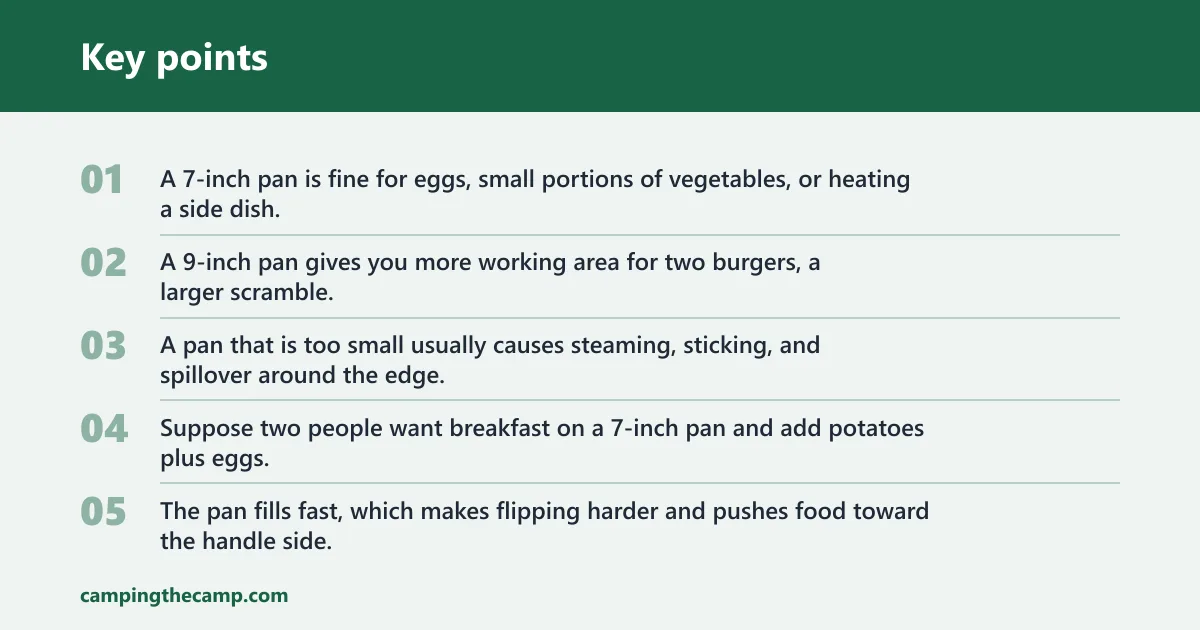
A 7-inch pan is fine for eggs, small portions of vegetables, or heating a side dish. A 9-inch pan gives you more working area for two burgers, a larger scramble, or a stir-fry that needs room to move. A pan that is too small usually causes steaming, sticking, and spillover around the edge.
Suppose two people want breakfast on a 7-inch pan and add potatoes plus eggs. The pan fills fast, which makes flipping harder and pushes food toward the handle side. A wider pan solves that without forcing a jump to family-size cookware.
Lid fit and burner coverage
Lids should actually fit the pot rim and pair with the burner size you plan to use. A lid that is loose wastes heat, while a burner that is much smaller than the pot base can leave cool spots and slow boil times. Most sets are pots and pans only, so check whether the lid is included and whether it doubles as a pan.
Stainless steel or nonstick?
Couples should choose stainless steel when durability, open-flame use, and rough handling matter most. Choose hard-anodized aluminum when lighter weight and faster heating matter more. Nonstick coating is helpful for easy cleanup, but it wears faster than bare metal and needs soft utensils plus careful heat control.
Stainless steel for durability and open flame
Stainless steel cookware is heavier than aluminum, but it resists metal utensils and rough packing better. It also handles open flame well, which makes it a safer bet for campfire cooking and high-heat stove use. If your gear rides in bins or gets stacked with other hard items, stainless is less likely to complain.
Hard-anodized aluminum for lighter packing
Hard-anodized aluminum is lighter than stainless steel and heats quickly, which helps when you want faster water boil times and easier carry weight. It is common in compact sets because it packs well and does not feel overbuilt for two people. For couples moving between car camping and lighter trips, it is often the middle ground.
Nonstick coating for cleanup, with limits
Nonstick makes cleanup easier after eggs, pancakes, and saucy food. The trade-off is wear: the coating scratches more easily, lasts less well than bare metal, and needs gentler heat management. If you cook over a hot flame, use low to medium heat and soft utensils, or the coating can age quickly.
Nesting design and included pieces
Nesting design matters because it reduces pack volume, even though it does not automatically make the set light. Pots, pans, bowls, and utensils stack inside one another, and many kits include a carry bag to keep the bundle together. That is a big advantage for car camping and van life, where organized storage matters.
What should a set include for two?
MustKitchenBeast says a couple needs one 2 to 3 liter pot, one pan, and two bowls. That is a good baseline for real meals, especially if you want to eat from separate bowls rather than from cook pots. Folding handles that lock securely and stay cool are also worth prioritizing.
For a cookware-only set, focus on the pot, pan, lids, and handles. For a dinnerware kit, check whether plates, bowls, sporks, and a bag are included, because the extra pieces are convenient only if you truly use them. A full dinnerware kit adds bulk fast.
Cookware-only vs dinnerware kit
Choose cookware-only if you already carry mugs, bowls, or utensils from other camp gear. Choose the dinnerware kit if you want one nested bundle for everything and accept the extra volume. The choice is less about elegance and more about how much separate gear you want to keep track of.
Can you use it over a campfire?
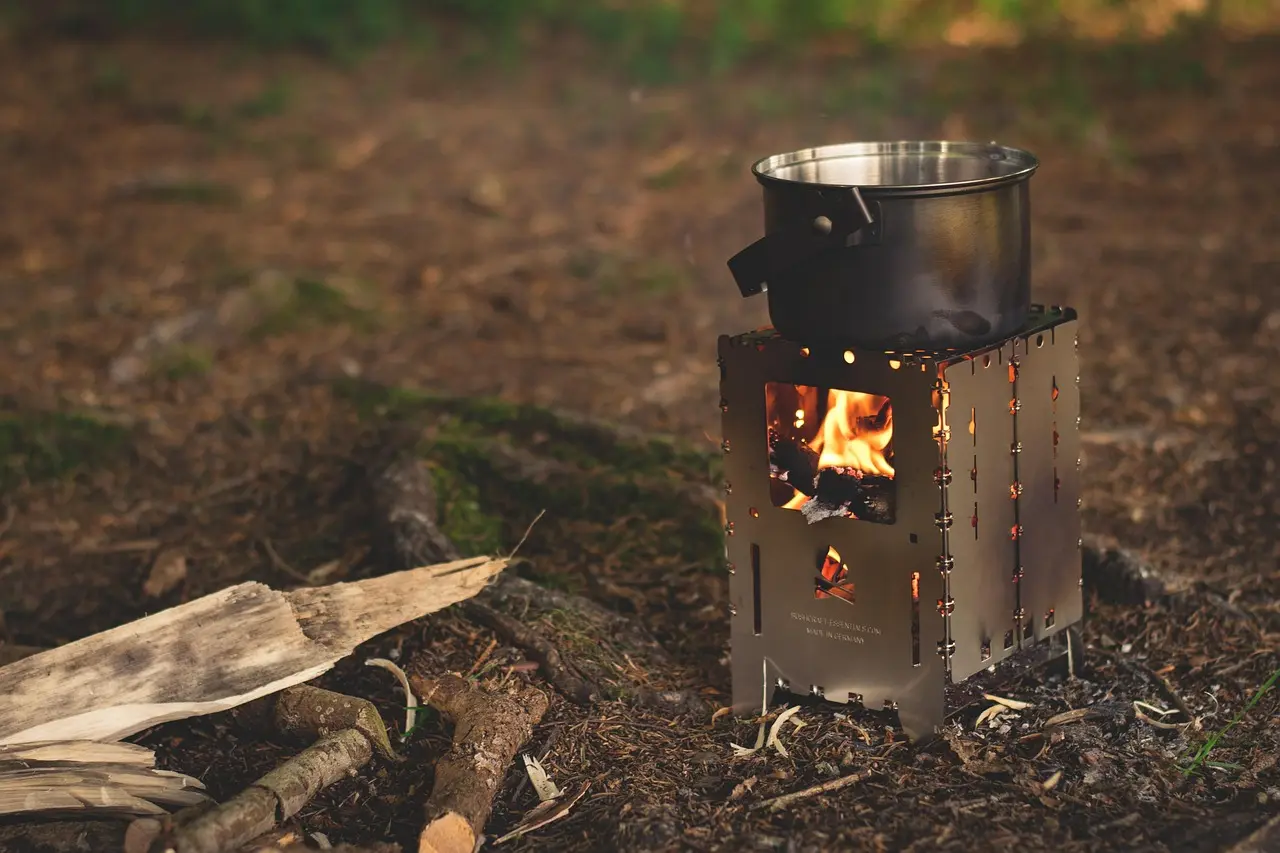
You can use some camping cookware over a campfire, but not every set is suitable. Stainless steel is the safest choice for open flame, while coated cookware needs more heat control and should not be treated like a bare steel pan. Check the manufacturer’s open-flame guidance before you put any set over coals.
Folding or locking handles
Handles matter more than many buyers expect. Folding or locking handles save space, but they should lock securely and stay cool if possible. Loose or floppy handles create spills, and detachable grips are easy to misplace when you are packing up in the dark.
Camp stove compatibility
Most sets do not include a heat source, so the burner is a separate decision. Match the stove burner size to the pot diameter for steadier heating, and make sure the pan sits flat without wobble. A stable base matters more than marketing language when you are cooking for two on uneven ground.
Choose 2-person cookware if… / Choose 4-person cookware if…
Choose 2-person cookware if you want the smallest practical nested bundle, cook simple meals, split gear with a partner, or move between car camping and occasional lighter trips. It is also the safer pick if you value pack space more than extra plates and bowls.
Choose 4-person cookware if you cook larger two-person meals often, want extra dinnerware in the same kit, or camp mostly by car and can tolerate more bulk. It can also make sense if you like roomy pots for soups and pasta, or if you often cook for guests.
Frequently asked questions
What size camping cookware set do two people need?
Two people usually need a compact set built around a 1.5- to 3-liter pot, plus a 7- to 9-inch skillet if you cook more than boil water. The right size depends on meal style. Breakfast-only trips can stay smaller, while pasta, rice, and simmered dinners benefit from more volume.
Is a 2-person or 4-person camping cookware set better for couples?
A 2-person set is usually better for couples because it tends to pack smaller and better matches the amount most pairs cook. A 4-person set can be useful if you want extra dinnerware or cook larger meals often, but it usually adds bulk that many couples do not need.
What pot size is best for camping for two people?
For most couples, 1.5 to 2 liters is the tight backpacking-friendly range, while 2.5 to 3 liters works better for one-pot dinners and more generous portions. Bigger pots make stirring easier and help with pasta or rice, but they also add size and weight.
Should couples choose stainless steel or nonstick camping cookware?
Choose stainless steel if you want durability, open-flame tolerance, and better resistance to rough handling. Choose nonstick if quick cleanup matters more and you are willing to use soft utensils and moderate heat. Hard-anodized aluminum sits between them when you want lower weight and faster heating.
Can you use camping cookware over a campfire?
Sometimes, but not always. Stainless steel usually handles campfire use better than coated cookware. Nonstick pans need more caution, and some sets are made for stove use only. Check the product’s guidance first, because open flame can damage finishes and handles that were not built for it.
Are nesting cookware sets worth it for couples?
Yes, if you care about packing cleanly. Nesting design keeps pots, pans, bowls, and utensils together in one compact bundle, which is useful for car camping, van life, and small storage spaces. The trade-off is that nesting reduces pack volume more than it reduces weight.
How heavy should a camping cookware set for two be?
There is no single target that fits every couple, because weight depends on material and included pieces. Hard-anodized aluminum is usually lighter than stainless steel, while dinnerware kits are heavier than cookware-only sets. If you split gear, a lighter pot and pan set is easier to divide between two packs.