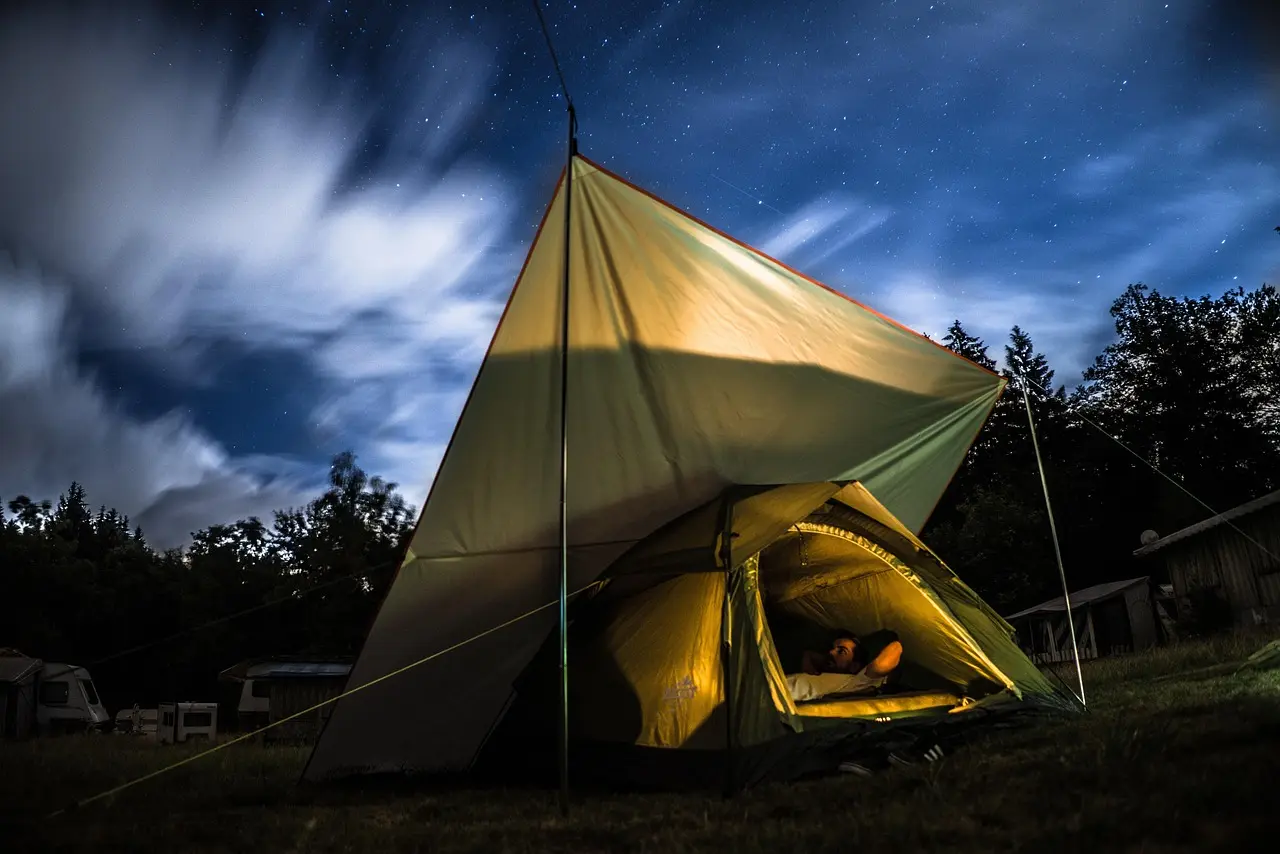
Cleaning a tent: How to wash, dry and care for your tent

Clean a tent by brushing off grit, spot-washing most dirt with lukewarm water and non-detergent soap, and doing a full wash only after heavy mud, salt, smoke, sap, or long storage. Machine washing, heat, bleach, or storing any damp fabric can strip coatings, weaken seams, jam zippers, and grow mildew. This guide explains when a quick spot-clean is enough, when a full wash is warranted, and how to dry and store a tent in small or shared spaces.
What you’ll need
- Mild dish soap for light spot-cleaning on tent fabric
- A specialty tent cleaner if the tent is broadly dirty or the coating is older and you want a cleaner made for technical fabrics
- An enzyme cleaner for odor removal on waterproof gear
- Lukewarm water, never hot water
- A microfiber cloth for wiping dirt and grime without abrasion
- A soft-bristle toothbrush for zippers, zipper pulls, clasps, and stubborn spots
- A large tub, bathtub, deep sink, or basin that fits the tent without sharp folding
- Clean towels for blotting pooled water
- A place to air-dry the tent fully: outside in shade, a garage, or another dry ventilated space
- Space to lay out or hang the rainfly, tent body, footprint, guylines, and poles separately
Tent condition decision table
| Condition | Recommended cleaner | Soak or spot-clean step | Drying location | Red flags |
|---|---|---|---|---|
| Light dust | Plain lukewarm water or mild dish soap | Shake out debris, then wipe dusty panels with a damp microfiber cloth; no full soak needed | Shade outdoors or a ventilated room until surface moisture is gone | Dust packed into mesh seams or zipper tracks means a closer cleaning is needed |
| Mud | Mild dish soap | Let thick mud dry, brush it off, then spot-clean; full tub wash if splatter covers multiple panels or the floor | Hang or pitch the tent where corners and the floor can air-dry | Grinding wet grit into fabric or floor coating can abrade finishes |
| Food spills | Mild dish soap, then enzyme cleaner if odor remains | Spot-clean first; if residue soaked into floor seams or mesh edge binding, wash the affected section more thoroughly | Dry with panels spread so sticky areas do not fold against each other | Lingering sweetness attracts insects and can leave odor in storage |
| Salt/sand exposure | Plain lukewarm water, plus mild dish soap if grime is visible | Rinse zipper coils, pole sleeves, stake loops, and floor corners with plain lukewarm water, or soak the tent briefly in a tub so trapped salt and fine sand wash out of the fabric and hardware | A breezy outdoor spot or a room with a fan | Salt crystals and sand in zipper coils, ferrules, or shock cords can cause sticking and wear |
| Musty smell | Enzyme cleaner made for waterproof gear | Use the odor treatment on the affected area; many enzyme cleaners need about five minutes of soaking | Full overnight air-dry with good airflow | If odor returns after complete drying, moisture may still be trapped in hems, sleeves, or corners |
| Visible mildew | Gentle tent cleaner or mild dish soap first, enzyme cleaner for odor only if compatible | Wash the area with light pressure, rinse until no cleaner remains, then air-dry until seams, hems, and corners are fully dry; staining may remain even if growth and odor are gone | Bright shade or indirect sun with lots of airflow | Bleach, stain removers, and stiff scrubbing can damage waterproof coating and seam tape |
| Post-season storage | Condition-based: plain water for dust, mild dish soap for grime, specialty cleaner for broad dirt, enzyme cleaner for odor | Clean only what the tent needs, then air-dry every piece before loose storage | Dry room, closet, or indoor rack; avoid damp utility spaces | Tight long-term compression and any residual dampness raise mold risk |
When should you spot-clean vs wash the whole tent?
Spot-cleaning is enough for light dust, a few muddy marks, isolated food drips, or dirty zipper tracks. A full wash makes more sense when grime covers several panels, the tent smells musty, salt or sand got everywhere, or you are cleaning before long-term storage.
Light dust, dry soil, and a few marks
Most tents do not need a bath after every trip. If the dirt is limited to a few areas, wipe those spots with a damp microfiber cloth and lukewarm water, adding a little mild dish soap only if plain water does not lift the grime. Popular Mechanics recommends a mild dish soap for spot cleaning, which fits this lighter job well.
Dry soil comes off more easily before you add water. Shake out the tent body, rainfly, and footprint, then brush grit from hems, stake loops, and corners before you wipe any stain.
Mud, food spills, salt, and sticky grime
Choose a full hand wash when the floor is muddy, the rainfly is splattered end to end, or the tent picked up coastal salt and fine sand. Wirecutter recommends a tub, deep sink, or large basin for soaking, and Popular Mechanics suggests a 10-gallon tub for washing space.
Salt and sand behave differently from plain dirt. Salt dries into crystals on fabric and zipper coils, while sand works into pole sleeves, stake loops, ferrules, and shock cords. If you only wipe the visible spots, those particles keep wearing the tent.
A four-person dome tent after a windy beach weekend may look only lightly dirty, yet zipper tracks, pole sleeves, and floor corners can still hold grit. That calls for a full wash, even if the walls appear clean.
Musty odor, visible mildew, and pre-storage cleanup
A musty smell points to leftover moisture, even if you do not see dark spotting. Visible mildew needs a careful wash, a thorough rinse, and a complete dry, and some discoloration may remain after the smell fades.
Before post-season storage, focus less on how the tent looks and more on what will keep reacting inside a tight bundle for months: food residue, dampness, smoke odor, beach salt, or ground-in mud.
Can you wash a tent in a bathtub or sink?
Yes, if the tent fits without being sharply creased or twisted. A bathtub, deep sink, or large basin is the usual hand-wash setup for tent fabric, while machine washing is riskier because agitation and heat can strain mesh, seam tape, coatings, and zipper stitching.
When a tub or basin wash makes sense
Use a tub wash when several panels are dirty, the floor needs more than local wiping, or salt and sand need to be flushed out. Fill the tub or basin with lukewarm water, not hot water. Hot water is a bad trade around coatings, seam tape, and delicate mesh.
If you use a specialty cleaner, follow its dilution directions. Gear Aid recommends 2 ounces of Revivex per 20 gallons of water for tent cleaning.
Why machine washing is a bad bet
Hand washing is the safer default. Wirecutter advises against top-loader washing machines for tents, and the same general caution applies to routine machine washing overall because agitators, spinning, and edge snagging can damage poles sleeves, mesh windows, and taped seams.
Machine drying is worse. High heat can stress waterproof coatings and distort synthetic fabric faster than dirt ever will.
Dish soap vs specialty cleaner vs enzyme cleaner
Mild dish soap is the practical choice for ordinary grime and spot-cleaning. It is gentle enough for many tent fabrics when used sparingly, and it rinses out easily.
A specialty tent cleaner is the better option when the whole shelter is dirty, the floor coating is older, or you want a cleaner made for technical fabrics and water-repellent finishes. It is also the safer choice if you want to avoid guessing how much soap residue is left behind.
Use an enzyme cleaner for odor, especially mustiness that remains after visible dirt is gone. Many enzyme cleaners in Wirecutter’s guide require about five minutes of soaking, so this is a short dwell treatment, not an all-day soak.
How to clean, dry, and store your tent
Start with the lightest effective method, then move up only if the tent’s condition calls for it. Cleaning a tent should take about 30 to 45 minutes, while drying usually takes much longer because the tent needs a full overnight air-dry before storage.
- Set up your area. Clear a bathtub, deep sink, or large basin, and make sure the tent can lie in it without hard folding. Keep poles, stakes, and guylines separate so metal grit does not scrape wet fabric.
- Shake out debris. Turn pockets inside out, open doors, and shake out leaves, sand, crumbs, and dry soil. Brush loose grit out of corners, mesh edges, pole sleeves, and stake loops before adding water so you do not grind particles into the fabric.
- Spot-clean first. Mix lukewarm water with a small amount of mild dish soap, dampen a microfiber cloth, and wipe dirty patches gently. Use a soft-bristle toothbrush on zipper coils, zipper pulls, and stubborn grime; Popular Mechanics recommends a toothbrush for those parts.
- Choose the cleaner. Stay with mild dish soap if the problem is ordinary dirt or a food drip. Switch to a tent-specific cleaner for broad grime or older coated fabric, and use an enzyme cleaner only when odor is the main issue.
- Fill with lukewarm water. Add enough water to soak the dirty fabric without forcing creases into windows, mesh, or taped seams. If the tent is not fully submerged, add water in about 1-gallon increments and recheck until panels can relax under the surface.
- Soak only as needed. For a full wash, let the fabric sit briefly in lukewarm water with the cleaner you chose, then wipe gently by hand. If you are using an enzyme cleaner on odor, many formulas need about five minutes of soaking before rinsing.
- Wipe high-friction areas. Clean the floor, door thresholds, lower fly edges, and sleeve openings with a microfiber cloth or other non-abrasive brush. Popular Mechanics says to use a non-abrasive brush for grimy areas, which matters most where dirt collects and coatings rub.
- Rinse thoroughly. Drain the soapy water and rinse until the water runs clear and the fabric no longer feels slick. Soap residue can interfere with water repellency and attract new dirt, so do not stop at a quick splash.
- Dry each part separately. Spread out the tent body, rainfly, footprint, guylines, and stuff sacks so folded layers are not trapping moisture. A full overnight air-dry is a common safe baseline before storage, even if surfaces feel dry sooner.
- Wipe poles and hardware. Dry tent poles with a towel, especially around ferrules and shock-cord openings, and brush grit out of joints. Sand and dirt left on poles can wear ferrules and shock cords in storage, even when the fabric is clean.
- Check hidden damp spots. Run your hand through corners, seam folds, pole sleeves, mesh binding, and the floor perimeter before packing. These are the places that stay damp after the large panels seem dry.
- Store it loosely. Put the tent into a large breathable sack, cotton storage bag, or loose bin rather than cramming it tight into the original stuff sack. Wirecutter says tents should be stored loosely rather than tightly packed.
If that didn’t work
If the tent still smells after the first wash, move one step up rather than repeating the same wash exactly.
- Reinspect damp zones. Check pole sleeves, corners, vent hoods, mesh binding, and the floor edge. Persistent odor often means those areas never fully dried.
- Retreat odor spots. Apply an enzyme cleaner to the smelly area, give it about five minutes if the label calls for that dwell, then rinse well and air-dry again overnight.
- Accept some staining. Mildew marks can sometimes remain after odor and residue are gone. Do not escalate to bleach or stain remover, because Wirecutter warns that bleach and harsh cleaners can damage waterproof coating over time.
Picture a two-person backpacking tent drying in an apartment bathroom. The roof panel feels dry by evening, but the floor corners and door hems are still cool and slightly tacky. Packing it then is how a clean tent turns into a musty tent.
What parts need extra care?
The fabric panels are only part of the job. Zippers, seams, pole sleeves, mesh, floor coatings, guylines, stake loops, poles, and hardware collect the dirt that causes sticking, abrasion, odor, and hidden dampness, so those parts need specific attention during cleaning and drying.
Zippers, pole sleeves, and mesh
Zippers collect dust, salt, and fine sand fast. Wipe them with soapy water or use a soft-bristle toothbrush so you can clean inside the coil without fraying nearby stitching. This is safer than a stiff brush and more effective than forcing a sticky zipper back and forth.
Pole sleeves trap grit because fabric rubs the same channel every time the tent goes up. Rinse those sleeves well and dry them fully. Mesh panels need a light touch, support the mesh from behind with your hand while wiping so it does not stretch.
Seams, floor coatings, and rainfly fabric
Seams need patience, not force. Avoid hard scrubbing on seam tape, seam sealer, or folded seam edges because that is where coatings can start to peel if stressed.
The floor usually carries the worst grime. Wash it with light pressure, especially around the perimeter where dirt, body oils, and food residue build up. The rainfly often looks cleaner than it is, so check lower edges, vents, and tie-back points where condensation, dust, and tree residue settle.
Poles, guylines, stake loops, and hardware
Wipe poles dry before storage and clear grit from ferrules and shock-cord openings. Dirt left there acts like sandpaper over repeated setup cycles.
Guylines and stake loops should be rinsed if they touched salt water, mud, or food spills. Let them dry stretched out rather than bundled tight, since wet line knots can hold moisture longer than flat fabric.
How do you dry and store a tent in a small space?
Dry a tent indoors by separating the body, rainfly, and floor so air can reach every fold, then store it loosely in a dry closet once no part feels cool or damp. Small spaces work well if airflow is steady and fabric is not piled on itself.
Indoor drying without trapping moisture
A yard helps, but it is not required. Hang the rainfly over a shower rod, drape the tent body over chairs, or pitch part of the frame indoors if ceiling height allows. Aim for moving air more than direct sun.
Keep panels out of thick folds. A fan across the room does more than warm, still air. Shade or indirect sun is the better outdoor option because intense heat is hard on coatings and adhesives.
What to do if the tent still feels damp
Do not pack it and hope for the best. Rotate the fabric, blot pooled water with clean towels, reopen sleeve ends, vents, and doors, and keep air moving until those slower-drying spots no longer feel cool, tacky, or heavy.
A common first-timer mistake is judging dryness from the biggest roof panel only. The slower areas are corners, webbing attachments, zipper plackets, sleeve ends, and the floor seam where two layers overlap.
Loose storage options for closets and apartments
Store the tent loose, dry, and away from temperature swings. A shelf in a bedroom closet is usually better than a garage shelf, attic tote, or damp basement bin. The same source recommends storing tents away from garages, attics, or basements with extreme temperatures or dampness.
If the original stuff sack is the only option for a few days between trips, unpack the tent for long-term storage once you get home. That single habit prevents a lot of odor and mildew trouble.
Prevention
After any beach trip, muddy trip, or humid trip, unzip the tent at home and air it out the same day, even if it looks clean. Early drying is the simplest way to avoid mustiness and hidden mildew in seams and floor corners.
How often should you clean a tent?
Clean a tent as needed, not on a rigid after-every-trip schedule. Spot-clean after ordinary weekends, but wash sooner after muddy trips, food spills, long humid outings, smoke exposure, or any coastal trip where salt and sand reached the fabric, zippers, and poles.
After every trip vs as-needed cleaning
Routine inspection matters more than routine washing. Many trips only require drying, shaking out dirt, and cleaning zipper tracks. Frequent full washing adds handling, rinsing, and drying cycles that the tent does not always need.
Trips that call for immediate washing
Wash promptly after heavy mud, fish or food spills, campfire smoke that clings to the tent, tree sap contamination, or any trip where the tent was packed wet. Coastal camping also moves up the schedule because salt and sand keep causing problems after the trip ends.
Post-season maintenance cadence
Before long storage, inspect every panel and accessory. If the tent is clean and fully dry, a full wash is unnecessary. If it has odor, grime, beach residue, or sticky spots, clean those issues before storage rather than letting them sit for months.
Common mistakes
- Using bleach, solvents, laundry detergent, or stain removers on tent fabric. Those cleaners can damage waterproof coating and DWR over time.
- Scrubbing with stiff brushes or abrasive sponges. Microfiber cloths and soft-bristle toothbrushes are much safer for coated fabric, mesh, and zipper stitching.
- Using hot water. Lukewarm water is the safer choice for soaking and washing.
- Packing the tent when the main panels feel dry but corners, sleeves, or hems do not.
- Ignoring zippers and poles. Fabric can be spotless while grit in zipper coils and ferrules still causes failures later.
- Leaving the tent compressed in its stuff sack for months. Long-term storage should be loose, dry, and indoors.
- Treating odor and mildew staining as the same problem. Odor can often improve with cleaning and enzyme treatment; staining may remain.
- Washing the whole tent when a spot-clean would do. More cleaning is not always better for coated fabric.
Frequently asked questions
How do you clean a tent without ruining the waterproof coating?
Use lukewarm water, a microfiber cloth, and either mild dish soap for ordinary dirt or a tent-specific cleaner for broader washing. Avoid bleach, harsh cleaners, stiff brushes, and heat. Rinse thoroughly, dry the tent completely, and do not scrub hard on seam tape or coated floor fabric.
Should I use dish soap or a specialty tent cleaner?
Use mild dish soap for spot-cleaning dust, mud marks, or small food spills. Choose a specialty tent cleaner when the whole tent is dirty, the fabric is more sensitive, or you want a product intended for technical coatings. Use an enzyme cleaner when odor, rather than visible grime, is the main problem.
How long does it take to clean a tent and dry it?
Cleaning usually takes about 30 to 45 minutes, depending on tent size and how much grime you are removing. Drying takes longer. Plan on an overnight air-dry after washing, and allow extra time if humidity is high or seams, corners, and sleeves are drying indoors.
Can you machine wash a tent, or is hand washing safer?
Hand washing is safer for most tents. Machine washing can stress seam tape, snag mesh, wear coatings, and twist wet fabric around zippers and sleeves. Heat from a dryer adds another risk. A tub, basin, or deep sink wash gives more control and is easier on delicate tent parts.
What parts of a tent need cleaning besides the fabric?
Zippers, pole sleeves, seams, mesh panels, floor edges, stake loops, guylines, ferrules, and poles all need attention. Clean zipper coils with a soft-bristle toothbrush, rinse grit from sleeves and loops, and wipe poles dry before storage so sand and dirt do not keep wearing the hardware.