
Can you machine wash a tent Without Ruining it?

Most tents should not go in a washing machine; only a bare-fabric inner tent or footprint with a care label that allows machine washing may be able to handle a cold, gentle cycle in a large front-loader. A bad wash can strip waterproof coatings, loosen seam tape, warp poles, and turn a dry shelter into a leaky one. This guide explains the risk, the few cases where machine washing may be acceptable, and the safer hand-cleaning method instead.
Why washing can damage tent materials
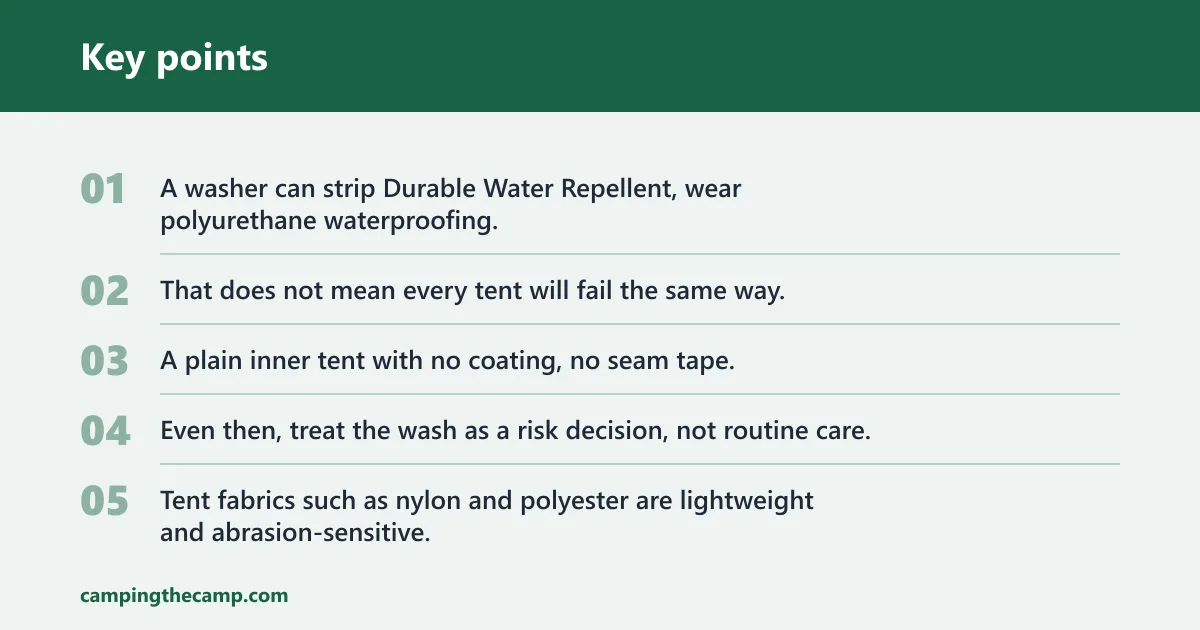
The short answer: usually no. The main risk is agitation, not dirt alone. A washer can strip Durable Water Repellent, wear polyurethane waterproofing, stress seams, and abrade lightweight tent fabric until the shelter loses water resistance.
That does not mean every tent will fail the same way. A plain inner tent with no coating, no seam tape, and a label that allows machine washing has a better chance than an aging shelter with taped seams and brittle fabric. Even then, treat the wash as a risk decision, not routine care.
Why most tents should stay out of the washer
Tent fabrics such as nylon and polyester are lightweight and abrasion-sensitive. They are built for low-weight shelter, not tumbling with water, zippers, grit, and spin force. Sand and dirt can turn a wash into a rubbing cycle that scrapes coatings and weakens fabric finish.
Seam tape is another weak point. It seals stitched seams against water entry, but it can peel or crack during machine washing. Once that tape lifts, leaks often start at the seams first, even if the rest of the tent still looks intact.
When a very gentle wash is still a bad idea
Even a front-loader can be the wrong choice if the tent is already tired. UV-brittle fabric, seam tape that is already lifting, or a shelter with glued parts can fail faster under tumbling. If the tent already sheds waterproofing or leaks at seams, hand cleaning is safer than gambling on a washer.
Suppose your backpacking tent is coated nylon, and the fly already feels tacky where the coating is breaking down. A wash may remove the last usable water resistance and leave the fly worse than a careful spot clean would have.
What washing machines do to tent fabric
Washing machines can strip DWR and polyurethane waterproofing, and that matters because those finishes help water bead and run off. When the finish thins, the fabric wets out more easily and may start leaking under steady rain.
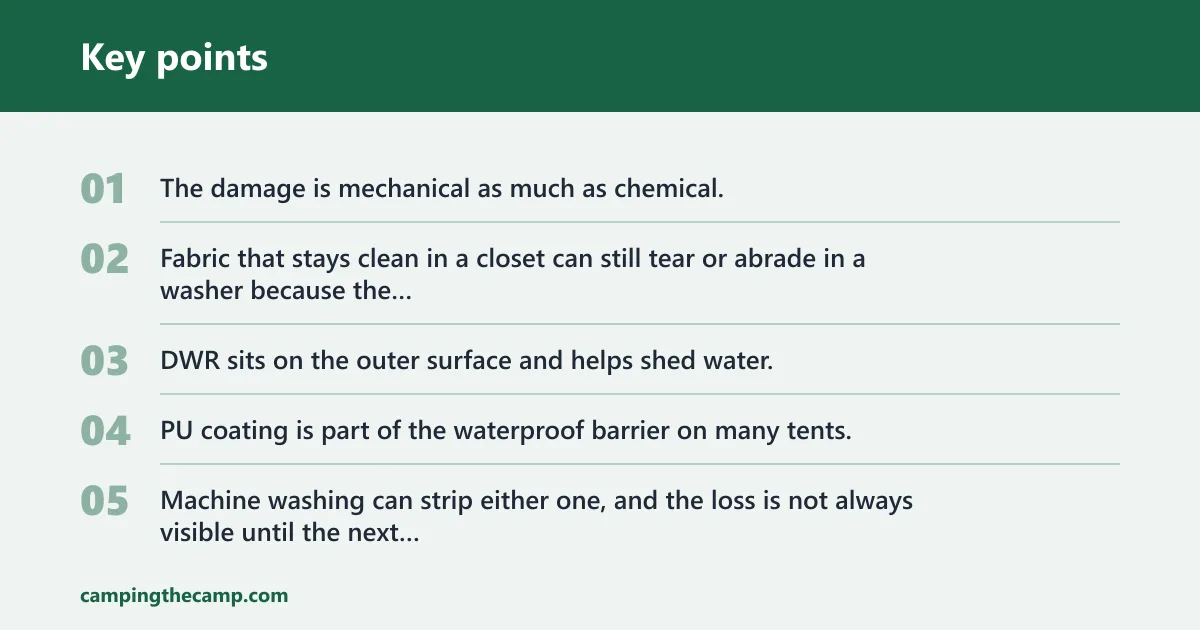
The damage is mechanical as much as chemical. Fabric that stays clean in a closet can still tear or abrade in a washer because the load twists, slaps, and rubs against hard parts of the drum, seams, and zipper hardware.
DWR and PU coatings can wear off
DWR sits on the outer surface and helps shed water. PU coating is part of the waterproof barrier on many tents. Machine washing can strip either one, and the loss is not always visible until the next storm.
Seam tape can peel or crack
Seam tape is meant to stay flat and bonded over stitched lines. Spinning and tumbling can lift edges, crack the adhesive, or peel sections entirely. Once the seal is compromised, water can enter through the seam holes the tape was covering.
Nylon and polyester can abrade under agitation
Nylon and polyester are common tent materials because they are light and packable. They also scuff more easily than heavier shelter fabrics. In a washer, abrasion from other parts of the tent or trapped grit can dull the surface and weaken delicate areas.
Zippers, mesh, and hardware add failure points
Mesh panels can snag. Zippers can bite into fabric. Buckles, hooks, and pole sleeves can twist into shapes that stress stitching. A washer does not know which part is fragile, so it treats the whole shelter as laundry.
Machine wash risk by tent condition
This table turns the decision into a practical check. The goal is not to approve machine washing broadly. It is to show which tents are slightly more forgiving, and which ones are poor candidates no matter how dirty they look.
| tent material/coating | washer type | risk level | likely damage | safer alternative |
|---|---|---|---|---|
| new coated nylon | large front-loader, cold, gentle cycle | moderate | coating wear, seam stress, zipper scuffing | hand wash with mild tent cleaner in a tub |
| old seam-taped shelter | any washer | high | seam tape peeling, cracking, leaks at stitched lines | spot clean, then hand wash only if needed |
| dirty mesh-heavy tent | front-loader | moderate to high | mesh snags, dirt abrasion, stretched panels | vacuum loose grit first, then hand wash |
| moldy tent | top-loader or front-loader | high | odor transfer, coating wear, mold spread, residue in seams | isolate, pre-clean by hand, treat odor, air-dry fully |
| canvas tent | any washer | high | heavy soaking, stress on stitching, shape distortion | hand clean with low-water methods and manufacturer guidance |
| integrated-lighting tent | any washer | high | electrical damage, water intrusion, connector failure | remove power source if possible and wipe by hand only |
Which tents are most at risk?
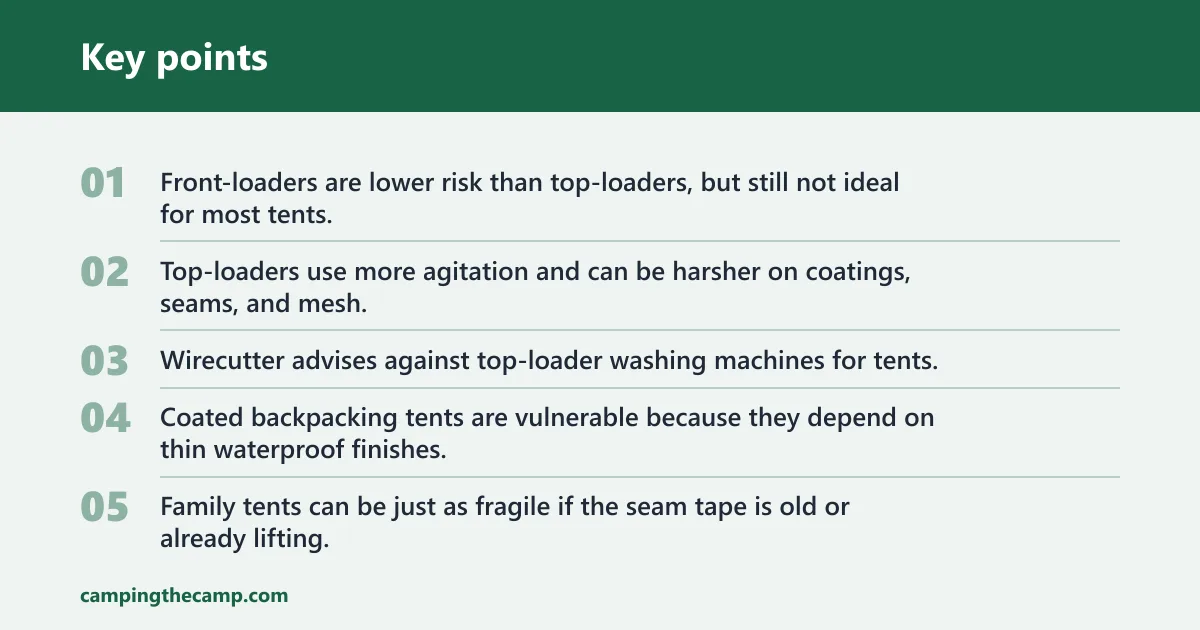
Front-loaders are lower risk than top-loaders, but still not ideal for most tents. Top-loaders use more agitation and can be harsher on coatings, seams, and mesh. Wirecutter advises against top-loader washing machines for tents, which matches the basic damage pattern described above.
Coated backpacking tents are vulnerable because they depend on thin waterproof finishes. Family tents can be just as fragile if the seam tape is old or already lifting. Tents with lighting, cords, glued fittings, or other integrated parts should stay out of a washer entirely.
A common first-timer mistake is thinking a dirtier tent needs a stronger wash. In practice, a tent packed with embedded sand often needs the opposite: careful dry brushing first, then a hand wash so grit does not grind into the fabric.
What soap should you use on a tent?
Use a mild, non-detergent cleaner made for technical fabrics. The recommended cleaning method is hand washing with mild, non-detergent soap, and a tent-specific cleaner is the safest default when you want to protect coatings and seams.
Regular laundry detergent can leave residue on tent fabric and may affect waterproof coatings. Bleach and harsh detergents are a bad fit because they can be too aggressive for coated shelter materials and seam finishes.
Tent-specific cleaner versus regular detergent
Nikwax Tech Wash is a tent-specific cleaner commonly used for technical fabrics, and cold water is a sensible starting point. It is a better match than standard laundry soap when you want to clean the surface without adding heavy residue.
For smell treatment, an enzyme odor remover such as Gear Aid Revivex Odor Eliminator can help. Soak time matters here. Odor control usually works better when the cleaner sits long enough to reach the material that holds the smell, especially near seams and panels that stayed damp.
When spot cleaning is enough
Spot cleaning is enough when the tent has a few muddy marks, dust, or light grime and the fabric still smells normal. Wirecutter recommends a damp microfiber cloth for spot treatment, and mild dish soap can be used for that kind of small clean-up.
Use the smallest effective method first. If only one corner has mud from a wet campsite, a full soak may add more coating wear than the dirt justifies.
The safest way to clean a tent by hand
A commonly recommended safest method is a hand wash in a bathtub or large tub with clean cold or lukewarm water. A tub, bathtub, or kiddie pool can be used as a tent-cleaning station. This keeps the fabric supported and avoids the tumbling that causes most wash damage.
Work slowly. Clean enough to remove soil, not enough to scrub the life out of the coating.
- Pitch the tent or lay out the fabric and shake off loose dirt.
- Brush away dry grit before water touches the fabric.
- Fill the tub with clean cold or lukewarm water.
- Add a mild tent cleaner or mild non-detergent soap.
- Use a soft sponge or microfiber cloth for broad surfaces.
- Use a soft-bristled brush only on stubborn spots.
- Rinse until the water runs clear.
- Press out water gently. Do not wring the fabric.
The same source says cleaning a tent should take about 30 to 45 minutes, which is realistic for a careful hand wash. That time assumes light to moderate soil, not a mold remediation job or a heavily grit-loaded shelter.
Picture a two-person nylon tent with a muddy vestibule and clean inner panels. A hand wash lets you treat the vestibule only, rinse the residue away, and avoid forcing the whole shelter through a machine cycle just because one area is dirty.
How do you dry a tent so mold does not start?
Air-dry only in a shaded, ventilated area. A tent should be air-dried completely in a shaded, ventilated area before storage. Do not use a dryer. Do not use direct sunlight. Drying is not a finishing touch; it is the step that protects the next trip.
The same source says the tent should air-dry overnight after cleaning, and overnight is a practical minimum for many shelters. Thick seams, layered panels, and floor fabric can hold water longer than the outer shell.
How long can a damp tent sit before mildew starts?
Mildew can begin within 24 hours in warm conditions, and that timing gets worse in humid storage. Mold and mildew develop when a tent is stored damp, and they bring odor as well as material damage. The smell is often the first warning sign.
If the tent still feels cool or slightly clammy anywhere, keep drying it. Do not pack it away “for later.” A damp stuff sack can turn one careless evening into a musty shelter that is hard to recover.
What to do before packing the tent away
Check seams, corners, pole sleeves, and the underside of the floor. Those spots trap moisture longest. Fold the tent only after every panel feels dry to the touch and no cooler damp patches remain.
Store it loosely if possible. Tight compression while damp makes mildew more likely and can hold odor in fabric and seam tape.
Frequently asked questions
Can you machine wash a tent or will it ruin the fabric?
Machine washing a tent can ruin the fabric, but not every tent fails the same way. The main danger is coating wear, seam tape damage, and abrasion from tumbling. If the tent is coated, taped, or already aged, hand washing is the safer choice.
Is it safe to put a tent in a washing machine?
Only rarely. A large front-loader on a cold, gentle cycle is generally lower risk than a top-loader, but it is still not the best option for most tents. Any tent with seam tape, coatings, mesh, or hardware is better cleaned by hand.
What happens if you wash a tent in the washer?
The washer can strip waterproof coatings, loosen seam tape, and scuff delicate fabric. Dirt and sand can act like abrasive material during the cycle. The tent may still look fine at first, then leak or smell musty after the next use.
Can I use regular laundry detergent on a tent?
Regular laundry detergent is not the preferred cleaner. It can leave residue and may affect waterproof coatings. Use a mild, non-detergent soap or a tent-specific cleaner instead, especially if the shelter has DWR or polyurethane waterproofing.
What is the safest way to clean a tent by hand?
Use a bathtub or large tub with cold or lukewarm water, a mild tent cleaner, and a soft sponge or microfiber cloth. Use a soft-bristled brush only for stubborn spots. Rinse until the water runs clear, then air-dry completely in shade.
Will washing a tent remove the waterproof coating?
It can. Washing machines can strip DWR or polyurethane waterproofing, and that raises leak risk. A hand wash is less aggressive, but even then you should use mild cleaner and avoid scrubbing hard enough to wear down the finish.