How to clean a tent that was put away wet

Dry it within 24 hours, then clean with mild soap and water. If mold has spread through coating, seams, or insulation, stop and repair or replace. Ignore it, and mildew can stain fabric, weaken coatings, and leave a smell that returns every time the tent gets damp. This guide gives a first-hour rescue plan, cleaning steps for odor, mildew, and visible mold, plus a simple decision tree for drying, treatment, repair, or replacement.
Why damp storage causes musty odor and mold

A wet-stored tent usually turns musty first, then may develop mildew or visible mold if moisture stays trapped. The odor can come from the tent itself, the stuff sack, the footprint, or the guylines. Moist storage also puts stress on coatings and seam tape, which can shorten the tent’s useful life.
Musty smell versus visible mold
Musty odor means moisture has lingered. Visible mold means growth is already on the fabric, and that changes the cleanup path. Odor alone often responds to airing, gentle washing, and full drying. Visible mold needs targeted treatment on the affected spots, plus a careful check of seams, corners, and folded areas.
Why wet storage causes trouble
Camping Canopy Guide says a packed moist tent can grow mold in a few days. That is why a wet tent should be opened and dried as soon as possible. Wirecutter says never put away a wet tent, and that warning matters because the problem gets harder to reverse the longer moisture stays trapped.
Wet-stored tent rescue checklist
| Time since discovery | Fabric type | Action | Stop and replace or repair |
|---|---|---|---|
| 0–10 minutes | Nylon / polyester | Open the tent fully, shake out grit, and air it out in shade. | If coating is peeling or fabric tears are obvious. |
| 0–10 minutes | Canvas | Spread it open, separate wet panels, and keep airflow moving. | If fabric stays stiff, brittle, or stained after drying. |
| Same day | Nylon / polyester | Spot clean with a damp microfiber cloth, then inspect seams and zippers. | If odor persists after a full dry and one wash. |
| Same day | Canvas | Spot clean with cool water and a soft brush, then re-dry fully. | If mildew has penetrated deep into the fabric. |
| Next 24 hours | Nylon / polyester | Use a short enzyme wash for odor if needed, then air-dry overnight. | If the waterproof coating fails after cleaning. |
| Next 24 hours | Canvas | Wash gently only if the care label allows, then dry until fully crisp and odor-free. | If seams, thread, or panels keep growing mold. |
What you’ll need
- Soft cloth or microfiber cloth for spot cleaning
- Soft brush or old toothbrush for seams and zippers
- Non-detergent soap or mild dish soap for small cleaning jobs
- Lukewarm or cool water
- Enzyme cleaner made for waterproof gear
- Clean towels
- A shaded, well-ventilated drying space
How do you clean a tent after rain?
Start by shaking out loose dirt, then spot-clean the dirtiest areas with a damp microfiber cloth. If the care label allows a fuller wash, use lukewarm or cool water and a very small amount of mild soap. Rinse thoroughly. Avoid hot water, stiff brushes, and harsh detergents that can damage the coating.
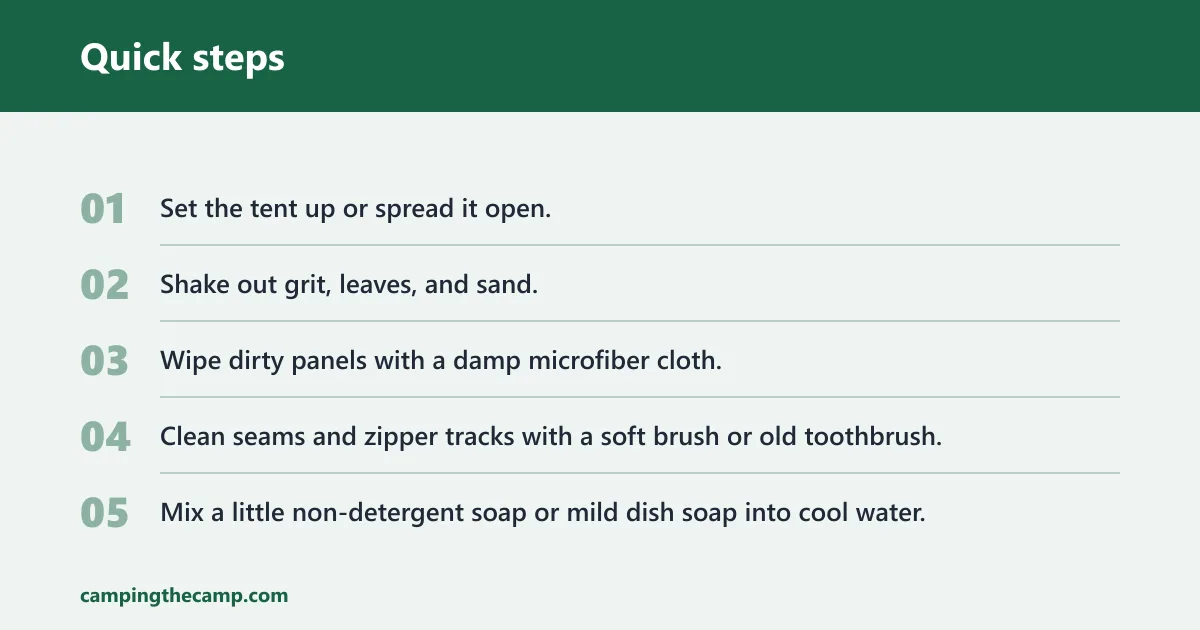
- Set the tent up or spread it open.
- Shake out grit, leaves, and sand.
- Wipe dirty panels with a damp microfiber cloth.
- Clean seams and zipper tracks with a soft brush or old toothbrush.
- Mix a little non-detergent soap or mild dish soap into cool water.
- Rinse until no soap residue remains.
- Air-dry the tent until every panel and seam is dry.
HG says synthetic tent fabric can be cleaned with lukewarm water and a brush, and that the cleaner should sit for at least five minutes. Use that only when the label allows it. Soap and vinegar can be too aggressive for some coatings, so keep the cleaner mild and the contact time short.
Say your 2-person nylon tent was packed after a wet Friday night and the fly smells sour, but there is no visible growth. Clean the fly, floor, and stuff sack separately. If the smell fades after drying overnight, the problem was likely trapped moisture, not embedded mold.
How do you treat mildew or mold?
Use the mildest cleaner that works. Mildew usually shows up as musty odor or light surface spotting, while mold is visible growth and may need more focused treatment. Clean the affected area, dry it completely, then recheck before repeating anything stronger. Embedded growth can be hard to remove fully.
Treat seams, corners, and fold lines
Work on the spots that stay damp longest: corners, folded creases, seam tape, and the base of the tent near the ground. Use a soft cloth or microfiber cloth for flat panels. Use a soft brush or old toothbrush only where stitching and zipper teeth need a little extra reach.
Use an enzyme cleaner only when odor lingers
An enzyme cleaner can help with odor that remains after normal washing, especially on waterproof gear. Apply it to the affected area, keep the soak short, then rinse well. If the smell is still there after a full dry cycle, inspect the stuff sack, footprint, and guylines before treating the tent again.
Picture a canvas shelter with black specks along a folded corner and a damp, basement smell after two days in storage. That calls for spot treatment, full drying, and a second inspection. If the spots return in the same places, the growth has likely reached deeper than the surface.
How should you dry and store it again?
Dry every panel, zipper, seam, and corner before packing anything away. The tent should air-dry overnight after cleaning. Store it loosely so air can move through it, and keep it out of hot, damp storage spaces. If the tent still feels cool, clammy, or sticky, it is not ready.
- Hang or spread the tent in shade.
- Open doors, vents, and vestibules.
- Wipe pooling water from seams and corners.
- Dry the footprint, guylines, and stuff sack separately.
- Check again after the fabric feels dry to the touch.
- Pack loosely in a breathable bag only when fully dry.
Tent was put away checklist
- No damp smell when the tent is reopened
- No cool or clammy patches on fabric
- No visible mold or dark spotting
- Seams and zipper tracks are dry
- Stuff sack, footprint, and guylines are dry too
Can you use a washing machine on a tent?
A washing machine is only a cautious maybe, and top-loaders with agitators are risky because they can damage tent fabric. A front-loader may be acceptable only if the care label allows it and the tent is small enough to move freely. In most cases, hand washing is the safer choice.
Why top-loaders are a bad bet
The same source says top-loader washing machines can damage tent fabric. The agitator can catch mesh, stress seam tape, and rough up coatings. If the tent is already weakened by wet storage, that extra wear can turn a salvageable tent into one that leaks or tears.
When a front-loader may work
If the care label explicitly allows machine washing, use the gentlest cycle, cool water, and no harsh detergent. Keep the load small. A tent should not be packed tightly with other laundry, and it should never go through a hot wash or a high-heat dry cycle.
Common mistakes
Using bleach is a common mistake. It can damage fabric and coating. Stiff brushes and abrasive sponges are another problem; they can scuff the waterproof layer. Hot water can also shorten coating life. Use cool or lukewarm water, mild soap, and light pressure instead.
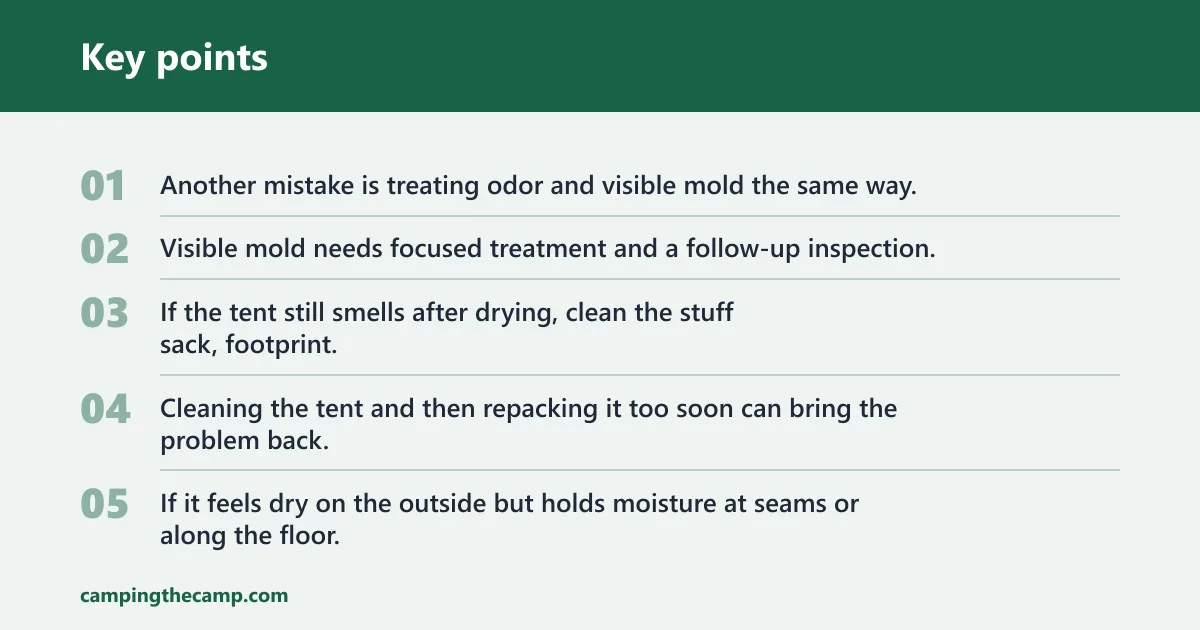
Another mistake is treating odor and visible mold the same way. Odor may improve with washing and drying. Visible mold needs focused treatment and a follow-up inspection. If the tent still smells after drying, clean the stuff sack, footprint, and guylines separately before you assume the tent body is the source.
Cleaning the tent and then repacking it too soon can bring the problem back. If it feels dry on the outside but holds moisture at seams or along the floor, wait longer. A full dry matters more than speed.
If that didn’t work, try this next: repeat the wash once with a cleaner approved for waterproof gear, then dry overnight again. If odor or spotting remains after that, inspect for coating failure, seam damage, or mold embedded in the fabric. At that point, repair or replace is usually the better decision.
Do you need to rewaterproof a tent after mildew cleanup? Only if the coating looks worn, water no longer beads, or a mild wash has reduced the finish. Do not add a reproofing step just because the tent smelled musty. Rewaterproofing is for coating wear, not for odor alone.
Frequently asked questions
How do you clean a tent that was put away wet?
Open it immediately, remove loose dirt, spot-clean with a damp microfiber cloth, then wash gently with cool water and a mild cleaner if needed. Dry it fully, including seams, the stuff sack, and accessories. If mold has spread through the fabric or coating, stop and repair or replace.
What happens if you put a tent away wet?
Moisture can cause a musty smell, mildew growth, and eventually visible mold. It can also weaken waterproof coatings and leave stains that are hard to remove. The longer the tent stays packed damp, the harder it is to rescue cleanly.
Can you save a tent that smells like mildew?
Often yes, if the smell is from surface moisture and not deep mold. Air it out, wash gently, dry it overnight, and check the stuff sack and footprint too. If the smell returns after a full dry, inspect seams and fold lines for hidden growth.
Should you wash a wet-stored tent with soap or a cleaner?
Use mild soap first for spot cleaning, or an enzyme cleaner if odor remains after a basic wash. Keep the amount small and the water cool or lukewarm. Avoid harsh detergents, bleach, vinegar, and anything abrasive that can strip coating or stress the fabric.
How long should a tent dry before storing it again?
Let it dry completely, then give it overnight if possible. Every panel, seam, zipper, and corner should feel dry and smell neutral before packing. If any area still feels cool, clammy, or sticky, wait longer before storage.
Can you use a washing machine on a tent after it was stored wet?
Only if the care label allows it, and even then a front-loader is the cautious option. Top-loaders with agitators can damage tent fabric. Use a gentle cycle, cool water, and no harsh detergent. Hand washing is usually safer for wet-stored tents.