What size camp cookware set do families need?

For many families of 3 to 6 on car-camping or RV trips, a camp cookware set with a roughly 2.5 to 3.5 quart pot, a 10 to 12 inch skillet, and a 6 to 8 cup kettle or second pot is often enough. Smaller gear means batch cooking. Larger gear adds weight and unused parts. This guide sizes cookware by family count, meal style, and trip type, not by piece count.
How to size cookware by family and meals
Start with the meals you cook most, then size the pot, pan, and kettle around that menu. A family of 3 can often manage with one medium pot and one 8 to 10 inch pan. A family of 4 to 6 usually needs a larger skillet and at least one pot that can handle pasta, soup, or boiling water without crowding.
Why piece count can mislead families
A 20-piece set can still fall short on useful capacity. The missing item is often the right-size skillet, the second lid, or a pot large enough for dinner without overflow. Families should judge cookware by volume, diameter, and nesting efficiency, not by how many bowls, utensils, or lids are packed into the box.
Match cookware to meal style and trip type
If you make pancakes, eggs, and bacon for breakfast, pan diameter matters more than total piece count. If dinner is pasta or chili, pot volume matters more than whether the set includes extra cups. Car camping and RV trips can handle a little more bulk. Backpacking logic does not fit family camping.
The shortest answer for 3, 4, 5, and 6 people
For 3 people, a 1.7L to 2.5 quart pot and an 8 to 10 inch pan can work for simple meals. For about 4 people, move to a roughly 2.5 to 3.5 quart pot and a 10 inch pan. For about 5 to 6 people, a roughly 3.5 to 4 quart pot and a 10 to 12 inch pan are often a safer fit for one-pan dinners and larger breakfast batches.
Family cookware sizing table
The table below translates family size into the smallest cookware that still works without constant batch cooking. It also shows when a set is too small for common family meals.
| Family size | Minimum pot volume | Minimum pan diameter | Kettle size | Must-have extras | Too small if… |
|---|---|---|---|---|---|
| 2 to 3 people | 1.7L to 2.5 qt | 8 to 10 in | 1.15L / 0.30 gal | 1 lid, 1 long handle or folding handle, 1 spatula | pasta needs two boils, pancakes cook in small batches, or soup fills the pot before dinner is done |
| 4 people | 2.5 to 3.5 qt | 10 in | 1.15L / 0.30 gal or a second small pot | 2 lids, heat-resistant handle, second serving spoon | rice boils over, noodles do not fit, or breakfast must be split across two pan rounds |
| 5 to 6 people | 3.5 to 4 qt | 10 to 12 in | 1.15L / 0.30 gal plus second pot or kettle | 2 pots, 2 lids, wider spatula, nesting bowls if you serve from camp | one skillet cannot hold enough eggs, or dinner needs repeated refills from a small pot |
| Minimal car-camping kit | 2.5 to 3 qt | 8 to 10 in | 1.15L / 0.30 gal | mesh bag, one lid that fits the main pot, cup or bowl for measuring | you cook full family pasta, one-pan dinners, or breakfast for more than 4 without batches |
| Comfortable family kit | 3 to 4 qt | 10 to 12 in | 1.15L / 0.30 gal plus second pot | two lids, folding or heat-resistant handles, turner, serving spoon | you need a backup pan for eggs, grilled sandwiches, or sauce while another dish is still on heat |
| Full camp-kitchen kit | 4 qt and a second smaller pot | 10 to 12 in plus smaller skillet | 1.15L / 0.30 gal and extra water pot | mesh or carry bag, nested bowls, cutting board, utensil set, two handles or grips | you travel with a large group but still expect one tiny pot to cover soup, rice, and water at once |
How many pots and pans does a family of four need?
Most families of four need at least two cooking vessels: one medium pot and one skillet. That gives you a simple breakfast-and-dinner setup without forcing every meal into the same pan. If you cook pasta, rice, or soup often, a second pot is more useful than extra cups or bowls.
Minimum viable two-pot setup
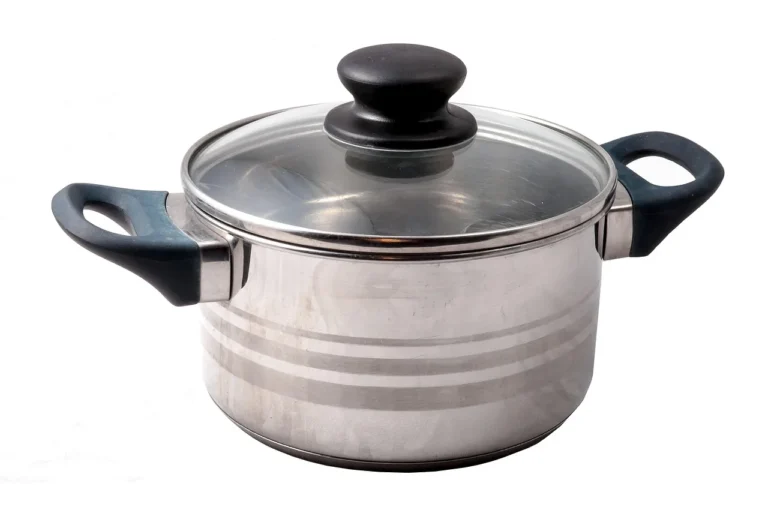
One 2.5 to 3.5 quart pot handles boiling water, pasta, rice, and soup. One 10 inch skillet handles eggs, quesadillas, sautéed vegetables, and burgers better than a 7 inch or 8 inch pan. Smaller pans leave food piled up, which traps steam and slows browning.
When a second pan earns its space
A second pan matters when breakfast and sides cook at the same time. You may want bacon in one pan and eggs in another, or tortillas in one pan while vegetables finish in the pot. That second pan is useful if it is a real cooking size, not a tiny extra piece that duplicates a serving dish.
How many lids and handles matter
At minimum, families do better with one lid for every main pot and pan that needs covered cooking. Shared lids are fine only if they fit well. Loose lids slow cooking, let heat escape, and can make simmering rice or keeping pasta water at a steady boil harder than it should be.
Is a 17-piece camping cookware set enough for a family?
A 17-piece camping cookware set can be enough for a small family if it includes the right pot size, a usable skillet, and a kettle. It is not enough by itself if the pieces are too small or repetitive. Families should check volume and diameter before counting plates, forks, or cups.
When 17 pieces are enough
The MalloMe 17-piece set includes a 1.7L pot, a 1.15L kettle, and a 7-inch frying pan, and it is described as space-saving and designed to nest perfectly. That kind of kit can work for 2 to 3 people, light breakfasts, and simple hot drinks, especially if meals stay basic.
When a larger set still misses the mark
A bigger set can still be too small if the pan is only 7 or 8 inches and you need to cook for 4 or more people. It can also miss the mark if it lacks a second real pot. Piece count does not fix a cooking surface that is too tight for pancakes or a pot that cannot hold family dinner.
Redundant pieces families often do not need
Families often do not need extra bowls, tiny plastic utensils, or duplicate cups if those pieces take space from a larger skillet or pot. A set can look complete while still failing at the meals that matter. The useful question is whether the set covers breakfast, lunch, and dinner without bottlenecks.
What cookware should you pack for car camping with kids?
For car camping with kids, pack enough capacity to avoid cooking in repeated small batches. A minimal kit covers one-pot meals and quick breakfasts. A comfortable kit adds a larger skillet and a second pot. A full camp kitchen only makes sense when you cook most meals at camp and have room to store it.
Minimal car-camping kit
Choose one medium pot, one 8 to 10 inch pan, and one small kettle or water pot. That kit fits simple eggs, oatmeal, soup, and boxed pasta. It is the lightest practical option for short trips, but it becomes cramped as soon as family meals become larger or more varied.
Comfortable family kit
A comfortable family kit usually includes one 3 to 4 quart pot, one 10 inch skillet, one smaller pot or kettle, and lids that fit the main pieces. This is the best balance for many families because it can handle tea, coffee, pasta, vegetables, and breakfast without turning every meal into a waiting game.
Full camp-kitchen kit
A full camp-kitchen kit makes sense when you cook most meals at camp, stay for several days, or feed more than four people often. It usually adds a second pot, a second pan, a cutting board, nesting bowls, and storage bags. It is helpful, but only if you have the storage room to carry it.
Best materials for family camp cookware
Material choice changes weight, cleanup, and how forgiving the cookware is with a family schedule. Aluminum heats fast and is light. Stainless steel lasts longer and resists rust. Non-stick cleans quickly. Cast iron tolerates high heat but adds a lot of weight. The best choice depends on your stove, your meals, and how much packing space you have.
Hard-anodized aluminum for fast heating
Hard-anodized aluminum is a strong choice for family camping because it is lightweight, heats quickly, and resists scratches and corrosion better than plain aluminum. Many manufacturers also describe it as food-grade or non-toxic. It suits families who want fast boil times and easy packing without moving up to heavy cookware.
Stainless steel for durability and rust resistance
Stainless steel is durable, rust-resistant, and common in 18/8 or 18/10 grades. It is a solid pick when cookware will be handled roughly or packed with other gear. The tradeoff is weight. It is heavier than aluminum or titanium, so families should buy it for durability, not because it is the lightest option.
Non-stick versus cast iron for cleanup and heat
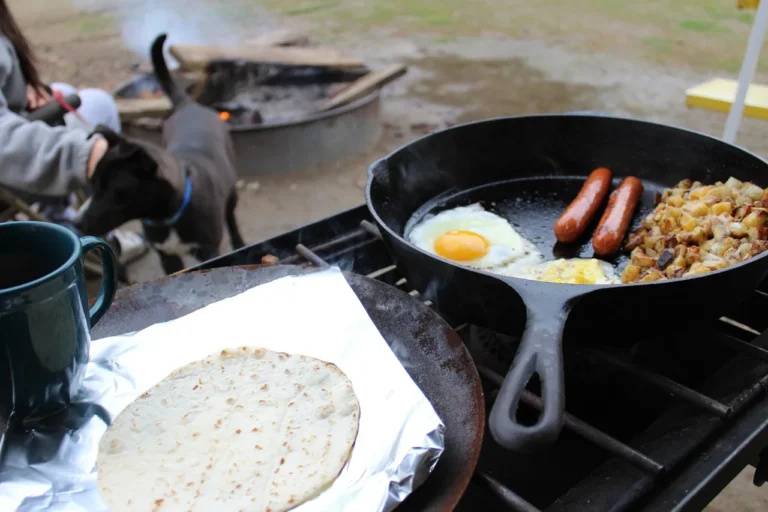
Non-stick makes cleanup easier and helps with sticky foods like eggs or pancakes, but the coating can scratch over time. Modern safer options are common, yet they still need careful handling. Cast iron is better for high heat and campfire cooking, but it is heavy and slow to carry, which matters when kids and coolers already fill the car.
Suppose your family of five wants pancakes at breakfast and pasta at dinner. A 7-inch pan will slow you down fast, because it cannot spread the batter or brown enough sausage at once. A 10 or 12 inch skillet solves the surface problem without changing the whole menu.
How nesting and pack size affect real family use
Nesting cookware helps more than a large piece count does. When pots, pans, and lids stack together, you waste less trunk space and spend less time sorting gear at camp. That matters for car camping and RV use, where bulky loose pieces can become harder to store than the meals they are supposed to support.
Why nesting beats loose pieces
Good nesting design keeps the set compact and reduces rattling in transit. The THTYBROS 27-piece set is described as compact enough that pieces nest inside pots, and it is listed at under 4.1 pounds total weight. MalloMe also describes its 17-piece set as nesting perfectly. Those are the kinds of design details that matter more than a long parts list.
What a good carry bag solves
A mesh or carry bag helps keep handles, lids, and small parts from spreading through the vehicle. It also makes it easier to grab the whole kit at once when you arrive at camp. That is useful when the cookware set is part of a larger family loadout with food, stove fuel, and kid gear.
Storage tradeoffs in cars and RVs
A bigger camp kitchen can be useful, but only if the vehicle has room for it. If a set includes many small pieces and still does not provide a 10 to 12 inch skillet or a real family pot, it is taking up storage without solving the meal problem. Families should favor fewer, larger, more useful pieces.
Fresh Off The Grid recommends a 10-inch or 12-inch skillet for most people, and that advice fits family camping well. You can cook a small amount in a large skillet, but not the reverse. That matters when you are feeding kids and need enough surface area for real breakfast portions.
Frequently asked questions
What size camp cookware set do families really need?
Most families need a set sized around meals, not around piece count. For 3 to 6 people, a 2.5 to 4 quart pot, a 10 to 12 inch skillet, and a 1.15L kettle or second pot cover the common jobs. Smaller sets work only for simpler menus and smaller groups.
How many pots and pans does a family of four need for camping?
A family of four usually needs one main pot and one main skillet at minimum. A second pot becomes useful for hot drinks, side dishes, or cooking two items at once. If the skillet is smaller than 10 inches, breakfast and dinner both become tighter than they need to be.
Do I need a full camp kitchen set for family camping trips?
Only if you cook most meals at camp and have room to store it. A full kit is useful for longer trips and bigger groups, but many families do better with a smaller, better-sized setup. Extra utensils and bowls help less than a real skillet and a proper family pot.
What pot size is best for family camping meals?
For most family camping meals, a 2.5 to 3.5 quart pot is the practical middle ground. It handles pasta, rice, soup, and boiling water without crowding. A 4-quart pot is better for larger families or when you want fewer batches and less overflow risk.
Should families buy a non-stick or stainless camp cookware set?
Choose non-stick if cleanup speed matters most and you cook eggs or pancakes often. Choose stainless steel if you want tougher, rust-resistant cookware and do not mind extra weight. Non-stick is easier to clean, but stainless is usually the better long-term choice when durability matters more than quick wipe-downs.