Who should choose a camp stove vs a backpacking stove?

Choose a camp stove for car camping, group meals, and wind protection; choose a backpacking stove for solo or two-person trips where pack weight and packed volume matter most. Pick the wrong one and you waste fuel, carry extra bulk, or fight weak burners in cold or windy conditions. This guide matches each stove type to solo overnighters, family campouts, minimalist weekend backpacking, and cold-weather travel.
| Decision factor | a camp stove | a backpacking stove | Winner |
|---|---|---|---|
| Best trip fit | Front-country camps, tailgates, picnic tables, and family car camping | Backcountry overnight trips, short backpacking trips, and trips where every ounce counts | Depends on trip access |
| Group size and cookware | Better for 3+ people, larger pots, and wider pans | Better for one person, two people, and small pots or mugs | a camp stove |
| Boil speed | Good to very fast, especially on higher-output models | Often fast for water, especially on canister systems | Depends on model |
| Simmer control | Usually better for sautéing and real meals | Often limited on ultralight boil-only systems | a camp stove |
| Weight and packability | Bulkier and less suited to long carries | Lightweight and compact by design | a backpacking stove |
| Cold weather and altitude | Works well if you are close to the car and can carry more fuel | Liquid fuel models perform best; canister systems can slow down in cold or at altitude | a backpacking stove for harsh conditions; tie otherwise |
Camp stove vs backpacking stove at a glance
The core trade-off is simple: a camp stove gives you more burner power, bigger cookware support, and better control for group meals, while a backpacking stove cuts weight and size for trips where you carry everything on your back. The right pick depends less on “camping” in general and more on distance, group size, and how you cook.
Best use case
A camp stove fits front-country trips where the vehicle does the hauling. A backpacking stove fits trips beyond the car, especially overnight or weekend routes where pack space and weight matter from the first mile.
Typical burner and fuel setup
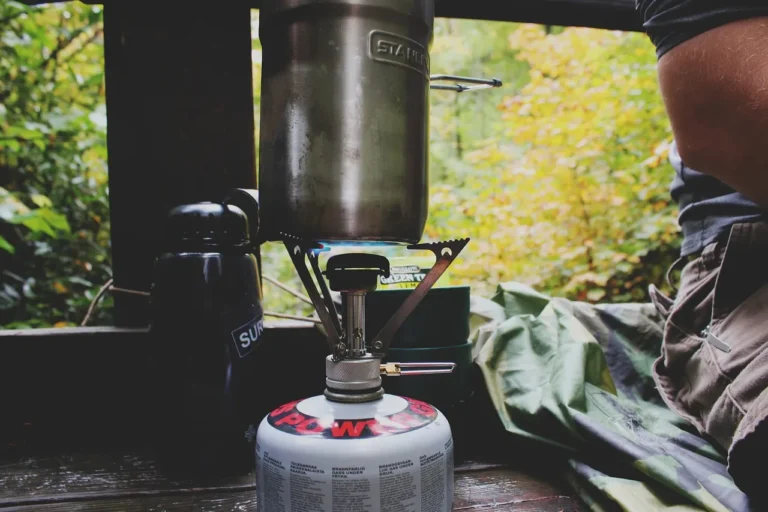
Camp stoves commonly come as single- or double-burner tabletop units, often propane-style setups that can support larger cookware. Backpacking stoves come in canister, liquid fuel, alcohol, wood-burning, and solid tablet variants, with canister and liquid fuel the most common choices for reliable backcountry cooking.
What matters most
For a camp stove, burner output, cookware support, and simmer control matter most. For a backpacking stove, boil-first efficiency, packability, and fuel choice matter most. Weight matters a lot for backpacking and far less for car camping.
Stove choice decision matrix
This matrix turns trip type into a stove choice. Use it before you compare specs, because the same stove can be right for one trip and wrong for another.
| User profile | Group size | Meal type | Carry distance | Weather | Fuel access | Recommended stove type | Rationale |
|---|---|---|---|---|---|---|---|
| Solo overnighter | 1 | Coffee, dehydrated meals, simple boil-and-eat food | Long carry | Mild to cool | Easy canister resupply, or one small fuel bottle | a backpacking stove | Light weight and fast boiling matter more than burner size. |
| Family car camping | 4 to 6 | Breakfasts, sautéing, pasta, full dinners | Short carry from vehicle | Variable | Propane or easy vehicle resupply | a camp stove | Larger cookware, higher heat, and better simmer control fit group cooking. |
| Minimalist weekend backpacking | 1 to 2 | Boil water, quick meals, few pans | Moderate to long carry | Mild to shoulder-season | Canister fuel or white gas, depending on route | a backpacking stove | Packability and boil speed beat burner bulk on short backcountry trips. |
| Cold-weather travel | 1 to 4 | Hot drinks, rehydrated meals, simple cooked food | Any, but usually carried farther from services | Freezing temperatures, wind, or altitude | White gas preferred; canister fuel is less reliable in the cold | a backpacking stove | Liquid fuel handles cold and altitude better than standard canister setups. |
Who should choose a camp stove?
Choose a camp stove if you camp from a vehicle, cook for several people, or want more control over real meals. It is the better fit when weight is not a serious penalty and you want a tabletop setup that supports larger cookware, higher heat, and easier group cooking.
Car camping and tailgates
Front-country use is where a camp stove makes the most sense. You are not paying a penalty for bulk when the vehicle carries it, so the wider burner platform and larger fuel supply are useful rather than inconvenient.
Group meals and larger cookware
Camp stoves are the natural choice for family breakfasts, pasta water, and dishes that need a wide pan or a second burner. Popular Mechanics notes small camp stove output can be around 5,000 Btu, while large camp stoves can reach 20,000 Btu, and larger groups should look above 20,000 Btu. That higher output helps when you are feeding more than one or two people.
Sautéing, simmering, and real cooking
If you want to brown onions, simmer sauce, or cook a full dinner, a camp stove is usually the better tool. Simmer control matters here, and ultralight backpacking stoves often give up some fine control to stay small and efficient.
Who should choose a backpacking stove?
Choose a backpacking stove if you are carrying your kitchen on your back, want a compact setup, or mainly boil water for coffee, soup, and dehydrated meals. It is the better fit for solo or two-person trips where packability and fuel efficiency matter more than burner size.
Solo backpacking and short trips
For one person, a backpacking stove usually solves the right problem: fast, small, and easy to pack. Switchback says a backpacking stove is necessary for backcountry overnight trips, and that advice fits the usual solo overnighter where every ounce and inch of pack space matters.
Boil-only cooking
If your meal plan is mostly boiling water, a backpacking stove is often enough. Canister systems are commonly described as a popular backpacking stove type because they offer easy ignition and relatively fast boiling, which can help when you only need hot water.
Backpack space and weight limits
Weight and packed size are the main reasons to choose this category. A backpacking stove takes less room in the pack and is built for carry distance, while a camp stove’s size becomes more of a burden once you leave the car behind.
How much weight and space do you save?
Backpacking stoves save the most when you are carrying food, shelter, and fuel for multiple miles. On a car camping trip, that savings usually matters far less than burner stability, cookware size, and how much food you want to make at once.
Pack weight vs trip distance
The farther you carry your kit, the more weight and bulk matter. For car camping, the stove can be bigger without much downside. For backpacking, a larger stove starts to compete with food, water, and shelter space in the pack.
Canister size and stove size
Canister fuel comes in 4-, 8-, and 16-ounce capacities, and backpacking canister stoves are built around that compact setup. That keeps the kitchen small enough for one pack or one corner of a shared bear canister or food bag, depending on the trip.
When weight matters less
Weight is far less important when the stove rides in a car, truck bed, or trailer. That is why overlanders, tailgaters, and family car campers often gain more from a stable burner and bigger pan support than from shaving ounces.
Which stove is better for simmering and full meals?
A camp stove is usually better for simmering and full meals because it gives you more burner control and better support for larger cookware. A backpacking stove is better when the meal plan is simple and boil-first, such as coffee, instant oatmeal, and dehydrated dinners.
Simmer control
Simmer control matters when you need to hold heat low without scorching food. That is a common need for sautéing, sauces, eggs, and one-pan meals, and it is where many ultralight systems give up performance in exchange for size and weight savings.
Cookware support
Camp stoves usually handle wider pans and heavier pots better, which helps with real meal prep. Backpacking stoves can support a small pot, but they are not the first choice for a skillet, multiple pots, or a crowded cooking setup.
Meal style
Choose the stove that matches your menu. If you cook like a kitchen at camp, a camp stove is the cleaner fit. If you mostly heat water and eat quickly, a backpacking stove is enough.
Which stove works better in cold weather and at altitude?
Cold weather and altitude favor backpacking stoves that use liquid fuel, especially white gas. Canister systems can be fast and easy in fair conditions, but they can lose performance in freezing temperatures and at elevation, which matters for shoulder-season trips and winter travel.
Canister fuel limits
Canister fuel is usually an isobutane and propane mix. It lights easily and boils water fast, but performance can drop in freezing temperatures and at altitude. That makes it a good warm-weather choice and a weaker pick for harsh shoulder-season conditions.
Liquid fuel strengths
Liquid fuel stoves run on white gas and use a refillable fuel bottle. The same source notes that white gas is less expensive per ounce than canister fuel, and liquid fuel is generally better in the cold and at altitude because it burns hotter and stays more reliable when temperatures fall.
Shoulder-season and winter use
For winter, alpine, or high-elevation travel, liquid fuel is usually the safer bet. A canister stove can still work, but you should expect more sensitivity to temperature and fuel pressure than with white gas.
Choose a camp stove if… / Choose a backpacking stove if…
Choose a camp stove if you drive to camp, cook for a family or group, want larger cookware support, or care about simmering and full meals more than pack weight. Choose a backpacking stove if you carry your gear far, cook mostly for one or two people, and want the smallest possible kitchen for boil-first meals.
- Choose a camp stove if your stove rides in the car and you want more burner power for group cooking.
- Choose a camp stove if you use a skillet, a large pot, or multiple pots at once.
- Choose a backpacking stove if your route includes miles of foot travel and pack space is tight.
- Choose a backpacking stove if you mainly need hot water for coffee, soup, or dehydrated meals.
Say your weekend includes a roadside campsite, four people, and pancakes plus eggs on Saturday morning. That is a camp stove situation, because you need burner area, a stable tabletop setup, and enough heat to keep breakfast moving.
Suppose your trip is a two-night loop with one person, about a 35-pound pack, and dinners that only need boiling water. That is a backpacking stove situation, because the weight savings and small footprint matter more than a wide burner.
Frequently asked questions
Who should choose a camp stove vs a backpacking stove?
Choose a camp stove for car camping, group cooking, and meals that need more heat control. Choose a backpacking stove for backcountry trips, solo or two-person use, and menu plans built around boiling water. The main dividing line is carry distance, then meal complexity.
Can you use a backpacking stove for car camping?
Yes, but it is usually a weak fit unless you are cooking only for one or two people. A backpacking stove can work at a campsite, yet it gives up burner area, cookware support, and often some simmer control compared with a camp stove.
Which stove is better for boiling water fast?
A backpacking stove with canister fuel is often the fastest and easiest choice for boiling water, especially for coffee and dehydrated meals. Camp stoves can also boil quickly, and a higher-output model can be very fast, but size and output matter more than category alone.
Which stove is better for cooking full meals at camp?
A camp stove is usually better for full meals because it supports larger cookware and gives you more control over heat. That matters for sautéing, simmering, and any recipe that needs more than one pot or pan. Backpacking stoves are usually built for simpler, boil-first cooking.
Do backpacking stoves work in cold weather and at altitude?
Some do, but not all with the same reliability. Canister stoves can lose performance in freezing temperatures and at altitude, while liquid fuel stoves running white gas are better suited to cold, windy, or high-elevation trips. That makes fuel choice part of the stove choice.
What fuel type should I choose for camp cooking?
Choose canister fuel if you want easy ignition and fast boiling in fair weather. Choose white gas if you need better cold-weather and altitude performance, or if you take longer trips where refillable fuel bottles make sense. Alcohol, wood-burning, and solid tablets are more specialized backcountry options.