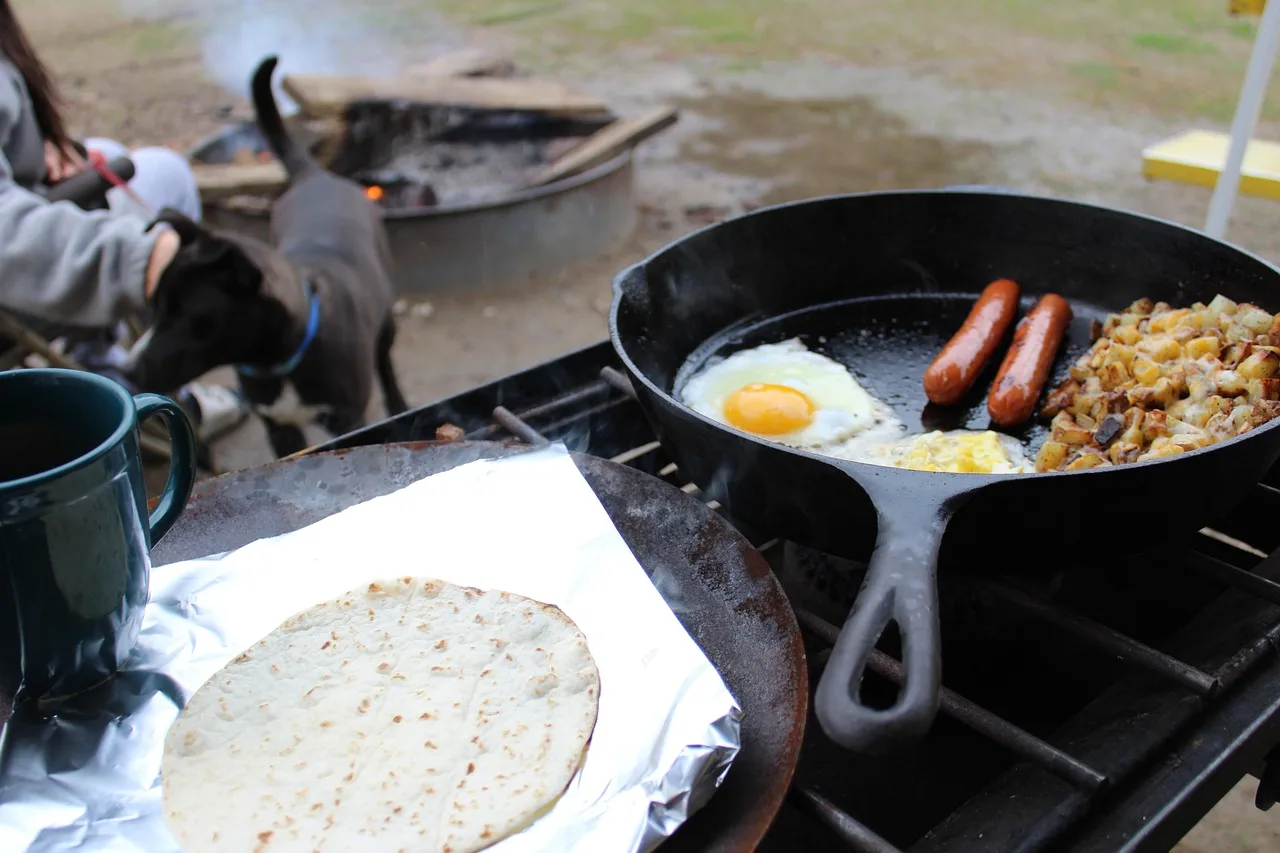
Recommended cookware sets for camping beginners: What to look for

For camping beginners, choose cookware by trip style, heat source, and cleanup tolerance: a compact 2–4 piece kit is often a practical choice for car camping, and cookware that matches the stove or fire setup is usually the better fit. Buy the wrong set, and you get extra weight, uneven heating, and cookware that is hard to clean at camp. This guide shows what to look for before you shop, so you can match a set to your first trips.
What should you look for first?
Start with the trip, then the heat source, then cleanup. If you camp from a car and cook on a stable burner, weight matters less than easy handling and larger pieces. If you backpack, pack size and low weight come first. The right set fits your stove, your group size, and your tolerance for washing up.
Begin with trip style
Car camping can handle bigger pots, lids, bowls, and even plates. Backpacking calls for fewer pieces and tighter nesting. A beginner should not buy by piece count alone, because extra parts add bulk fast. Look for a set that matches how far you carry it and how many people eat from it.
Match the set to your heat source
Check whether the set is campfire-safe, stove-only, or both. Some cookware is built for direct flame; some is better on portable burners. Titanium and nonstick both need more care over high heat. A stable burner and a flat-bottom pot matter more than a long accessory list.
Choose by cleanup tolerance
If you want the easiest cleanup, look for smooth stainless steel or hard-anodized aluminum interiors and lids that wipe clean. Cast iron needs seasoning and more maintenance. Nonstick is easy for simple meals, but the coating can wear if you use high heat or metal utensils. Your tolerance for washing up should shape the buy.
Beginner cookware decision checklist
| Camping style | Heat source | Group size | Weight tolerance | Cleanup tolerance | Budget | Ideal material and set size | Skip if |
|---|---|---|---|---|---|---|---|
| Backpacking | Small stove | 1 person | Under 2 lbs | Low tolerance for scrubbing | Midrange or premium | Titanium or hard-anodized aluminum; 0.8-1.5 L pot, 2-4 pieces | You want full-size pans, cast iron, or loose parts that do not nest |
| Backpacking | Small stove | 2 people | Under 2 lbs to about 3 lbs | Moderate | Midrange | Nested hard-anodized aluminum; 2-person capacity, lids and one small pan | You plan to cook one large shared meal every night |
| Car camping | Portable burner or campfire | 2-4 people | 5-8 lbs acceptable | Moderate to low | Budget or midrange | Stainless steel or hard-anodized aluminum; 2-4 piece set with bowls or plates | You need ultralight gear or tiny solo cookware |
| Car camping | Campfire | 4 people or more | Over 6 lbs is fine | Low | Midrange or premium | Stainless steel or cast iron; larger pots, pans, lids, and serving pieces | You expect fast cleanup with no seasoning or drying time |
| Simple stove meals | Portable burner | 1-2 people | Moderate | High tolerance for care | Budget to midrange | Nonstick coating on a compact set, used at lower heat | You cook over open flame or expect rough handling |
Which material fits your first set?
Stainless steel is the easy durability choice, hard-anodized aluminum is the balance choice, cast iron is the heavy-duty heat-retention choice, titanium is for very light packs, and nonstick helps with simple meals on controlled burners. The best material is the one that fits your stove, your meals, and your patience for maintenance.
Stainless steel
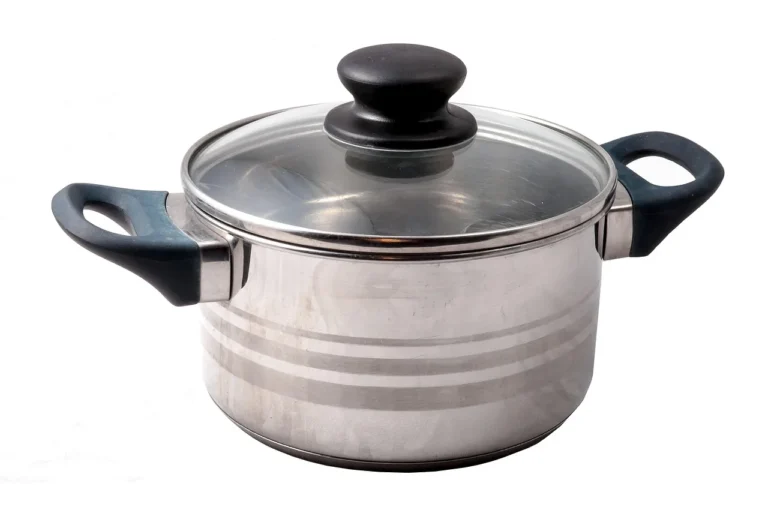
Stainless steel is the most forgiving option for beginners who want durability and straightforward cleaning. It tolerates bumps, scrub pads, and repeated use better than many coated pans. The tradeoff is weight and slower heating than aluminum. It fits car camping well and works for people who want a long-life set.
Hard-anodized aluminum
Hard-anodized aluminum gives a strong heat-to-weight balance. It heats faster than stainless steel and usually packs lighter, which is why it fits backpacking and mixed-use trips so well. The tradeoff is less abuse tolerance than stainless steel. Look for a flat base and tight nesting so the set stays stable and compact.
Cast iron
Cast iron holds heat well and handles campfire cooking well, but the weight is a real tradeoff. It also needs seasoning and drying after use. For a first set, cast iron makes sense only if you car camp, cook hearty meals, and want cookware that can move from fire to table without hurry.
Titanium and nonstick
Titanium is ultralight and expensive, so it fits backpackers who count every ounce. It can heat unevenly and is less forgiving with direct flame, especially on small burners. Nonstick is useful for eggs, pancakes, and other simple meals, but it dislikes high heat and rough utensils. Both choices reward careful use.
Say your first trip is a two-night backpacking outing with a canister stove and dehydrated meals. A nested hard-anodized pot around 0.8 to 1.5 liters is a better fit than a heavy multi-pot kit, because you need one efficient vessel, not a full kitchen.
How much capacity do you need?
Capacity should match the number of eaters, not the number of pieces in the box. Solo camping sets usually sit around about 0.8 to 1.5 liters. Two-person sets should cover two servings without forcing you to cook in rounds. Group sets need larger pots, and car camping can support bigger serving pieces too.
Solo sets
For one person, look near 0.8 to 1.5 liters. That range handles boil-water meals, soup, oatmeal, and simple pasta portions without excess bulk. A solo set should nest tightly and keep the lid secure. If you carry more capacity than you need, you usually carry more weight and take longer to heat water.
Two-person sets
For two campers, a set with true 2-person capacity is the practical target. That means one pot large enough for shared food and, ideally, a small pan or second pot. If you often cook one-pot meals, prioritize pot volume and a stable lid over extra utensils or a full plate stack.
Group and car-camping sets
For four people or more, choose a group set with larger pots, wider pans, and enough bowls or plates to reduce passing food around. Car camping allows bigger pieces because you are not carrying them far. Larger sets also fit better when you want pancakes, pasta, or a full breakfast spread.
Suppose two beginners buy a 16-piece kit for a weekend trip. If half the pieces are small cups, extra forks, and a cutting board they never use, the set can still be the wrong size. A smaller nested pot-and-pan set often works better than a bigger box with clutter.
Weight and pack size
Weight should match how you travel. Backpacking sets are often aimed at staying under about 2 lbs. For car camping, a set around 5 to 8 lbs can still be acceptable because it stays near the vehicle. Over 6 lbs is best suited to car camping only, especially if the set includes cast iron or larger serving pieces.
Backpacking weight targets
Backpacking beginners should keep the set light and compact. Under 2 lbs is a useful target for one or two people if the set is simple and nested well. Titanium and thin hard-anodized aluminum fit this use case best. If the set needs a large bag to hold loose parts, it is probably too bulky.
Car-camping weight limits
Car camping gives you room to prioritize comfort over ultralight packing. A 5 to 8 lb set can still be a smart buy if it includes sturdier pots, better lids, and easier cleaning. Heavier sets can be fine when they stay in the vehicle and do not need to fit into a small backpack.
Nesting design and carry bags
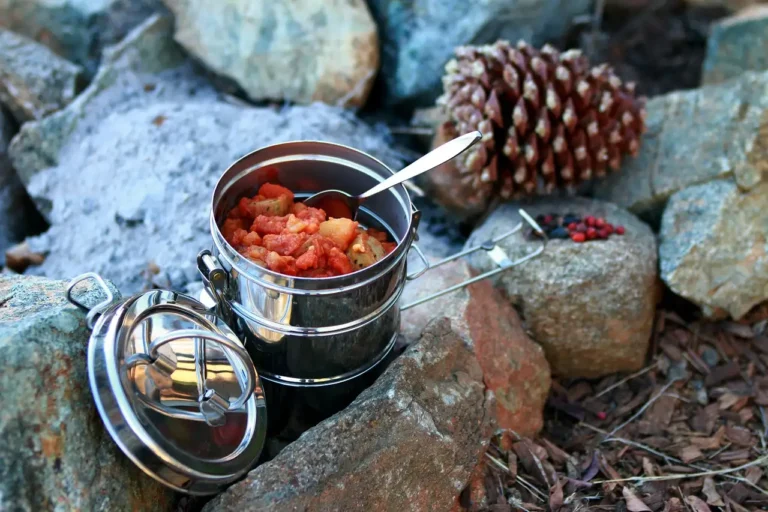
Good nesting design means pots and pans stack inside one another, lids stay in place, and loose parts do not rattle around. A compact pack-down size matters because it saves space and keeps the set organized. A stuff sack or carry bag is worth paying for when it keeps the parts together.
Can you use it on your stove or fire?
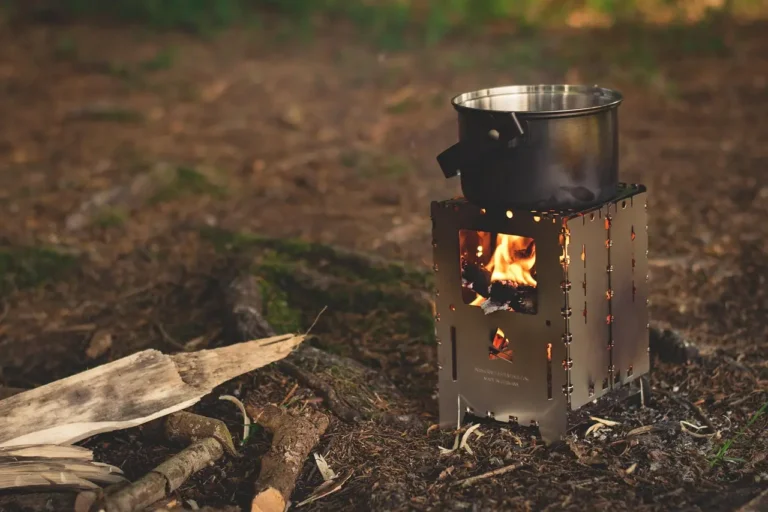
Use only cookware that matches your heat source. Campfire-safe sets handle direct flame and uneven heat better, while stove-only sets often assume a flat, controlled burner. Portable burner stability matters, because a wide or top-heavy pot can wobble. Titanium and nonstick need the most care with direct flame.
Campfire-safe versus stove-only
Campfire-safe cookware usually has sturdier construction and better tolerance for flame contact. Stove-only cookware may be lighter or coated, but it can struggle over open fire. If you are not sure which you need, look for the maker’s explicit heat-source note. Never assume all camping cookware handles a fire ring.
Portable burner stability
On a small stove, the pot base should sit flat and the handles should lock or stay steady. Unstable handles and narrow bases are common beginner failure points. A heavy lid or a tall stockpot can tip if the burner is small. Stability matters as much as total capacity.
Direct-flame limits
Titanium and nonstick both have limits on direct flame use. Titanium can create hot spots, so food may brown fast in one area and lag in another. Nonstick coatings can peel or wear if they are overheated or scraped. If you want fire cooking, stainless steel or cast iron is usually the safer first choice.
What comes in a good beginner set?
A good beginner set includes only the pieces you will use. At minimum, that usually means a pot, a pan or second pot, and lids. Useful extras include a spoon, spork, bowl, or plate, but only if they fit your trip style. Do not pay for clutter that adds size without solving a cooking problem.
Pots, pans, and lids
The core pieces are the pot and, if needed, a pan. Lids help water boil faster and keep heat in. Lids with straining holes can be useful for pasta or vegetables. For car camping, a bigger pot can be worth it. For backpacking, one small nested pot is usually enough.
Useful extras
Extra items are worth paying for when they save you from bringing separate gear. Bowls, plates, or a basic utensil can make sense for car camping. A cutting board or drying rack can help if you cook fresh food and wash dishes at camp. A carry bag is also a practical add-on for nesting sets.
Clutter to skip
Skip pieces that duplicate gear you already own. Extra cups, decorative utensils, and oversized serving tools often add bulk without real value. Beginners often buy by piece count and end up with a set that is hard to pack and harder to clean. A smaller, better-matched kit is usually the better buy.
What should you look for in a camping cookware set?
Look first at fit: trip style, heat source, and cleanup tolerance. Then check material, capacity, weight, nesting design, and the actual pieces included. A beginner set should match your stove or fire, handle your group size, and avoid common problems like warping, hot spots, and unstable handles.
Frequently asked questions
What camping cookware is best for car camping beginners?
Car camping beginners usually do best with stainless steel or hard-anodized aluminum in a 2-4 piece set. You can accept more weight, so choose stable handles, larger pots, and easier cleanup over ultralight packing. Look for a set that nests neatly and includes only the tools you will actually use.
What camping cookware is best for backpacking beginners?
Backpacking beginners should start with a compact hard-anodized aluminum or titanium set that stays under 2 lbs if possible. A solo pot around 0.8 to 1.5 liters, or a small two-person nested kit, is usually the right scale. Packability and burner compatibility matter more than full meal variety.
How much should a beginner spend on camp cookware?
Spend enough to get the right material and a usable nesting design. Budget entry sets can work for car camping, midrange sets often offer the best balance of weight and durability, and premium options make sense when you want very light or long-life gear. Buy for fit first, not the biggest box.
What makes a camping cookware set easy to clean?
Smooth stainless steel or hard-anodized aluminum usually cleans more easily than rough or heavily coated surfaces. Lids and pans with simple shapes also help. Dishwasher-safe claims matter only if you can actually use a dishwasher after the trip, which most campers cannot. Cast iron is the least convenient because it needs seasoning and drying.
Can I use camping cookware over a campfire?
Yes, but only if the set is campfire-safe. Stainless steel and cast iron are usually the safer choices for direct flame. Nonstick and titanium need more caution, especially with hot spots and coating wear. If the maker says stove-only, treat that as a real limit and use a burner instead.
What comes in a good beginner camp cookware set?
A good beginner set should include the smallest useful group of pieces: one or two pots, a pan if you need one, and lids that fit well. Useful extras are bowls, plates, a spork or utensil, and a carry bag. Skip anything that adds clutter without helping you cook or clean.