How does stainless steel camp cookware perform for camping meals?

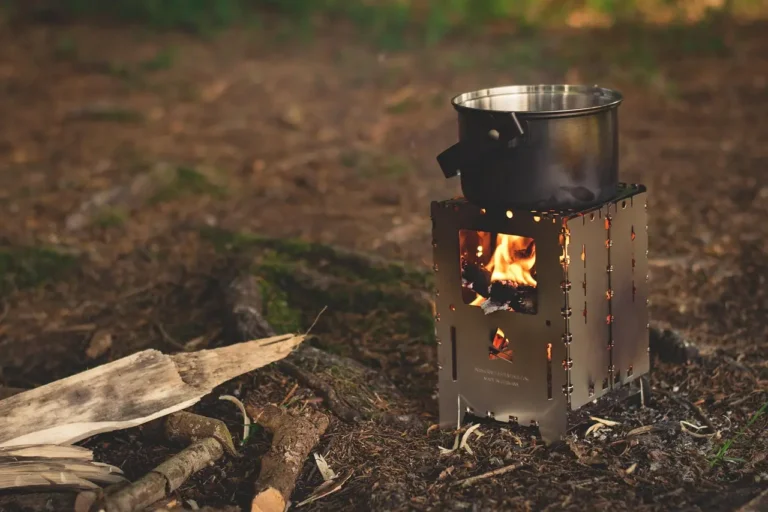
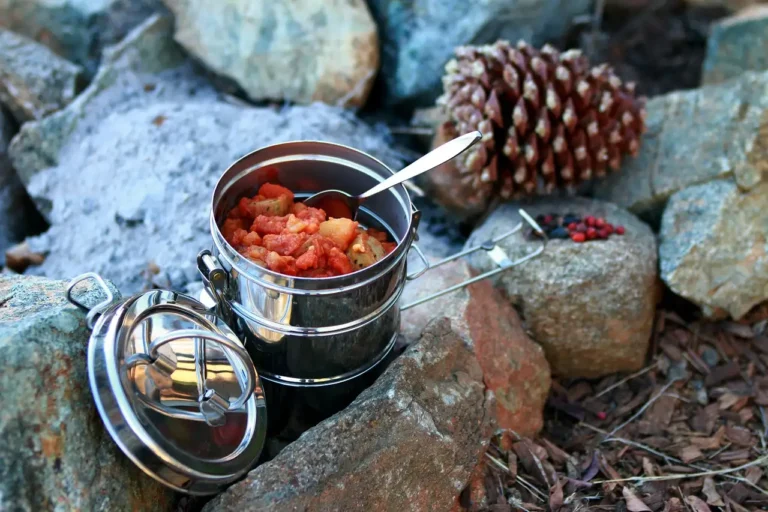
Stainless steel camp cookware works best for boiling, simmering, braising, and pan sauces; choose it for camping meals if you want durability and easy cleanup, not top-tier nonstick. Poorly matched stainless pans can burn eggs, stick rice, and waste fuel. This guide explains what stainless steel cooks well, where it struggles, and how to pick the right pot or pan for your campsite menu.
What stainless steel does well and poorly
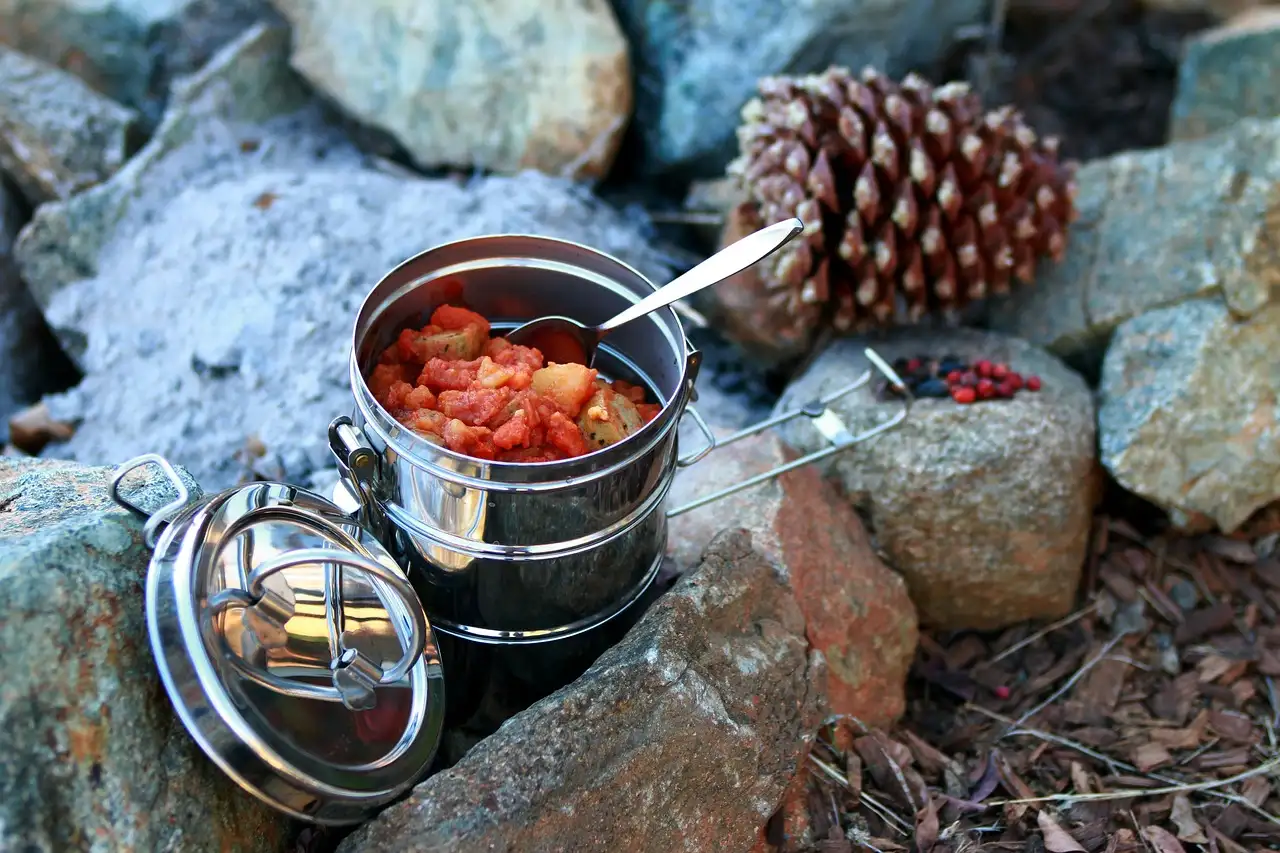
Stainless steel fits camp meals that need steady simmering, direct flame tolerance, and cookware you can clean without babying. It works well for pasta, rice, soups, sauces, and searing, especially when you want pans that resist scratching and survive rough packing.
The tradeoff is heat control. Stainless steel does not spread heat as evenly as aluminum, so thin pans can develop hot spots on a camp stove. That matters most for eggs, pancakes, and sugar-heavy sauces, where a small temperature spike can lead to sticking or scorching.
What stainless steel cooks well at camp
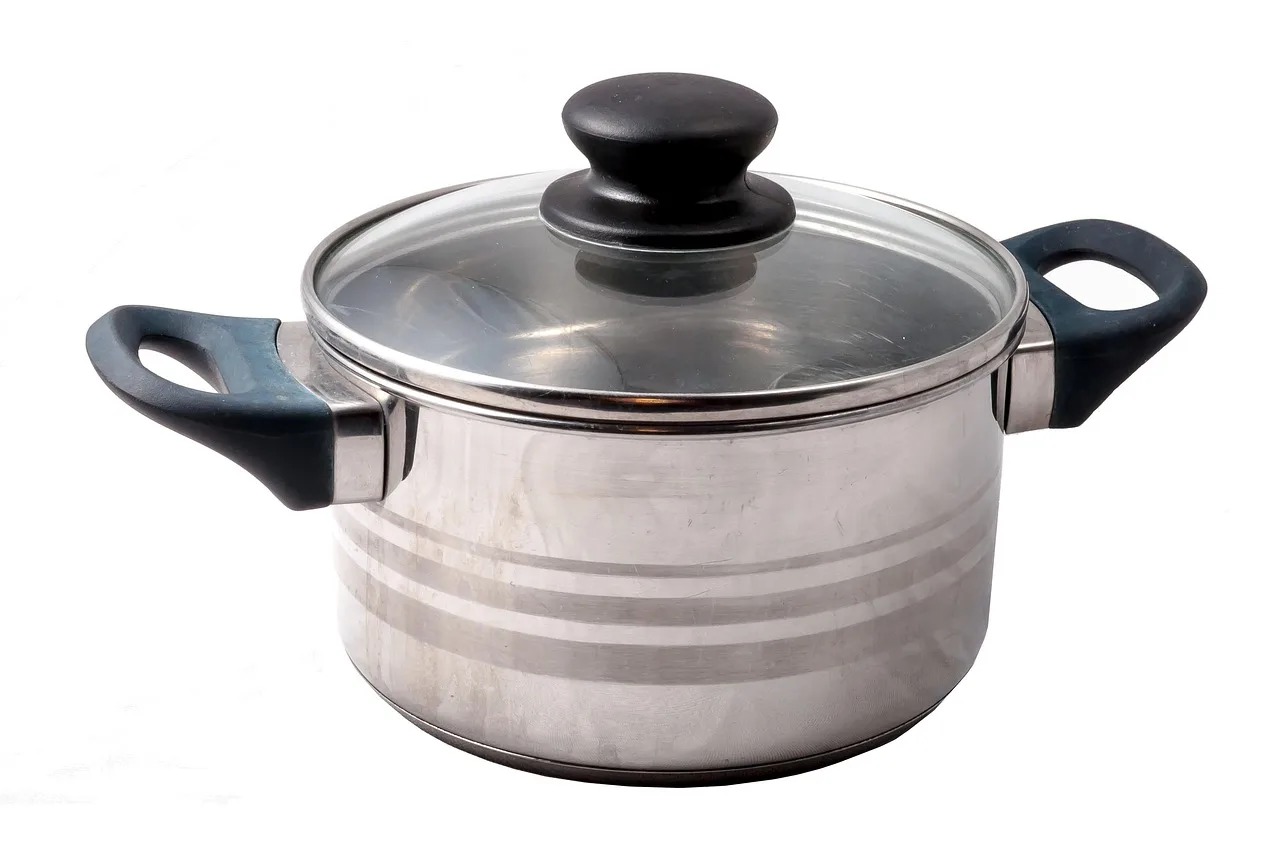
A camping pot can handle pasta, steamed rice, soups, and one-pot meals. A full-size skillet is also useful camp cookware when breakfast or searing matters. Stainless steel fits both jobs because it tolerates higher heat and rough handling better than coated pans.
It is also a practical choice for mixed menus. If your campsite meals lean on boil-and-simmer cooking, a stainless pot earns its place quickly. If you make breakfast in the pan and dinner in the pot, a skillet plus pot setup covers most campsites without bringing extra pieces.
Where stainless steel struggles
Stainless steel struggles most with delicate foods that punish uneven heat. Eggs can set too fast at the edges, pancakes can darken before the center firms, and rice can cling if the burner runs too hot. That does not make stainless unusable. It means heat management matters more than with nonstick.
Thin stainless cookware also takes longer to recover after adding cold food. On a weak single-burner stove, that can create more sticking than expected. For those meals, a heavier base or a pan with better heat spread is worth the extra grams.
How does it compare with aluminum?
Aluminum usually heats faster and more evenly, so it is easier to manage for eggs, pancakes, and quick sauces. Stainless steel is harder, resists scratching, and often cleans up more easily after rough camp use. For many campers, the choice is speed and evenness versus durability and scratch resistance.
For camp meals, aluminum often wins on heat distribution. Stainless steel often wins on abuse resistance. If you cook simple boil-and-simmer meals, stainless is plenty capable. If you make a lot of breakfast food on a small burner, aluminum can be easier to live with.
Heat distribution and hot spots
Heat distribution matters because camp stoves rarely spread flame evenly across a pan bottom. Stainless steel can still cook evenly enough, but it depends on the pan’s base design and the burner size. Hot spots are most obvious with eggs, pancakes, and sauces because those foods show browning and sticking fast.
Some product descriptions call out base treatments that help with heat spread. The Sea to Summit Sigma Pot is described as a super durable stainless steel pot, and its black powder coating on the base is noted for helping with heat distribution. That kind of detail matters more than a shiny finish.
Weight, durability, and cleanup
Stainless steel weighs more than aluminum, but it is also tougher against drops and often dishwasher safe. Outdoor cookware descriptions commonly list 304 stainless steel because it is corrosion-resistant, durable, and easy to clean. For car camping, that durability often outweighs the extra weight.
For family trips, weight adds up faster than many buyers expect. A two-pot set, skillet, and lids can become a noticeable load. If you pack by vehicle, stainless is easy to justify. If you carry everything by hand, aluminum may be the simpler choice for larger sets.
Is stainless steel better for campfires than nonstick cookware?
Yes, stainless steel is the safer general choice for campfires because it handles direct flame better than coated cookware and has no plastic components to worry about near heat. Nonstick coatings are more heat-sensitive, and direct flame can shorten their life quickly. Stainless is still not equal to cast iron for campfire heat retention.
Camplabx says stainless steel is the safest all-rounder for stove, grill, and coals. That fits practical camp use: stainless is flexible across heat sources, while coated pans are better kept to gentler stove heat. On a campfire, cookware with simple metal handles and no plastic parts is the cleaner fit.
Direct flame and coal use
Stainless steel works on stove, grill, and coals, which makes it useful for campsites that mix heat sources. It tolerates direct flame better than nonstick cookware and is easier to move from stove to grate to fire ring. That flexibility helps when your meal plan changes with weather or fire restrictions.
Cast iron remains the campfire benchmark for heat retention, especially in a Dutch oven. Stainless steel is lighter and easier to pack, but it will not hold heat the same way over coals. Use stainless when portability matters more than long, even radiant heat.
Why coated cookware is a weaker fit
Coated cookware can work on a stove, but campfire use is harsher. Flame licking the sides, ash, and uneven coals all punish coatings and attached parts. Stainless steel has fewer failure points. That makes it a better long-term choice for campers who want one pan to survive repeated fire-ring use.
Meal performance matrix
This matrix turns stainless steel into a meal decision tool. It shows where the material shines, where it needs careful heat control, and what size tends to fit solo, couple, and family camping use. The best vessel depends on the meal, the heat source, and how much cleanup you want after dinner.
| Meal type | Best vessel | Heat risk | Sticking risk | Cleanup difficulty | Best size for solo/couple/family |
|---|---|---|---|---|---|
| Eggs | Skillet | High on hot spots | High without preheating and oil | Moderate | 8-10 in / 10-12 in / 12 in |
| Pancakes | Skillet | High if burner runs hot | High with thin batter | Moderate | 8-10 in / 10-12 in / 12 in |
| Pasta | Pot | Low | Low | Easy | 0.5-1L / 1.5-2L / 3-5L |
| Rice | Pot with lid | Moderate on weak stoves | Moderate to high if overheated | Moderate | 0.5-1L / 1.5-2L / 3-5L |
| Sauces | Small pot or saucepan | Moderate | Moderate | Easy to moderate | 0.5-1L / 1.5-2L / 3-5L |
| Searing | Skillet | Moderate to high | Moderate | Moderate | 10 in / 10-12 in / 12 in |
Say your camp menu is eggs on day one, rice bowls on day two, and pasta on day three. A 2L pot and a 10-inch skillet will cover the plan better than a deep set of oversized pans, because the meals reward the right shape more than extra capacity.
What size do you need?
Size should match the number of eaters and the meals you actually cook. A solo camper usually does well with 0.5-1L. A couple often needs 1.5-2L. A family of four generally needs 3-5L. Groups of 6 or more often need multiple pots or a stock pot of about 5 L or larger.
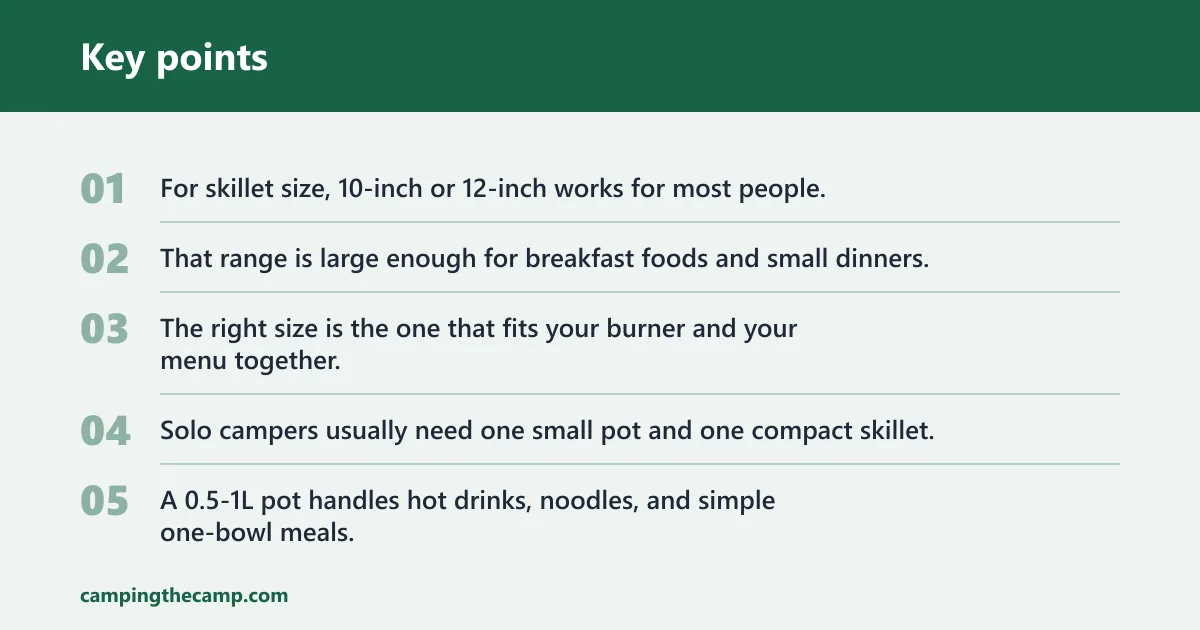
For skillet size, 10-inch or 12-inch works for most people. That range is large enough for breakfast foods and small dinners, but not so large that it becomes hard to heat on a standard propane camp stove. The right size is the one that fits your burner and your menu together.
Solo and couple sizing
Solo campers usually need one small pot and one compact skillet, or just one pot if the menu is mostly boil-and-simmer. A 0.5-1L pot handles hot drinks, noodles, and simple one-bowl meals. Couples usually do better with a 1.5-2L pot and a 10-inch skillet for breakfast and quick pan meals.
Family and group sizing
For a family of four, 3-5L is the more realistic pot range, especially for pasta, rice, and stews. If you cook for 6 or more, single-pot capacity becomes less efficient, so multiple pots or a 5L+ stock pot make more sense. Two-burner stoves help here because they let you run a pot and a skillet at the same time.
A two-burner propane camp stove is generally more forgiving than a single-burner setup. With two burners, you can simmer rice on one side and fry eggs on the other. With a single burner, one pot usually gets priority because skillet foods and sauces compete for precise heat.
Skillet and pot pairings
A skillet and a pot cover most camping meals. The pot handles boiling, simmering, and reheat jobs. The skillet handles breakfast and searing. If you buy nesting cookware, those two pieces often pack better together than separate home cookware, especially when the handles fold or detach and the set stores in a stuff sack or storage bag.
How do you keep food from sticking to stainless steel at camp?
Sticking usually comes from heat that is too high, food added too soon, or a pan that is not preheated evenly. The fix is simple but disciplined: let the pan warm, add fat at the right moment, and lower the flame before the food starts to smoke. That matters most for eggs, pancakes, and rice.
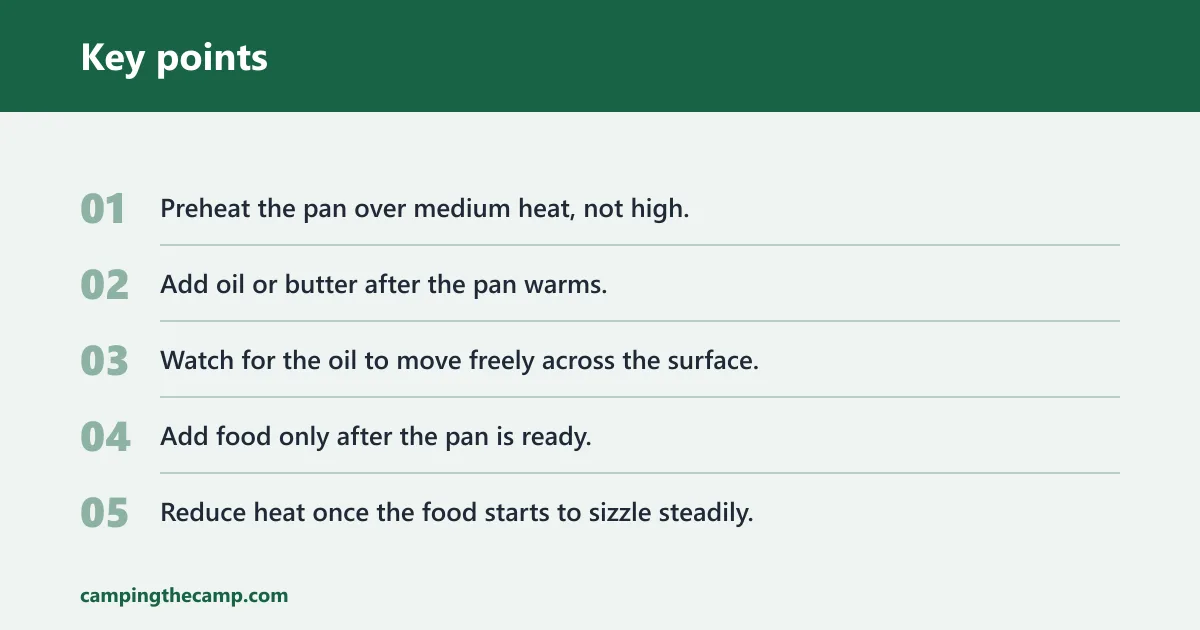
- Preheat the pan over medium heat, not high.
- Add oil or butter after the pan warms.
- Watch for the oil to move freely across the surface.
- Add food only after the pan is ready.
- Reduce heat once the food starts to sizzle steadily.
- Use a thin spatula for release, not force.
Preheating and oil timing
Oil timing matters because stainless steel does not hide poor heat control. A preheated pan with fat added at the right moment releases food far better than a cold pan flooded with oil. If the pan smokes hard, it is too hot for most breakfast food.
A common first-timer mistake is putting eggs into a cold stainless pan on a full flame. The whites grab the surface before the pan stabilizes, and the result is scraping. A gentler preheat and a little patience solve more sticking than extra oil alone.
Heat control on camp stoves
Standard propane camp stoves can run hotter at the center than at the edges. That is why a single burner may brown pancakes unevenly or scorch a sauce in the middle of the pot. Turning the flame down, centering the pan, and using a thicker-base pan all help reduce hot spots.
Suppose you are cooking rice in a 2L stainless pot on a single burner and the bottom starts to catch before the top is done. That usually points to excess heat, not a bad pot. Lower the flame earlier, keep the lid on, and let residual heat finish the job.
Cleanup after cooking
Stainless steel is usually straightforward to clean after a camp meal, especially compared with food that has burned onto a thin pan. Deglazing with a little water while the pan is still warm loosens browned bits from sauces and seared meat. Many stainless pieces are also dishwasher safe, which helps at home after the trip.
How do nesting stainless steel cookware sets help with packing?
Nesting sets save pack space by fitting pots, lids, and sometimes a pan into one compact stack. Folding or detachable handles make that easier, and a storage bag or stuff sack keeps the set from rattling around in the bin. For car camping, that can matter as much as the cooking surface itself.
Nesting also keeps you from overpacking duplicate pieces. If the pot, lid, and skillet are sized to fit together, you can bring the tools that match your menu without turning the tote into a cluttered drawer. That is especially useful when you have limited room around a propane stove or cooler.
Is stainless steel camp cookware too heavy for family camping trips?
Usually no, as long as you are car camping and not carrying everything far from the vehicle. Stainless steel is heavier than aluminum, but it is durable, resists scratching, and often stands up better to repeated family use. For short walks from car to site, the weight tradeoff is often acceptable.
It becomes less attractive when every ounce matters. Families who want a large skillet, a deep pot, and a backup pan may feel the difference fast. In that case, choosing stainless for the most abused piece and aluminum for the lightest piece can keep weight under control.
How does nesting stainless steel cookware help with packing?
Nesting cookware helps because it reduces wasted air space inside your bin or duffel. A compact stack with a folding handle or detachable handle is easier to fit beside fuel, plates, and utensils. For campers who organize by meal, that can make setup and teardown faster.
It is also easier to protect. A nested set in a storage bag is less likely to scratch other gear, and it keeps lids and handles together. For stainless steel, that matters because one of its strengths is resistance to scratching, so you may as well preserve that advantage in transit.
Frequently asked questions
How does stainless steel camp cookware compare to aluminum for camping meals?
Aluminum usually heats more evenly and responds faster to burner changes, which helps with eggs and pancakes. Stainless steel is heavier, but it is tougher against drops, resists scratching, and is often easier to trust for rough camp use. For boiling and simmering, stainless performs very well.
Does stainless steel camp cookware heat evenly enough for eggs and pancakes?
Yes, but the margin for error is smaller than with aluminum or nonstick. A thicker base helps, and a standard propane camp stove should be kept at moderate heat. Eggs and pancakes are the meals most likely to expose hot spots, so pan size and burner control matter.
What meals are easiest to cook in stainless steel camp cookware?
Pasta, rice, soups, stews, and pan sauces are the easiest wins. These meals reward a durable pot and do not depend on perfect nonstick release. Searing also works well in a skillet, especially when you want browning before deglazing or adding sauce.
What size stainless steel pot or pan do I need for camping meals?
Use 0.5-1L for solo cooking, 1.5-2L for a couple, and 3-5L for a family of four. Groups of 6 or more usually need multiple pots or a 5L+ stock pot. For skillets, 10-inch or 12-inch is the most useful range for most campers.