
How to deep clean a very dirty camp stove

Deep clean a very dirty camp stove by removing detachable parts, washing grease and carbon from the body, clearing burner ports, and drying everything fully. If the flame is still weak after that, you likely have a clog, bad regulator, or worn valve. Skip the wrong cleaners or wet reassembly, and you can create ignition problems, rust, or gas-flow failure. This guide covers safe cleaning for propane and liquid-fuel camp stoves, then a checklist to tell dirt from mechanical trouble.
How to deep clean a very dirty camp stove

What you’ll need
- Warm water
- Dish soap
- Baking soda
- White vinegar or citric acid
- Nonabrasive pad
- Nylon scrubber
- Soft cloths
- Small brush
- Straight pin, needle, or small gauge wire
- Bucket or basin for soaking removable parts
- Cooktop scraper for hard residue, if the surface can take it
Camp stove cleaning checklist
- Turn the stove off, close the fuel supply, and let it cool completely before you touch anything.
- Unplug the stove if it has electrical ignition. On standing pilot models, shut the gas valve off too.
- Remove loose crumbs, ash, and visible grime from the top and around the burner box.
- Lift off grates, burner caps, and burner bases or heads if the design allows it.
- Soak greasy removable parts in warm, soapy water for easier scrubbing.
- Scrub with a nonabrasive pad or nylon scrubber, then use a soft cloth to lift loosened residue.
- Use a baking soda paste on stuck-on grime. Let it sit for 20-30 minutes, then wipe and rinse.
- Use white vinegar or citric acid on mineral deposits and stained spots that do not budge with soap alone.
- Clean burner ports carefully with a straight pin, needle, or small gauge wire. Do not use a wooden toothpick in place of a pin.
- Dry every part fully, reinstall caps and grates in the correct position, and test the flame only after all moisture is gone.
How do you clean baked-on grease off a camp stove?
Start with hot, soapy water and a nylon scrubber. For hard residue, a cooktop scraper can help if the surface allows it. Baking soda paste works well on stuck-on spots, especially after 20-30 minutes of contact time. Avoid metal pads on coated or polished parts.
Deep-clean the removable parts first
Remove stove grates, burner caps, and burner bases or heads before scrubbing when the design allows it. Homemade Simple recommends soaking gas stovetop grates and burner caps in warm, sudsy water, which is a good first pass for grease and soot. Reinstall only after everything is fully dry.
For example, a propane stove may have a greasy grate on one side and a clean grate on the other. Clean the greasy side first, then compare the finish as you work so you do not over-scrub the cleaner part. That keeps you from scratching parts that already need little more than washing.
Use the right cleaner for the residue
Use baking soda as a paste or mild scrub for stuck-on stovetop grime, especially where soap alone leaves a film. White vinegar or citric acid works better for mineral deposits and some stains. For heavy grease, let the cleaner sit, then wipe and repeat instead of forcing the residue off in one pass.
How do you clean clogged stove burners safely?
Clear burner ports only after the stove is off, cool, and dry enough to handle. KitchenAid lists a straight pin, needle, or small gauge wire for burner ports, and it warns not to use a wooden toothpick in their place. Clean the ports gently, then fully dry the burner before relighting.
Clear the ports without widening them
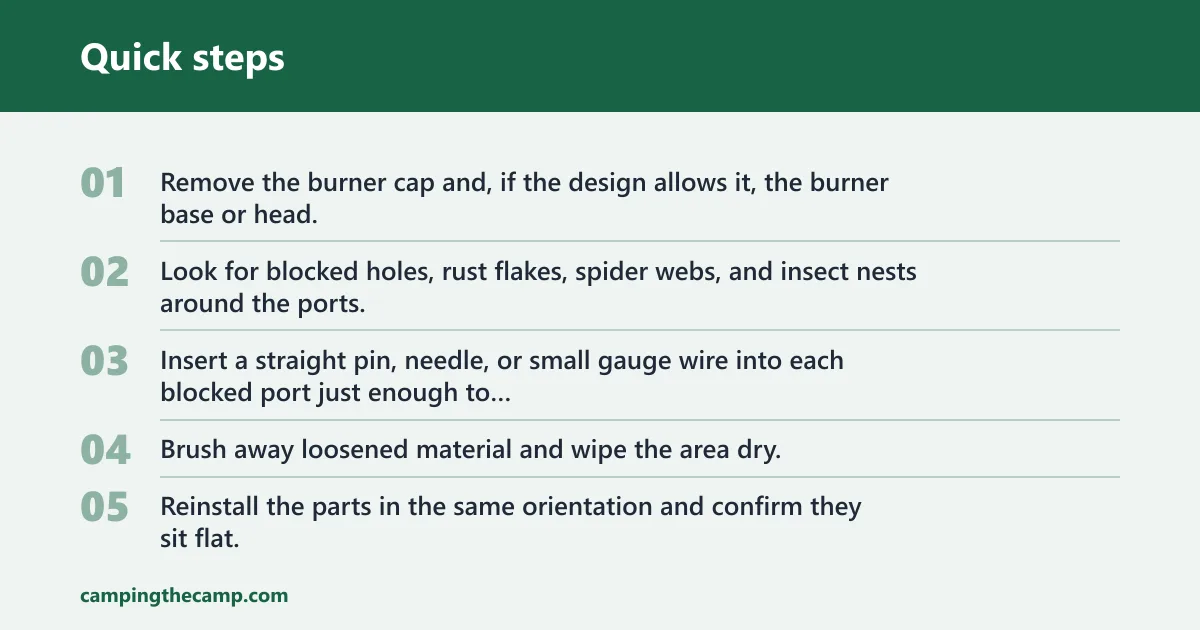
- Remove the burner cap and, if the design allows it, the burner base or head.
- Look for blocked holes, rust flakes, spider webs, and insect nests around the ports.
- Insert a straight pin, needle, or small gauge wire into each blocked port just enough to clear debris.
- Brush away loosened material and wipe the area dry.
- Reinstall the parts in the same orientation and confirm they sit flat.
A common first-timer mistake is pushing a wooden toothpick into a blocked port because it is handy. That can break off and leave debris behind, which makes the flame worse. Use a metal pin or wire sized for the opening, and stop if the port looks damaged or oval.
If that didn’t work, try this next
If cleaning ports does not restore a steady flame, move one step deeper. Check the burner cap fit, then inspect the jet, regulator, or hose for wear, kinks, or residue. On liquid-fuel and dual-fuel stoves, a weak flame after cleaning can also point to fuel-delivery trouble, not just grime.
- Confirm the burner cap is seated correctly and not warped.
- Inspect the jet or fuel opening for carbon or corrosion.
- Check the hose, valve, or regulator for cracks, stiffness, or damage.
- Stop cleaning and replace worn seals, caps, jets, or hoses if the fault remains after the surfaces are clean.
How do you clean under a camp stove top?
Lift the top or open access panels only if the stove design allows it. Remove crumbs, rust flakes, spider webs, and loose debris from the burner box and exposed surfaces, then wipe with a barely damp cloth. Keep water away from ignition parts, wiring, and gas openings.
Check the hidden contamination points
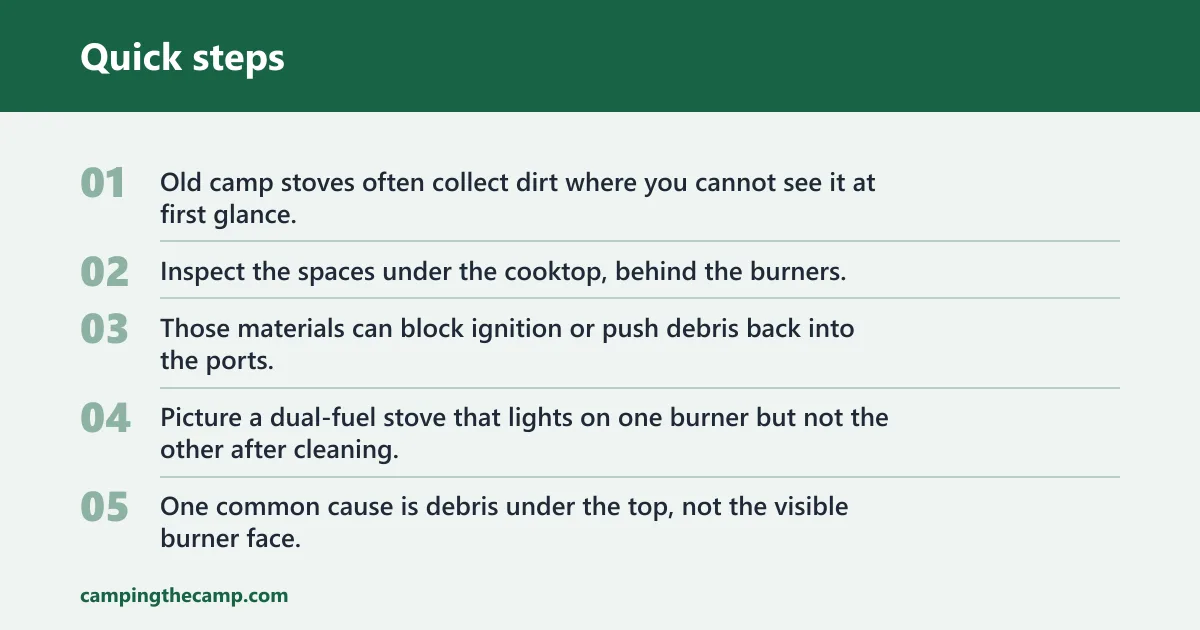
Old camp stoves often collect dirt where you cannot see it at first glance. Inspect the spaces under the cooktop, behind the burners, and around the valve area for insect nests, oxidized flakes, and greasy residue. Those materials can block ignition or push debris back into the ports.
Picture a dual-fuel stove that lights on one burner but not the other after cleaning. One common cause is debris under the top, not the visible burner face. Removing the loose contamination may fix the issue; a damaged jet or worn seal needs replacement instead of more scrubbing.
How to remove rust and corrosion from a camp stove
White vinegar or citric acid is commonly recommended for light rust and mineral stains where a milder acid is appropriate. Let the part sit, then scrub with a nonabrasive pad. If rust has pitted a burner cap, warped a grate, or eaten into a seal surface, cleaning will not restore it.
Camp stove rescue checklist
| Symptom | Likely cause | Safest cleaning fix |
|---|---|---|
| Greasy burners | Baked-on cooking residue on the burner face or grate | Soak in warm, soapy water, then scrub with a nonabrasive pad and baking soda paste |
| Rust on the grate | Moisture left on metal after storage or washing | Use white vinegar or citric acid on light rust, then dry fully before reassembly |
| Clogged ports | Carbon, soot, or insect debris blocking gas flow | Clear with a straight pin, needle, or small gauge wire, then brush clean and dry |
| Weak flame | Dirty ports, blocked cap, or a worn regulator or valve | Clean ports and caps first; if the flame stays weak, stop and inspect fuel parts |
| Yellow flame | Incomplete burn from dirt, poor air mix, or blocked openings | Clean burner ports and cap seating; replace damaged burner parts if the color stays yellow |
| Stuck knobs | Grease buildup or corrosion around the control stem | Wipe the area with hot, soapy water; do not force the knob if it binds |
| Soot on the stove body | Fuel residue or a burner burning too dirty | Use hot, soapy water, then baking soda paste for stubborn soot |
| Moisture-related ignition failure | Wet burner ports, cap, or igniter after cleaning | Dry every part completely before relighting or reassembly |
| Uneven burn | Cap set crooked or ports still blocked | Remove the cap, clean again, and reinstall it in the correct position |
| No ignition after cleaning | Wet ignition parts, blocked jet, or damaged fuel path | Dry first, then inspect the jet and valve; replace worn parts if needed |
| Heavy mineral stains | Hard-water deposits on metal or enamel surfaces | Use white vinegar or citric acid, then rinse and dry |
| Sticky burner cap | Grease under the cap or a warped seating surface | Clean the cap and base separately, then reinstall only when dry and flat |
Common mistakes
The most common error is cleaning a stove that is still hot. Rural Sprout says never to clean a hot stove, and embers can stay hot long after the fire goes out. Another mistake is wet reassembly; moisture can affect ignition and gas flow even when the stove looks clean.
Do not scrub polished or coated surfaces with harsh abrasives, metal pads, or aggressive scraping. Do not force vinegar onto every stain, either. It works for mineral deposits and some corrosion, but it is not the right fix for damaged seals, clogged jets, or a cracked hose.
Can I use vinegar or baking soda on a camp stove?
Yes, but use them for specific jobs. Baking soda is commonly used as a paste for stuck-on grime and baked-on grease. White vinegar or citric acid works better for mineral deposits and some rust-related buildup. Rinse or wipe the part clean afterward, then dry it fully before reassembly.
What should I not use on gas stove burners?
Avoid harsh abrasives, metal pads, and anything that can scratch coated or polished parts. Do not use a wooden toothpick in burner ports. Skip wet shortcuts, and do not soak electrical ignition parts or fill burner openings with liquid cleaner. If a part is cracked, warped, or pitted, replace it.
Frequently asked questions
How do you clean dirty stove?
Turn the stove off, let it cool, and remove loose debris first. Then wash removable parts in warm, soapy water, scrub with a nonabrasive pad, and dry everything fully before reassembly. If flame quality stays poor, inspect the burner ports and fuel parts next.
What should I soak stove grates and burner caps?
Warm, sudsy water is the standard soak for removable grates and burner caps. Let them sit long enough to loosen grease, then scrub with a nylon scrubber or nonabrasive pad. Dry them completely before putting them back on the stove.
How do you clean burner ports without damaging them?
Use a straight pin, needle, or small gauge wire to clear each blocked opening with light pressure. Do not force the tool or widen the port. Brush away loosened debris, then dry the burner fully before relighting so moisture does not interfere with ignition.
How do you remove rust and corrosion from a camp stove?
Use white vinegar or citric acid on light rust and corrosion stains, then scrub with a nonabrasive pad. Rinse or wipe clean and dry the metal completely. If the rust has eaten into the metal or warped a burner part, replacement is the safer choice.
How do you clean under a camp stove top: open the top or access?
Open the top or access panel only if the design allows it. Remove debris, rust flakes, spider webs, and loose grime around the burner box, then wipe the area without flooding ignition or gas parts. Dry all hidden surfaces before reassembly.